
Adult moths are not dangerous to humans or pets. They don’t bite or sting, aren’t poisonous to touch, and a dog or cat that eats a moth will almost always be fine. The real risks come from some caterpillars, whose hairs or spines cause itchy rashes and, rarely, severe reactions, and from household moth larvae that damage clothes and food. Mothballs used against moths are more toxic to children and pets than the moths themselves.
| Do moths bite? | No. Most adult moths have no biting mouthparts, and some have no mouth at all. A few rare Asian “vampire moths” (Calyptra) can pierce skin. |
| Are moths poisonous? | No to touch. Some brightly colored moths taste bad or are toxic if eaten in large numbers, which is a warning to birds, not a risk to people. |
| Moth dust on skin | The powder is wing scales. It is harmless, though it can irritate sensitive skin or eyes. |
| Allergies | Scales and body parts can add to indoor allergens in heavy infestations. |
| Main risk | Hairy or spiny caterpillars and mothballs |
Table of Contents
Are Moths Dangerous to Dogs and Cats?
Cats and dogs love chasing moths, and eating one is harmless. A large number of moths, or moths coated in insecticide, might cause a mild upset stomach. Mothballs are the real danger: they contain naphthalene or paradichlorobenzene, which can poison pets and children if chewed or swallowed. Call a vet or animal poison line straight away if your pet eats a mothball. Hairy caterpillars can also cause drooling, mouth swelling or pawing at the face in pets that bite them.
Caterpillars That Can Hurt You
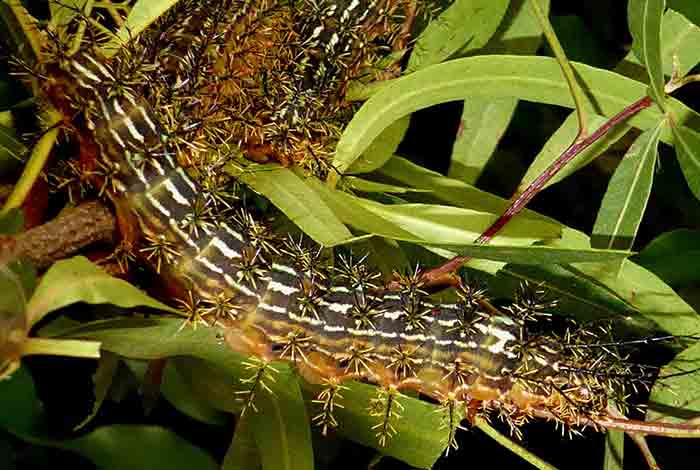
Doctors call reactions to moth and caterpillar hairs lepidopterism. Hairs and spines can break off into skin, get blown by wind onto laundry and patios, or reach the eyes.
| Caterpillar | Where | Effect |
|---|---|---|
| Puss (asp) caterpillar | Southern US, Central America | Furry but hides venomous spines; intense, spreading pain, sometimes nausea and swelling |
| Saddleback and io moth caterpillars | Eastern US | Stinging spines; burning pain and welts |
| Browntail moth | New England, Europe | Airborne hairs cause itchy rash lasting weeks |
| Oak and pine processionary | Europe | Hairs cause rash, eye irritation and breathing problems; stay active for over a year |
| Spongy (gypsy) moth | North America, Europe | Hairs cause itchy rash |
| Lonomia | South America | Rare but serious bleeding disorder; has its own antivenom |
First aid for a caterpillar sting or rash
- Remove the caterpillar with tweezers or a stick, not bare hands.
- Press sticky tape, such as duct tape, on the skin and pull it off to lift out hairs. Repeat with fresh tape.
- Wash with soap and water.
- Apply ice, then hydrocortisone cream; take an antihistamine for itching.
- Seek care for severe pain, swelling spreading beyond the sting, trouble breathing, eye exposure, or any sting in South America.
Damage Moths Cause at Home
- Clothes moths: larvae chew holes in wool, silk, cashmere, fur, feathers and felt. See what moths eat.
- Pantry moths: Indian meal moth larvae spoil flour, cereal, nuts, rice, dried fruit and pet food with webbing and droppings. Throw out infested food; eating a few by accident isn’t harmful but is unpleasant.
- Garden and tree moths: caterpillars of spongy moths, cabbage moths and others strip leaves and damage crops.
Identify which moth you have with types of moths and house moths, then follow how to get rid of moths.
Safer moth control (no mothballs)
- Pheromone clothes moth traps non-toxic and pet-safe
- Pantry moth traps for kitchens
- Cedar blocks and rings for closets and drawers
- Zippered garment bags to seal wool and silk
As an Amazon Associate, Pestbugs earns from qualifying purchases.
FAQs
No. Adult moths don’t bite, sting or spread disease and aren’t poisonous to touch. Some caterpillars have hairs or spines that cause rashes or painful stings.
Yes. Touching a moth is safe. The dust left on your fingers is wing scales, which is harmless but can irritate sensitive skin or eyes.
No. Eating a moth is harmless for cats and dogs. Mothballs are toxic to pets, and hairy caterpillars can irritate a pet’s mouth.
Almost no moths bite. Most adults have no biting mouthparts. Holes in clothes are made by clothes moth larvae, not adults.
No adult moths are dangerous to touch. The concern is caterpillars such as the puss caterpillar, saddleback, browntail and processionary caterpillars, and Lonomia caterpillars in South America.
Sources
- DermNet: Skin problems due to caterpillars and moths
- Cleveland Clinic: Can caterpillars cause a skin rash?
Facts in this guide are checked against the sources above and reviewed when they change. See how we research in our editorial policy.