
Silverfish are wingless, carrot-shaped insects about 1/2 inch long, covered in shiny silver-gray scales, with two long antennae and three bristly tails. They live in damp places like bathrooms, basements and laundry rooms and eat paper, glue, starch and cereals. They don’t bite or spread disease. To get rid of them, lower the humidity, fix leaks, clear out stored paper and cardboard, and use traps or a thin dusting of diatomaceous earth in cracks.
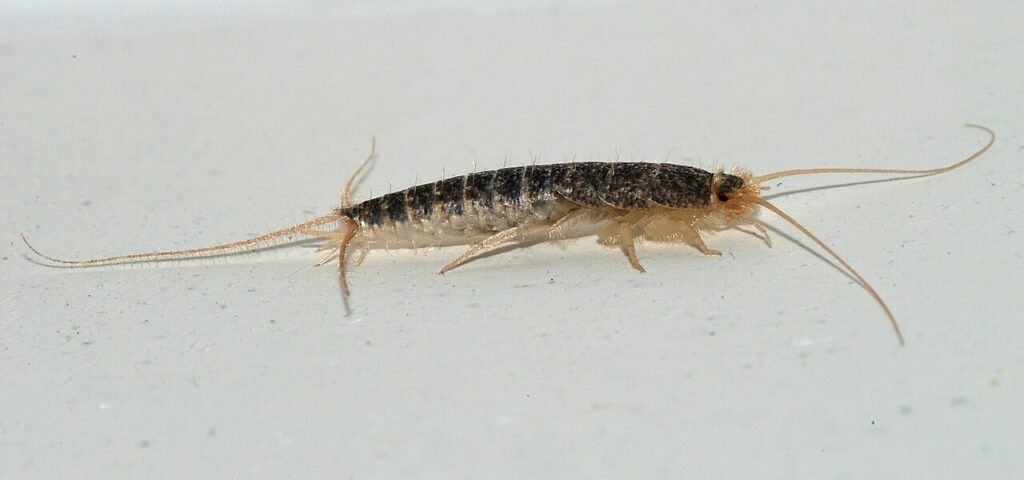
Table of Contents
How to Identify Silverfish
- Size: about 1/3 to 3/4 inch long.
- Shape: flat and wingless, wide at the head and tapering to the tail like a carrot or fish.
- Color: covered in shiny silver or pearl-gray scales that rub off as a dust. Very young silverfish are white and scaleless.
- Antennae and tails: two long antennae at the front and three long filaments at the back.
- Movement: fast, with a side-to-side wiggle like a swimming fish. They hide from light.
Silverfish vs firebrats
| Silverfish | Firebrat | |
|---|---|---|
| Color | Shiny silver-gray | Mottled gray or brown, no sheen |
| Preferred spots | Damp, moderate temperatures: bathrooms, basements, laundry rooms | Hot spots above about 90°F: near furnaces, water heaters, ovens, attics |
| Humidity | High, about 75% to 95% | Can handle drier air |
Where Silverfish Live
- Bathrooms, especially around tubs, sinks and pipes
- Basements, crawl spaces and laundry rooms
- Kitchens and pantries
- Attics, closets and garages with stored boxes
- Bookshelves, paper files and behind baseboards, wallpaper and window frames
They often get trapped in sinks and tubs because they can’t climb the slick sides. They arrive in homes in boxes, books, furniture and stored items.
What Silverfish Eat
Silverfish eat starchy and sugary materials and can digest cellulose. Common targets:
- Paper, book bindings, photographs, wallpaper and wallpaper paste
- Glue on boxes and envelopes
- Starched clothing and cotton, linen and rayon fabrics
- Flour, cereals, pasta and dry pet food
- Dead insects and mold
Signs of silverfish damage
- Irregular, scraped patches or holes in paper, book covers, wallpaper and fabric
- Yellowish stains
- Tiny silver scales and pepper-like droppings near damaged items
- Live silverfish in sinks and tubs at night
Real damage takes a large, long-standing population. Silverfish breed slowly, so many of them means they have been there a long time.
Silverfish Life Cycle
Females lay about 100 eggs over their lives, a few at a time, in cracks. Eggs hatch in about 3 to 6 weeks into tiny white nymphs that look like small adults. They take 3 months to 2 years to mature and, unusually, keep molting as adults, sometimes dozens of times. Silverfish live several years, with estimates from about 2 to 8 years, and can survive months without food if they have moisture.
Are Silverfish Harmful?
Silverfish are harmless to people. They don’t bite, sting or transmit disease, and their jaws are too weak to do more than scrape surfaces. The damage is to books, papers, photographs, wallpaper and some fabrics. A persistent silverfish problem usually points to excess moisture worth fixing for its own sake.
How to Get Rid of Silverfish
- Dry the house. Run a dehumidifier in the basement and use bathroom and laundry fans. Fix leaky pipes, faucets and drains.
- Clear out paper and cardboard. Recycle old newspapers, magazines and boxes, and store papers, books and fabrics in sealed plastic bins off the floor.
- Store food in airtight containers. Flour, cereal, pasta and pet food.
- Seal cracks. Caulk gaps around baseboards, pipes, windows and door frames.
- Set traps. Sticky traps along baseboards and in cabinets catch silverfish and show where they are. A homemade jar trap works too: wrap the outside of a small glass jar with masking tape so they can climb in but not out.
- Use a dry dust. A thin, barely visible layer of diatomaceous earth or silica gel dust in cracks, under sinks and behind appliances. It only works while dry, and thick piles don’t work.
- Spray cracks only if needed. A crack-and-crevice insecticide labeled for silverfish can help. Skip foggers and baits.
Expect to see fewer silverfish within two to three weeks. If they keep coming back, look again for a moisture source. Silverfish are favorite prey of house centipedes, so seeing both together is common.
Silverfish control supplies
- Basement dehumidifier to cut humidity
- Sticky traps for baseboards and cabinets
- Diatomaceous earth with duster for cracks
- Humidity monitor to track basement and bathroom humidity
As an Amazon Associate, Pestbugs earns from qualifying purchases.
FAQs
Moisture and starch. Silverfish need high humidity, roughly 75% or more, and feed on paper, glue, book bindings, wallpaper paste, starched fabric, cereals and flour. Damp basements, bathrooms and laundry rooms with stored paper are ideal for them.
No. Silverfish have very weak jaws that scrape rather than bite, and they are considered harmless to people. They don’t spread disease.
No. It usually means a moisture problem or plenty of undisturbed hiding spots, such as boxes of paper in a damp basement. Fixing humidity matters more than cleaning.
Several years. Estimates range from about 2 to 8 years, which is unusually long for an insect. They also keep molting as adults and can survive months without food.
Silverfish are shiny silver-gray and like damp, moderate temperatures. Firebrats are mottled gray or brown, lack the silver sheen, and live in hot spots near furnaces, water heaters and ovens.
Run a dehumidifier, fix leaks, clear out stored paper and cardboard, and set sticky traps or masking-tape jar traps. A thin layer of dry diatomaceous earth or silica dust in cracks helps. Expect results within two to three weeks.
Sources
- UC IPM Pest Notes: Silverfish and Firebrats
- Ohio State University Extension: Silverfish and Firebrats
- Penn State Extension: Bristletails (Silverfish and Firebrats)
- University of Florida IFAS: Silverfish (EENY-705)
- Missouri Department of Conservation: Silverfish (Firebrat)
- Iowa State University Extension: Silverfish and Firebrats
Facts in this guide are checked against the sources above and reviewed when they change. See how we research in our editorial policy.