
Carpet beetles are tiny round beetles, about 1/16 to 1/8 inch long, whose hairy larvae chew holes in wool, silk, fur, feathers and leather. The adults you see on windowsills in spring eat only pollen; the damage comes from the bristly brown larvae hiding in closets, rug edges, vents and lint. Get rid of them by finding the infested item, vacuuming thoroughly, washing or freezing fabrics and storing woolens in sealed containers. A few beetles are normal; surveys find them in nearly every home.
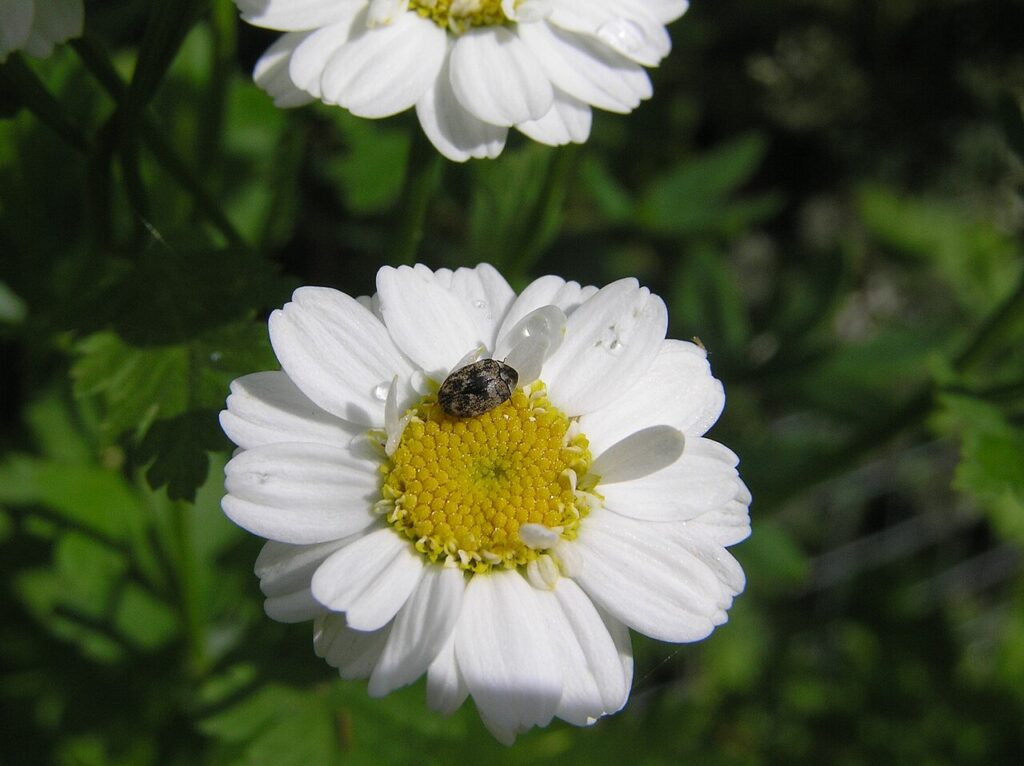
Table of Contents
Types of Carpet Beetles
| Species | Adult | Larva |
|---|---|---|
| Varied carpet beetle | About 1/10 inch, round, black with a mottled pattern of white, brown and yellow scales | Striped light and dark brown, with tufts of hair that it raises when disturbed |
| Furniture carpet beetle | Slightly larger and rounder, black spots among white and yellow-orange scales | Similar to varied carpet beetle |
| Black carpet beetle | 1/8 to 3/16 inch, shiny black to dark brown, oval | Carrot-shaped, shiny, light brown to nearly black, with a long tail tuft; up to about 1/2 inch |
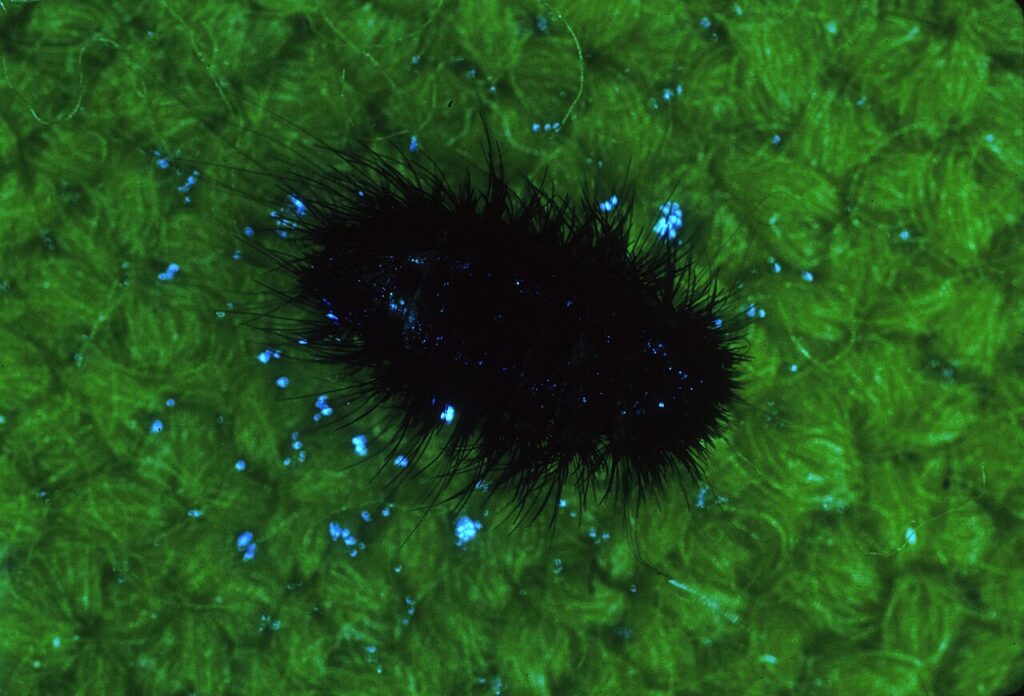
The larvae, sometimes called woolly bears, look like tiny bottle brushes. They shed their skins many times as they grow, so you may find more empty skins than live larvae.
What Carpet Beetles Eat
- Fabrics: wool, silk, fur, felt, feathers, leather and hair, including rugs, blankets, sweaters, coats and piano felts.
- Other animal material: dead insects, lint with pet hair, taxidermy and old bird or rodent nests.
- Pantry items: some species eat cereals, flour, spices and dry pet food.
- Cotton and synthetics: rarely, unless stained with food or sweat or blended with wool.
Adults don’t eat fabric. They feed on pollen and nectar from flowers such as crape myrtle, spiraea and viburnum.
Carpet Beetle Life Cycle
A female lays about 40 to 100 eggs on or near a food source: a wool rug, a lint-filled crack, a dead insect. Eggs hatch in one to two weeks. The larval stage is long, from about two months to more than a year depending on species and food, and larvae can survive a long time without eating. There are one to four generations a year, and a serious infestation usually takes at least a year to build up.
Adults appear in spring and early summer, drawn to light, which is why you find them on windowsills. Some flew in from outdoors; others developed inside and are trying to leave.
Signs of Carpet Beetles
- Small beetles on windowsills in spring
- Irregular holes or bare spots in wool sweaters, rugs, blankets and upholstery
- Brown, bristly shed skins in drawers, closets and along baseboards
- Tiny droppings about the size of a grain of salt
- Larvae crawling on walls, floors or bedding
Carpet beetles vs clothes moths
Both damage wool. Carpet beetles leave shed skins and no webbing, and their larvae wander. Clothes moth larvae leave silk webbing or small cases on the fabric, and adult clothes moths avoid light. See why moths eat clothes.
Where Carpet Beetles Hide
- Under and along the edges of rugs and carpet
- Under heavy furniture and along baseboards
- In closets and stored woolens, especially in folds, hems, collars and cuffs
- In heating vents and return-air ducts, where lint builds up
- In attics and wall voids with dead insects or old nests
- Around light fixtures and windowsills
Carpet Beetle Rash
Carpet beetles don’t bite, but the larvae carry tiny spear-shaped hairs. In people who become sensitive, usually after repeated exposure over time, contact can cause an intensely itchy, bumpy rash that feels like bites, and sometimes eye or breathing irritation. If you have a mystery rash and find carpet beetle larvae or skins in your bedding or closet, removing them usually ends it. A doctor can confirm the cause.
How to Get Rid of Carpet Beetles
- Find the source. Check stored woolens, rugs (both sides), upholstered furniture, closets, vents and attics for larvae and skins. Throw out heavily damaged items.
- Vacuum thoroughly. Rug edges, under furniture, baseboards, vents, closet floors and shelves, upholstery and drapes. Empty the vacuum outdoors.
- Clean fabrics. Wash in hot water or dry-clean; both kill all life stages.
- Freeze what can’t be washed. Seal items in plastic bags and hold at 0°F or colder for at least a week, then let them warm up for a day before opening.
- Heat small items. At least 30 minutes at 120°F or higher kills all stages.
- Remove food sources. Clear dead insects from light fixtures and windowsills, and remove old bird, wasp or rodent nests from attics and eaves.
- Spot-treat if needed. Use an insecticide labeled for carpet beetles only in cracks, carpet edges and closet corners. Never spray clothing or bedding.
How to Prevent Carpet Beetles
- Clean wool and fur items before storing them; stains attract larvae.
- Store them in tightly sealed plastic bins or garment bags.
- Vacuum rugs on both sides and under furniture regularly.
- Check cut flowers for small beetles before bringing them inside, and keep window screens tight.
- Don’t rely on cedar; it doesn’t protect stored clothes reliably. Mothballs only work sealed in an airtight container with the items and must be kept from children and pets.
Carpet beetle control supplies
- Airtight storage bags for woolens
- Vacuum with crevice tool for rug edges and vents
- Carpet beetle monitoring traps to track activity
- Lidded storage bins for blankets and sweaters
As an Amazon Associate, Pestbugs earns from qualifying purchases.
FAQs
Small, hairy, slow-moving grubs about 1/8 to 1/4 inch long, sometimes up to 1/2 inch, that look like tiny bottle brushes. Varied carpet beetle larvae have light and dark brown stripes; black carpet beetle larvae are shiny, carrot-shaped and brown with a long tail tuft.
Carpet beetles don’t bite. Some people develop an itchy, bumpy rash from contact with the larvae’s tiny barbed hairs, which can feel like bites. It usually takes repeated exposure to become sensitive.
The larvae eat animal materials: wool, silk, fur, feathers, leather, felt, hair and dead insects, plus lint and some stored foods like cereals, spices and pet food. Adults eat only pollen and nectar.
Adults fly in through open windows and doors in spring and early summer, or ride in on cut flowers, secondhand clothing and furniture. They lay eggs on fabrics, in lint and near dead insects or old bird and rodent nests.
Carpet beetles leave brown, bristly shed skins and tiny salt-grain droppings but no webbing. Clothes moth larvae leave silk webbing or small cases on the fabric.
Find and remove the infested item, vacuum rugs, baseboards, vents, closets and under furniture, wash or dry-clean fabrics, or freeze items at 0°F for a week. Store clean woolens in sealed containers.
Sources
- UC IPM: Carpet Beetles
- University of Kentucky Entomology: Carpet Beetles (ENTFACT-601)
- NC State Extension: Clothes Moths and Carpet Beetles
- Penn State Extension: Carpet Beetle Dermatitis
- Clemson HGIC: Fabric Pest Control
- NC State Plant Disease and Insect Clinic: Spring Signals Indoor Carpet Beetle Activity
Facts in this guide are checked against the sources above and reviewed when they change. See how we research in our editorial policy.