
To get rid of cluster flies, vacuum the ones at your windows, seal the gaps inside where they come out (around window frames, baseboards, light fixtures and outlets), and set UV light traps in the attic. To stop them next year, seal the outside of the house by late August, before they arrive.
Cluster flies are sluggish gray flies with golden hairs on the thorax that spend the winter in walls and attics. They don’t bite, breed indoors or spread disease, and indoor sprays and fly paper don’t work on them.
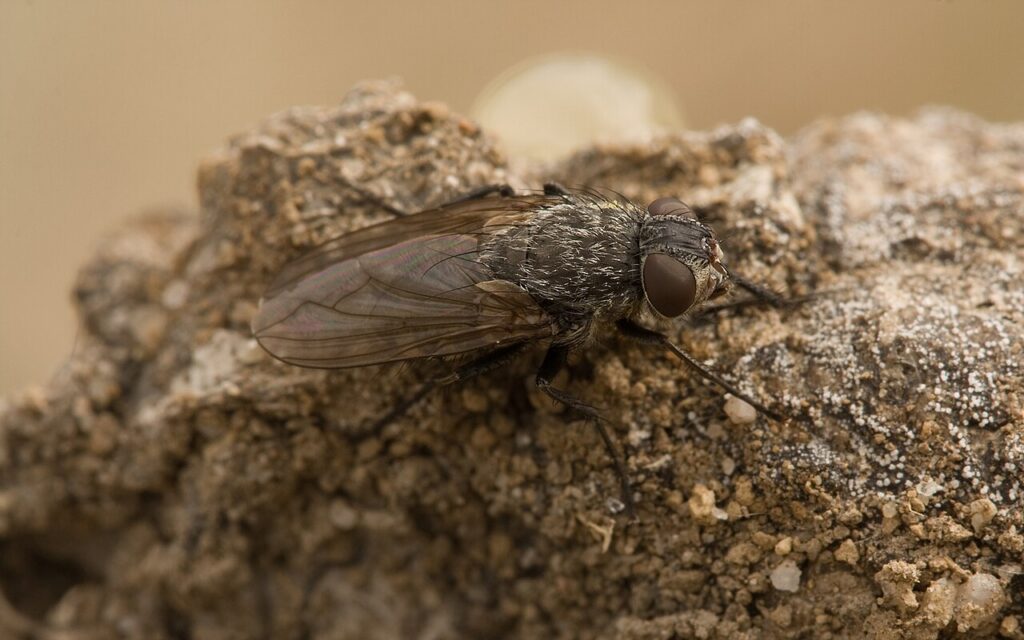
Table of Contents
What Are Cluster Flies?
- Size: about 3/8 to 1/2 inch, a little larger than a house fly.
- Color: dull gray or grayish-brown with darker markings, sometimes with light patches on the abdomen.
- Key feature: short golden-yellow hairs on the thorax, easiest to see with a hand lens.
- Wings: fold flat over the back at rest, with the tips overlapping.
- Behavior: slow, clumsy fliers that are easy to swat; they often buzz in circles at windows.
- Smell: crushed flies give off a sweet, buckwheat-honey smell.
They belong to the blow fly family but aren’t filth flies and don’t feed on garbage. For a side-by-side guide, see cluster flies vs house flies.
Where Do Cluster Flies Come From?
Cluster flies come from earthworms. In spring and summer, females lay eggs in cracks in the soil of lawns, fields and pastures. The larvae find earthworms, burrow inside, feed on them, and then pupate in the soil. Adults feed on flower nectar and water.
- They are most common in rural areas and near lawns, fields, irrigated turf and moist soil.
- Wet summers that favor earthworms tend to mean more flies in fall.
- Houses on hilltops or open, high ground seem to attract the most.
- They are thought to be native to Europe and probably arrived in North America in soil carried in ship ballast.
Killing earthworms or treating the lawn doesn’t help. The flies fly in from as far as several hundred yards away.
Why Cluster Flies Are in Your House
From late August through September, adults look for a sheltered place to spend the winter. During the day they gather on the warm, sunny south and west walls of buildings, then crawl in at dusk through gaps under eaves, around windows, in siding and around pipes and wires. Window screens don’t stop them.
Inside, they settle in attics, wall voids, and upper floors. On mild, sunny winter days, or when furnace heat warms the walls, they wake up, crawl out of gaps around baseboards, window frames, light fixtures and outlets, and head for the light. That is why you find clusters of flies buzzing at windows in spare rooms and attics, sometimes in the middle of winter.
How Long Do Cluster Flies Live?
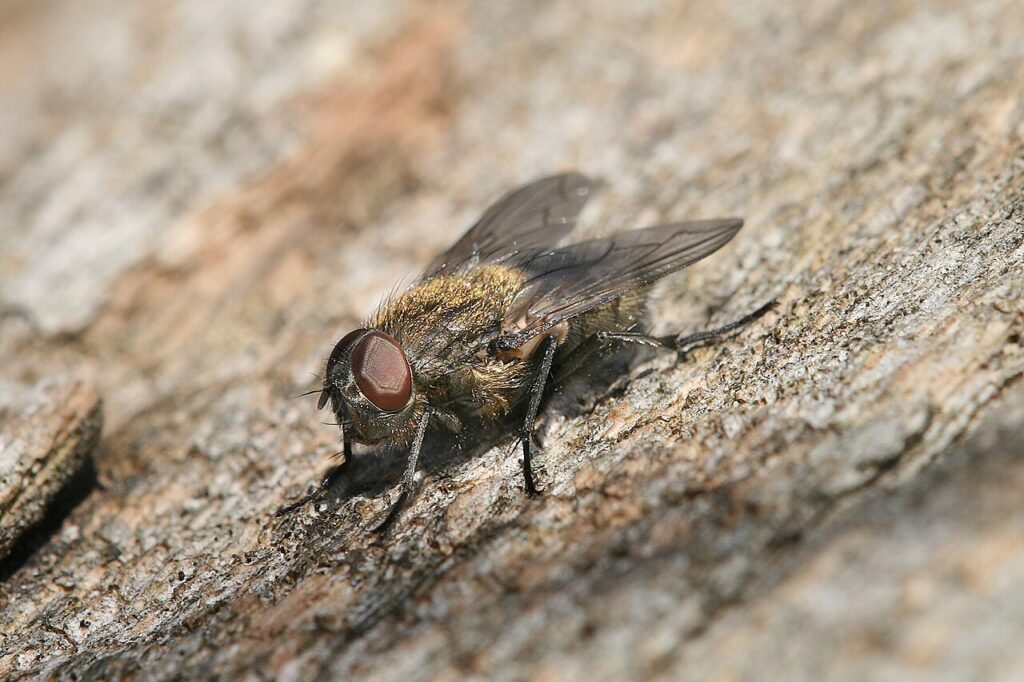
In summer, one generation takes about four to six weeks from egg to adult: eggs hatch in about three days, larvae feed inside earthworms for two to three weeks, and pupae develop for about two weeks in the soil. Usually, there are three or four generations a year.
The last generation of the season lives much longer. Those adults spend the whole winter dormant inside walls and attics, and most survive and leave in early spring. Few die indoors, though piles of dead flies sometimes turn up in late spring in homes that sat empty all winter.
Do Cluster Flies Bite?
No. Cluster flies don’t bite or sting, aren’t known to carry disease and don’t breed indoors. They do leave small dark spots of droppings on windows and walls.
Large numbers that die in wall voids can attract carpet beetles, larder beetles and even rodents, which then move on to woolens and stored goods.
How to Get Rid of Cluster Flies in Your House
- Vacuum them. The quickest fix for flies at windows. Empty the vacuum outdoors.
- Use the window trick. Darken a room except for one bright window; the flies gather there and are easy to vacuum.
- Seal inside gaps. Caulk around baseboards, window and door trim, light fixtures, outlets and exhaust fans, where flies crawl out of the walls into rooms.
- Set UV light traps in the attic. Sticky-board light traps work in dark attics and unused rooms, where they don’t compete with daylight. They reduce numbers but won’t catch them all. Our guide to cluster fly traps covers which types work.
- Skip fly paper, fly strips and bait traps. Cluster flies aren’t attracted to them.
- Don’t spray or fog wall voids. Sprays don’t reach flies hidden under insulation, foggers don’t stop more flies coming out of walls, and the dead flies feed carpet beetles.
Cluster Fly Control: Keep Them Out Next Year
Sealing the outside of the house before flies arrive is the only lasting way to control cluster flies.
- Seal by late August, Labor Day at the latest, before flies start gathering.
- Caulk gaps around windows, doors, siding, fascia boards, soffits, chimneys and where pipes and wires enter.
- Fill wider cracks with foam backer rod before caulking.
- Repair damaged screens and fit door sweeps.
- For heavy, recurring problems, a licensed pest professional can treat the sunny outside walls with a residual insecticide in late August or early September, just before the flies gather. It breaks down in sunlight within about a week and works best when paired with sealing.
Cluster flies arrive at the same time as other fall invaders: Asian lady beetles, stink bugs and boxelder bugs. Sealing the house in summer keeps them all out.
Cluster fly control supplies
- UV fly light trap for attics and spare rooms
- Handheld vacuum for flies at windows
- Exterior caulk for sealing gaps before fall
- Foam backer rod for wider cracks
As an Amazon Associate, Pestbugs earns from qualifying purchases.
Tiny dark flies around houseplants in winter are fungus gnats, not cluster flies.
FAQs
Vacuum the flies at windows, seal gaps around windows, baseboards, light fixtures and outlets where they come out, and use UV light traps in the attic. To stop next year’s flies, seal the outside of the house by late August.
Cluster flies are dull gray flies slightly larger than house flies, with golden hairs on the thorax. Their larvae live as parasites in earthworms outdoors, and the adults spend winter sheltering inside walls and attics.
From lawns, fields and pastures with earthworms. Females lay eggs in soil cracks, and the larvae develop inside earthworms. In late summer, the adults fly in from up to several hundred yards away to find winter shelter in buildings.
No. Cluster flies don’t bite or sting, aren’t known to spread disease and don’t damage the house.
A generation takes about four to six weeks from egg to adult in summer. The last generation of adults lives for months, shelters dormant through the winter, and leaves in early spring.
Each fall a new generation looks for the same kind of warm, sunny, high building, and many of the same gaps are still open. Sealing the outside before late August is the only lasting fix.
Sources
- Penn State Extension: Cluster Flies
- Colorado State University Extension: Cluster Flies and Other Winter Flies
- Purdue Extension: Nuisance Flies, Cluster and Face Flies (E-235)
- Iowa State University Extension: Cluster Fly
- University of Minnesota Extension: Flies
- Connecticut Agricultural Experiment Station: Cluster Fly
- University of Wisconsin Extension: Larder Beetles
Facts in this guide are checked against the sources above and reviewed when they change. See how we research in our editorial policy.