
Pantry moths, mostly Indian meal moths, are small moths about 1/2 inch across whose wings are pale gray-tan near the body and coppery red-brown at the tips. Their cream-colored caterpillars infest flour, cereal, rice, nuts, dried fruit, pet food and birdseed, leaving silk webbing and droppings. To get rid of them, find and throw out every infested package, vacuum and wipe the shelves, freeze anything you want to keep, and store dry food in airtight glass, metal or heavy plastic containers. Pheromone traps only monitor them.
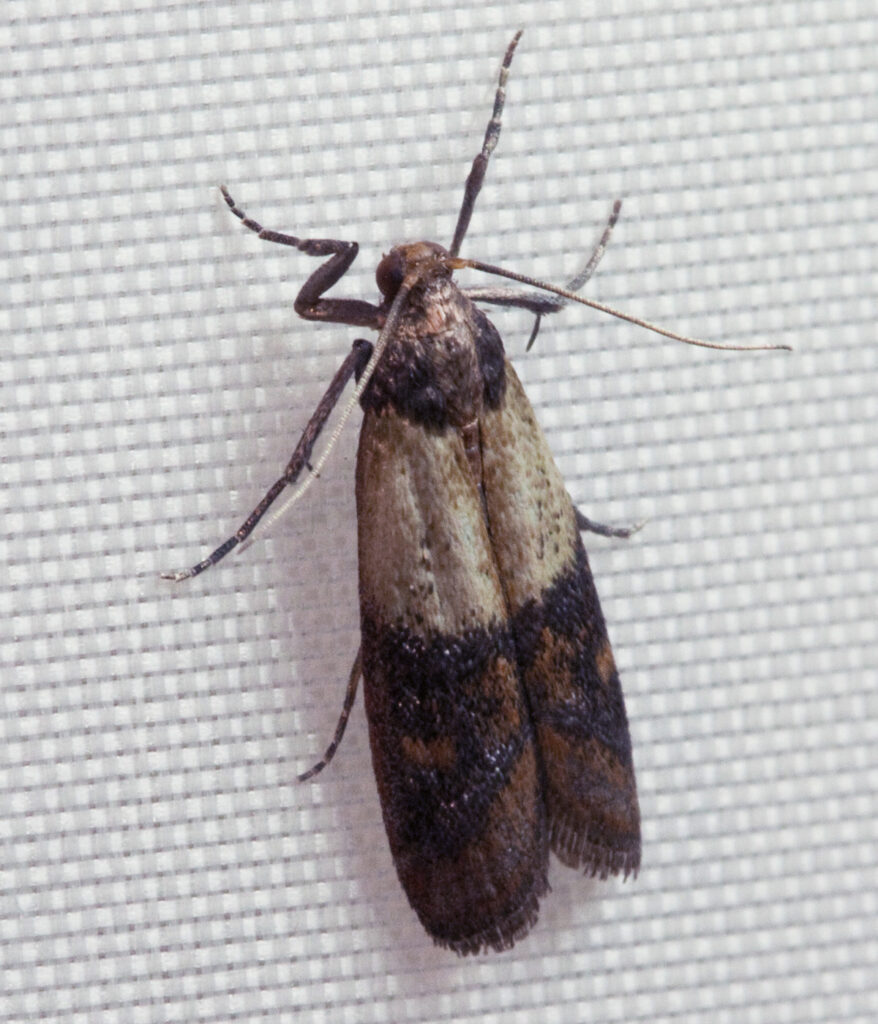
Table of Contents
How to Identify Pantry Moths
Adults
- Size: about 1/2 to 5/8 inch across the wings, about 1/4 to 2/5 inch long at rest.
- Wings: the inner third is whitish-gray or tan; the outer two-thirds are reddish-brown with a coppery sheen. Worn moths can look faded.
- At rest: wings folded flat over the back.
- Behavior: zigzag flight, usually at dusk or night, and drawn to lights, so they turn up in rooms away from the pantry.
Adults don’t eat and live only about a week. All the damage comes from the larvae.
Larvae
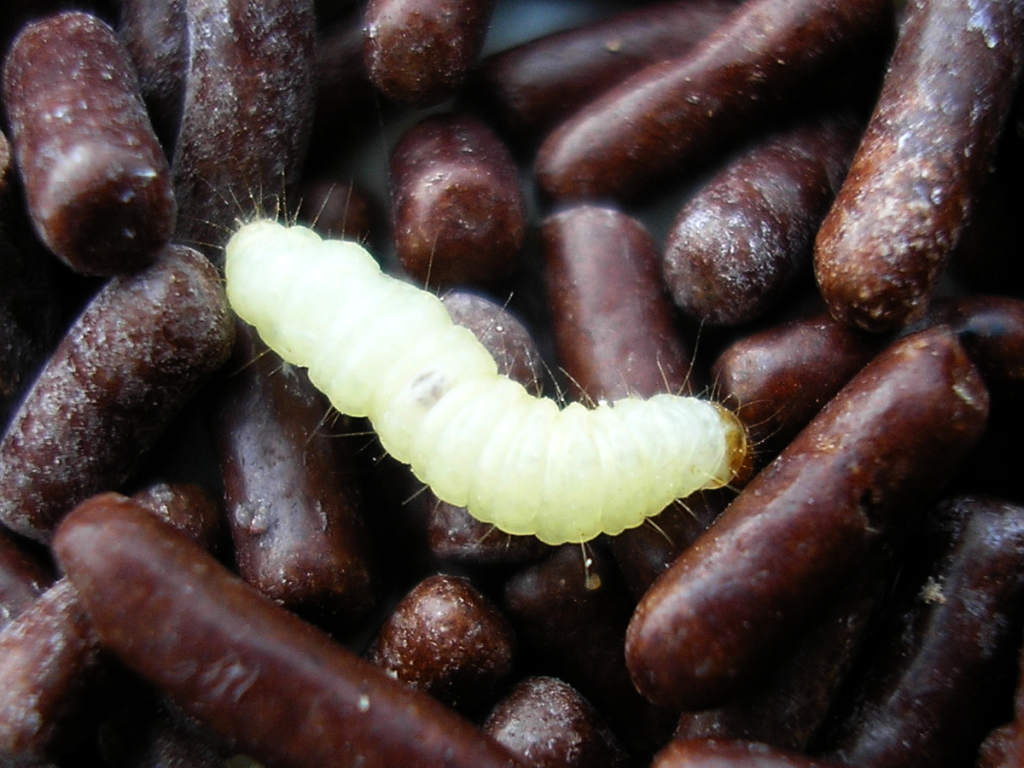
- Off-white to cream caterpillars, sometimes tinged pink, green or yellow depending on food
- About 1/2 inch long when full grown, with a brown head
- Spin silk webbing wherever they crawl, clumping food together
- Chew through plastic bags, thin cardboard and paper packaging
Signs of Pantry Moths
- Small moths flying in the kitchen or around lights, often the first sign
- Silk webbing in flour, cereal, rice or nuts, or along the folds of packages
- Food stuck together in clumps
- Tiny holes in packages and small droppings in food
- Caterpillars crawling on walls, counters or the ceiling
- Cocoons in package seams, shelf cracks and where the walls meet the ceiling
What Foods Pantry Moths Infest
Indian meal moth larvae feed on almost any dry food: flour, cornmeal, cereals, crackers, pasta, rice, oats, dried fruit, nuts, chocolate and candy, spices, dried peppers, herbal tea, powdered milk, dry pet food and birdseed. They also infest dried flowers, potpourri and seed crafts. Pet food and birdseed are frequent sources because they are bought in bulk and stored a long time.
Pantry Moth Life Cycle
A female lays about 40 to 400 eggs on or near food. Eggs hatch in a few days to about a week, and larvae feed for several weeks before spinning cocoons. In a warm kitchen, egg to adult takes about 6 to 8 weeks, faster in summer heat and much slower in cool rooms. Indoors there can be four to six generations a year, which is why pantry moths seem to appear in every season.
How to Get Rid of Pantry Moths
- Inspect everything. Check every dry food in the kitchen and pantry, including unopened packages, plus pet food, birdseed, spices and dried decorations.
- Throw out infested food. Seal it in a bag and put it in an outdoor trash can right away.
- Freeze food you want to keep. Freeze it at 0°F for at least 4 days to a week to kill eggs and larvae.
- Vacuum the shelves. Get into corners, cracks, shelf-pin holes and the gap where shelves meet the wall, then empty the vacuum outside.
- Wipe shelves. Wipe with soapy water and dry them well before restocking. Bleach and disinfectants don’t add anything.
- Check the ceiling and walls. Remove cocoons and webbing from the tops of cabinets, ceiling corners and door frames.
- Store food airtight. Use glass jars, metal tins or heavy plastic containers with tight-fitting lids. Plastic bags and cardboard boxes aren’t enough.
- Monitor with pheromone traps. Hang one or two near the pantry and check weekly. Keep them up for at least a month after cleanup.
Don’t spray insecticides on food shelves. The risk to your family outweighs any benefit, and cleanup works without them. If moths keep coming back after two to three weeks, look again for a hidden food source.
How to Prevent Pantry Moths
- Buy undamaged packages, and only as much as you will use in two to four months.
- Move flour, grains, cereals, nuts and pet food into airtight containers when you bring them home.
- Don’t pour new food on top of old; empty and clean containers before refilling.
- Freeze bulk grains, birdseed and flour for a few days before storing.
- Keep pantry shelves clean and dry.
Are Pantry Moths Harmful?
Pantry moths don’t bite or sting, and no diseases have been linked to them. Infested food is still unfit to eat because of the larvae, webbing and droppings, and contaminated food can grow molds. Throw it out rather than sifting it.
Pantry Moths vs Clothes Moths
| Pantry moth | Clothes moth | |
|---|---|---|
| Wings | Two-toned: pale inner part, coppery outer part | Plain buff or golden, narrow, fringed |
| Where you see them | Kitchens, pantries, around lights | Closets and dark storage areas; avoid light |
| Larvae eat | Dry foods, pet food, birdseed | Wool, fur, silk and other animal fibers |
For moths in closets and on clothing, see why moths eat clothes and house moths: where they come from.
Pantry moth control supplies
- Pantry moth pheromone traps for monitoring
- Airtight food containers for flour, cereal and grains
- Glass jars with lids for nuts and dried fruit
- Airtight pet food bin for kibble and birdseed
As an Amazon Associate, Pestbugs earns from qualifying purchases.
FAQs
Almost always from an infested food package brought home from the store, often something stored a long time like flour, birdseed, pet food, dried fruit or nuts. Some food is infested before it reaches your home.
Small, off-white or cream caterpillars about 1/2 inch long when full grown, sometimes tinged pink, green or yellow from their food, with a brown head. They spin silk webbing through the food and often crawl up walls and onto ceilings to spin cocoons.
No diseases have been linked to pantry moths, and adults don’t bite or sting. Infested food is still unfit to eat because of the larvae, webbing and droppings, so throw it out.
Usually two to three weeks after every infested item is gone, though eggs and larvae hiding in cracks can keep the cycle going for a few weeks. Keep food sealed and pheromone traps up for at least a month.
No. Pheromone traps catch only males, and one mating is enough for a female to lay eggs. Use them to spot moths early and check whether your cleanup worked.
Pantry moths have two-toned wings, pale near the body and coppery on the outer part, and fly around kitchens and lights. Clothes moths are smaller, plain buff-colored, avoid light and stay in closets with wool and fur.
Sources
- UC IPM Pest Notes: Pantry Pests
- Colorado State University Extension: Indian Meal Moth (5.598)
- Purdue Extension: Insect Pests of Home Stored Foods (E-37)
- Clemson HGIC: Indian Meal Moth
- University of Wisconsin Extension: Indian Meal Moth
- University of Kentucky Entomology: Clothes Moths (ENTFACT-609)
Facts in this guide are checked against the sources above and reviewed when they change. See how we research in our editorial policy.