
House centipedes are fast, yellowish-gray centipedes with a body about 1 to 1 1/2 inches long, three dark stripes down the back and 15 pairs of very long, banded legs that make them look 3 to 4 inches across. They live in damp basements, bathrooms and crawl spaces and hunt silverfish, cockroaches, spiders and other pests at night. They are harmless to people and pets and rarely bite. To have fewer of them, dry out damp areas and remove the insects they eat.
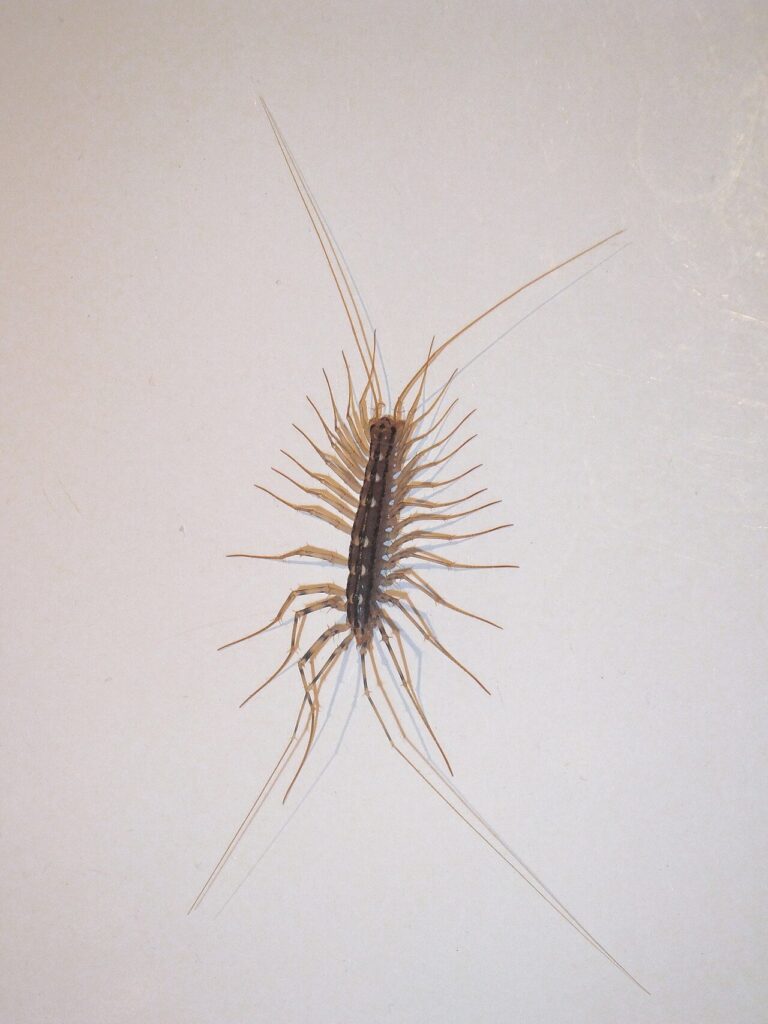
Table of Contents
How to Identify a House Centipede
- Body: about 1 to 1 1/2 inches long, yellowish to brownish-gray with three dark stripes running down its length.
- Legs: 15 pairs of long legs with light and dark bands. The last pair is much longer than the body.
- Overall size: with legs and antennae, it looks 3 to 4 inches long.
- Antennae: very long and thin.
- Eyes: large compound eyes, unusual for a centipede.
- Young: hatch with 4 pairs of legs and add more pairs with each molt.
House centipedes came originally from the Mediterranean region and are now common in homes across North America. For other kinds of centipedes, see types of centipedes.
Where House Centipedes Live
- Basements, cellars and crawl spaces
- Bathrooms and laundry rooms
- Closets and storage areas with cardboard boxes
- Under concrete slabs, in hollow block walls and around floor drains
- Outdoors under rocks, logs, firewood and mulch
They hide in damp, dark places by day and come out at night to hunt. Unlike most centipedes, house centipedes can live and breed indoors year-round in heated homes. They come in through gaps around pipes, wires and the foundation.
What House Centipedes Eat
House centipedes are predators. They grab prey with their barbed legs and inject venom. They eat:
- Silverfish and firebrats
- Cockroaches
- Spiders
- Carpet beetle larvae
- Flies, moths, crickets and earwigs
- Bed bugs
Frequent sightings often mean there is a good supply of other insects in the house. Silverfish are a common partner pest; see how to get rid of silverfish.
Life Cycle and Behavior
A female lays about 35 to 100 eggs and doesn’t guard them. Young house centipedes go through several molts, adding legs each time, and females can live several years and produce up to about 150 young.
House centipedes are nocturnal and very fast. They dash, freeze, then dash again. A startled centipede sometimes runs toward a person, which looks like an attack but is only the animal fleeing.
Do House Centipedes Bite?
Rarely, and only when picked up, trapped or pressed against skin. Their mouthparts don’t pierce skin well. A bite is usually no worse than a bee sting, causing brief pain and a little swelling, and is harmless unless the person is allergic to insect venom. House centipedes don’t spread disease and are harmless to pets and property.
Are House Centipedes Good to Have?
From a pest-control view, yes. They eat many of the insects people least want indoors. Many extension entomologists suggest leaving them alone if you can tolerate them. If you can’t, the fix is to make the house less inviting rather than to spray.
How to Get Rid of House Centipedes
- Lower the humidity. Run a dehumidifier in the basement, use bathroom fans, and fix leaky pipes and drains.
- Remove their food. Use sticky traps along walls to see which insects are present, then deal with those pests.
- Seal entry points. Caulk cracks in the foundation and gaps around pipes, wires and windows, and screen floor drains and sump covers.
- Clear clutter. Move cardboard boxes off basement floors and into sealed plastic bins.
- Fix the outside. Grade soil away from the foundation and move mulch, leaves, rocks, boards and firewood away from the walls.
- Remove the ones you see. A vacuum or broom is enough.
Indoor insecticides do little for house centipedes. A light dusting of boric acid or diatomaceous earth in cracks and voids can help where they hide. Outdoor centipedes are beneficial and don’t need control.
House centipede control supplies
- Basement dehumidifier to dry damp areas
- Sticky traps to catch centipedes and their prey
- Floor drain screens for basements
- Lidded storage bins to replace cardboard
As an Amazon Associate, Pestbugs earns from qualifying purchases.
FAQs
No. House centipedes are harmless to people, pets and property. They rarely bite, and only when handled or pressed against skin; the bite is usually no worse than a bee sting.
They live where it is damp and where there are insects to eat. Seeing them often means moisture in a basement or bathroom and a supply of prey such as silverfish, spiders or cockroaches.
Yes. Unlike most centipedes, house centipedes can live and reproduce inside heated buildings. A female lays about 35 to 100 eggs and can live several years.
Adults have 15 pairs, or 30 legs, each long and banded. Newly hatched young have only 4 pairs and gain more as they molt.
You don’t have to. They eat silverfish, cockroaches, spiders, bed bugs, carpet beetle larvae and other pests. If you don’t want them, reduce moisture and remove their prey rather than spraying.
Run a dehumidifier, fix leaks, seal cracks and gaps around pipes, clear boxes and clutter from basements, and move mulch and debris away from the foundation. Sticky traps catch them and show what prey is present.
Sources
- Penn State Extension: House Centipedes
- Missouri Department of Conservation: House Centipede
- Clemson HGIC: Centipedes
- Iowa State University Extension: House Centipedes, Beneficial Predators or Nuisance?
- University of Kentucky Entomology: Centipedes and Pseudoscorpions (ENTFACT-647)
- Texas A&M AgriLife Extension: Centipedes and Millipedes
Facts in this guide are checked against the sources above and reviewed when they change. See how we research in our editorial policy.