
Asian lady beetles are ladybug look-alikes, about 1/4 to 1/3 inch long and tan, orange or red with up to 19 spots, that swarm sunny walls in October and crawl into houses to spend the winter. The surest way to tell one from a native ladybug is the black M- or W-shaped mark on the white area behind its head. They don’t breed or eat anything indoors, but they can pinch, stain surfaces with a smelly yellow fluid and trigger allergies. Seal gaps before fall and vacuum the ones that get in.
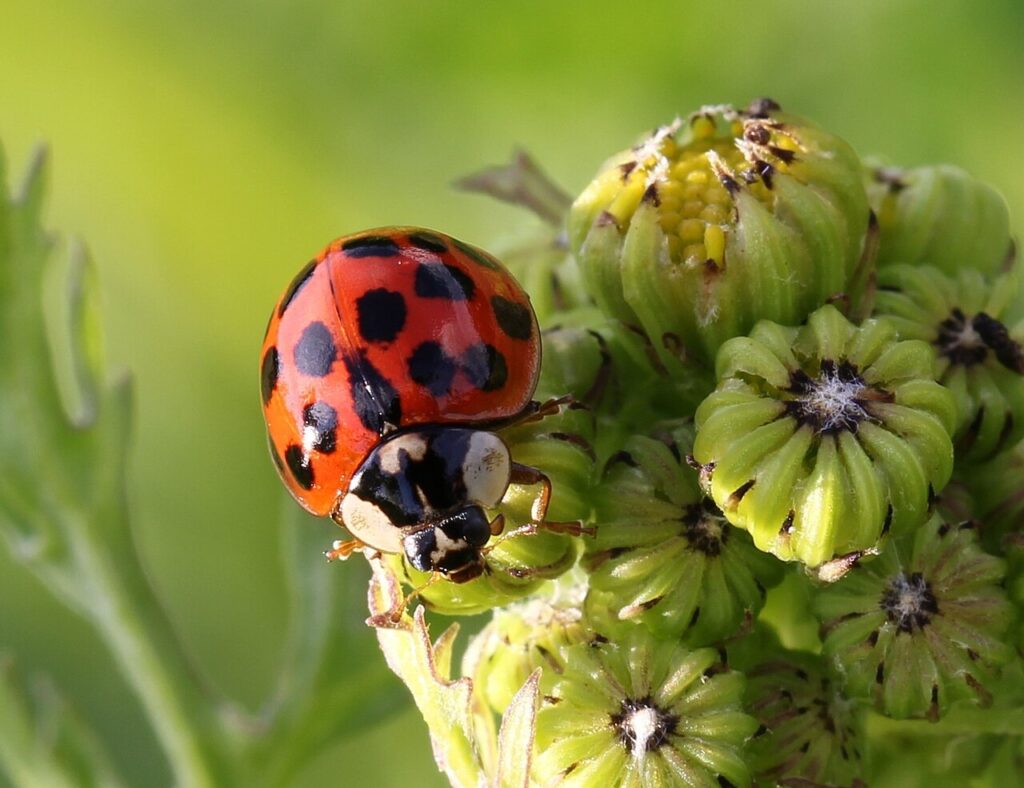
Table of Contents
How to Identify an Asian Lady Beetle
- Size: about 1/4 to 1/3 inch long, oval and domed. Most are larger than native lady beetles.
- Color: tan, yellow-orange, deep orange or red, and occasionally black with orange-red spots.
- Spots: up to 19 black spots, which can be faint or missing. Beetles with few or no spots tend to be males.
- Key mark: a black M or W shape (depending on which way you look) on the whitish area just behind the head.
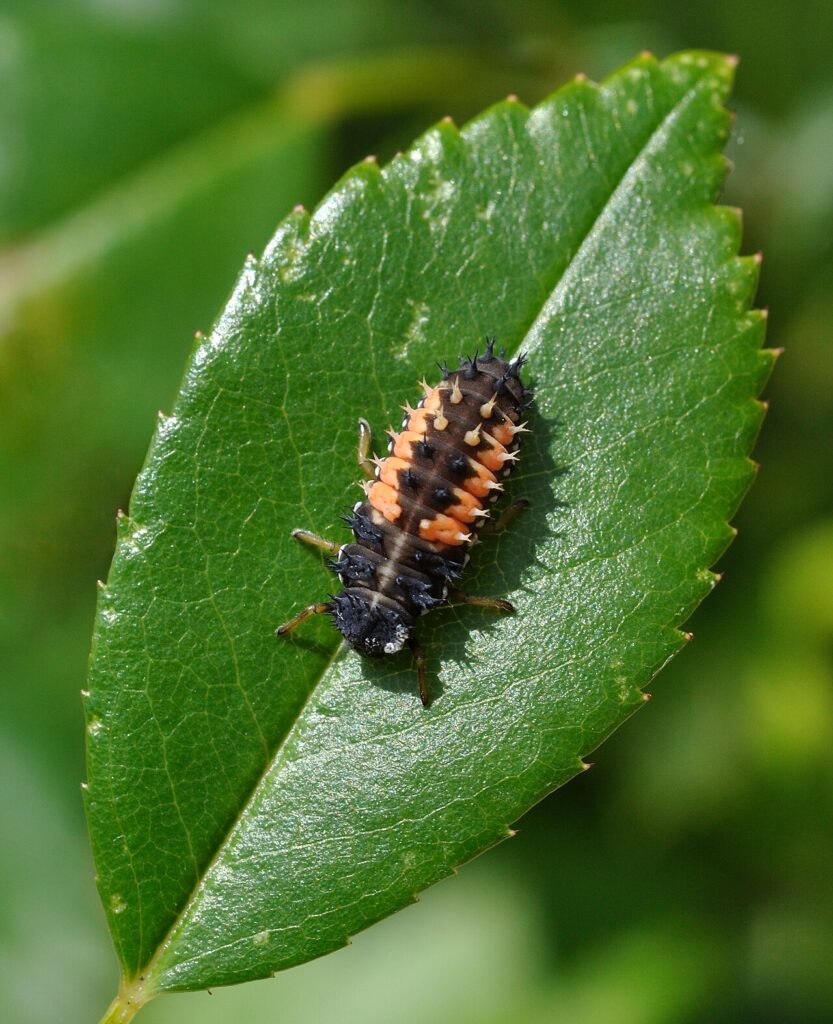
- Larvae: look like tiny alligators, dark gray to blue-black with orange marks and rows of soft spines.
Other common names include Halloween lady beetle, Japanese lady beetle and harlequin ladybird.
Where they came from
Asian lady beetles are native to China, Russia, Korea and Japan. The USDA released them in several states over decades to control aphids and scale insects on trees and crops. The first established U.S. population was found in Louisiana in 1988, possibly from beetles that arrived on cargo ships, and they reached Pennsylvania and Ohio by 1993.
Why Asian Lady Beetles Invade Homes
Researchers think the beetles mistake buildings for the rocky cliffs where they shelter for winter in their native range. On the first warm, sunny days in fall, usually from late September through October, they fly to buildings and gather in large numbers.
- They prefer the sunny south, southwest and west sides of buildings.
- Light-colored houses in full sun attract the most, and strong light-dark contrast such as dark shutters on pale siding draws them in.
- Homes near woods and fields get more of them.
From the walls they crawl into gaps as small as 1/8 inch and settle into attics, wall voids, soffits and the spaces behind siding and window frames.
Winter and spring
Mild, sunny winter days and furnace heat wake some beetles, and they wander toward windows and lights. More appear in late winter and spring as they try to get back outdoors. They don’t reproduce or feed indoors, and many starve and die in the dry heat of a house.
Are Asian Lady Beetles Harmful?
- Bites: they occasionally pinch, especially when trapped under clothing or looking for moisture on skin. It feels like a pinprick, and some may break the skin. They can’t sting and don’t spread disease.
- Stains and smell: when disturbed they release yellow-orange fluid from their leg joints. It smells foul and can permanently stain walls, curtains and furniture.
- Allergies: some people develop runny noses, itchy eyes, asthma or hives from the beetles, including dead ones in the house.
- Pets: pets that eat the beetles may get irritation or burns inside the mouth from the beetles’ defensive chemicals.
- Your house: they don’t eat wood, fabric or food.
Are They Good for Anything?
Yes. Outdoors, adults and larvae eat hundreds of aphids a day, along with scale insects and other soft-bodied pests, and they are major predators of soybean aphids. The problem is only their habit of sheltering in houses.
How to Keep Asian Lady Beetles Out
Sealing the house is the most effective, longest-lasting fix. Do it in summer or by late September at the latest.
- Caulk around windows, doors, siding, fascia boards, soffits and where pipes and wires enter.
- Fill larger gaps with foam, copper mesh or steel wool.
- Repair window screens, fit door sweeps, and cover attic and soffit vents with fine screen.
- At night, shine a flashlight along gaps from inside to find light leaks.
- Shade the south and west walls with trees or awnings where you can.
A professional can apply an exterior insecticide around windows, eaves and siding in late September or early October, before the beetles arrive. It breaks down in sunlight within days to two weeks and does nothing once beetles are inside.
How to Get Rid of Asian Lady Beetles Inside
- Vacuum them. Stretch a knee-high nylon stocking into the vacuum hose and secure it with a rubber band. The beetles collect in the stocking; tie it off and throw it out. A shop vacuum also works.
- Don’t crush or sweep them. That releases the staining fluid.
- Try a light trap in the attic. Black-light traps catch some beetles in attics but few in living areas.
- Skip bug zappers, indoor sprays and foggers. Zappers make the beetles burst and spray fluid, and sprays don’t stop more beetles coming out of the walls.
Don’t treat inside walls: dead beetles there feed carpet beetles, which then move on to rugs and wool clothing. Other fall invaders that behave the same way are stink bugs, boxelder bugs and cluster flies.
Asian lady beetle control supplies
- Nylon stockings for the vacuum trick
- Small shop vacuum for clusters at windows
- Exterior caulk and copper mesh for sealing gaps
- Lady beetle light trap for attics
As an Amazon Associate, Pestbugs earns from qualifying purchases.
FAQs
Look behind the head. Asian lady beetles have a whitish area with a black M- or W-shaped mark, and they are usually a bit larger than native ladybugs. Their color ranges from tan to orange to red, with anywhere from zero to 19 spots.
They gather on sunny south and west walls in fall, especially on light-colored homes near woods or fields, and crawl into gaps to spend the winter in attics, walls and window frames.
Sometimes. They occasionally pinch skin, which feels like a pinprick, often when they land on bare skin looking for moisture. They can’t sting and don’t spread disease.
It is their blood (hemolymph), released from the leg joints when they are disturbed. It smells bad and can stain walls, curtains and fabric, so don’t crush or sweep them.
No. They don’t breed indoors. Beetles you see in winter or spring came in the previous fall and are trying to get back outside.
Seal gaps before late September, then vacuum beetles inside with a stocking over the hose so they don’t get crushed. Indoor sprays and foggers don’t help.
Sources
- University of Kentucky Entomology: Asian Lady Beetle Infestation of Structures (ENTFACT-416)
- Ohio State University Extension: Multicolored Asian Lady Beetle
- University of Minnesota Extension: Multicolored Asian Lady Beetles
- Penn State Extension: Multicolored Asian Lady Beetle
- Iowa State University Extension: Multicolored Asian Lady Beetle
Facts in this guide are checked against the sources above and reviewed when they change. See how we research in our editorial policy.