
The clearest signs of mice are small black droppings, about 1/8 to 1/4 inch long and pointed at the ends, along walls, in cabinets and under sinks. Other signs are gnawed packages and wires, nests of shredded paper or insulation, scratching in walls at night and a musky smell. Mice move indoors in fall and can squeeze through a 1/4-inch gap. Seal the gaps, set snap traps along walls and clean droppings with disinfectant, never by sweeping or vacuuming.
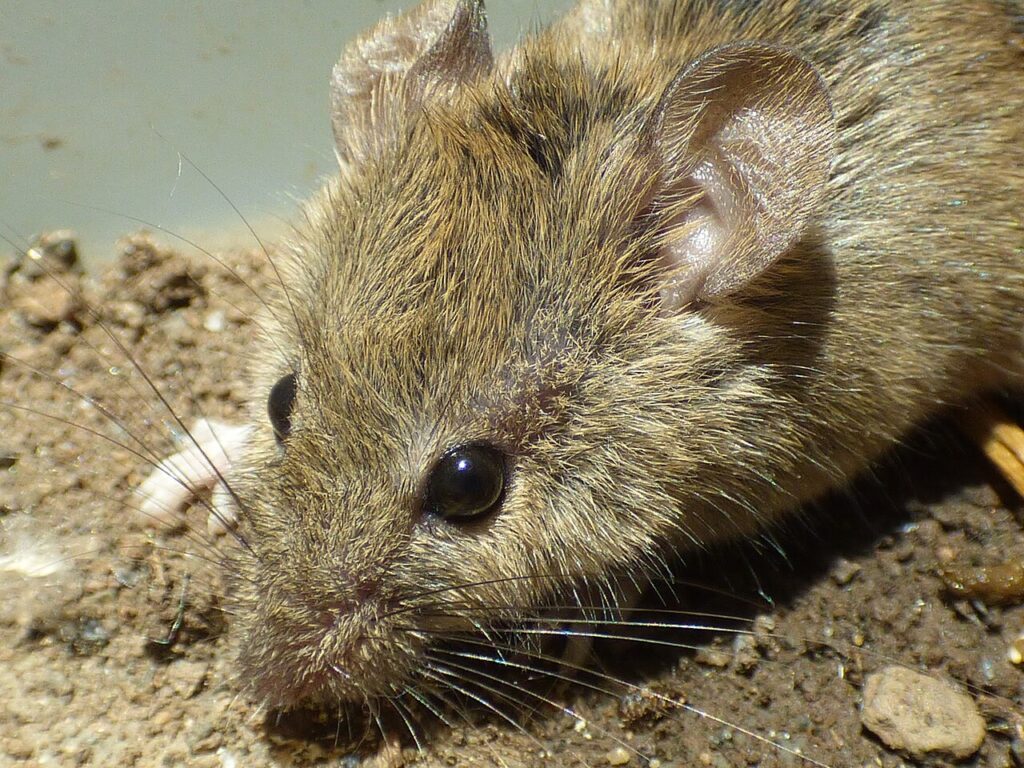
Table of Contents
Signs of Mice in Your House
- Droppings: black, rice-sized pellets about 1/8 to 1/4 inch long, pointed at one or both ends, scattered rather than piled. One mouse leaves about 50 to 75 a day.
- Gnaw marks: tiny tooth marks about 1/32 inch wide on food boxes, bags and wood, and clean holes about 1 1/2 inches wide in cardboard. Mice also chew electrical wiring.
- Nests: balls of finely shredded paper, fabric or insulation, often near warmth such as water heaters, ovens, refrigerators and inside walls.
- Sounds: scratching, scurrying and squeaking in ceilings and walls, mostly after dusk and before dawn.
- Smell: a stale, musky odor where mice have been active for a while.
- Tracks: footprints and tail marks in dust. Sprinkle flour or unscented talc along a wall overnight to check.
House Mouse vs Rat vs Deer Mouse
| House mouse | Rat (Norway) | Deer mouse | |
|---|---|---|---|
| Weight | About 1/2 to 1 ounce | About 1 pound | About 1/2 to 1 ounce |
| Length | 5 to 7 1/2 inches including a 3 to 4 inch tail | Much larger, with a thick body | Similar to house mouse |
| Look | Light brown to gray, large ears, small eyes, almost hairless tail | Large head and feet, blunt nose | Brown back with a sharply white belly; tail dark on top, white below |
| Droppings | 1/8 to 1/4 inch, pointed | 1/2 to 1 inch, blunt at one end | Similar to house mouse |
| Where found | Inside homes and buildings | Homes, sewers, yards | Mostly near fields and woods; enters cabins, sheds and garages |
| Disease concern | Salmonella, LCMV, allergens | Several diseases | Main carrier of hantavirus in the U.S. |
Why Mice Come Inside in Fall
House mice move indoors when temperatures drop in fall, and most people notice them in winter. They need food, water and warmth, and a kitchen or pantry supplies all three. Mice fit through any opening about 1/4 inch wide, about the width of a pencil, and can jump about 12 inches up onto a ledge.
How fast mice multiply
A female can have 5 to 10 litters a year, with about 5 or 6 pups each. Pups are born about three weeks after mating and can breed themselves at 5 to 10 weeks old. Mice live about 9 to 12 months. Two mice in fall can become a large problem by spring.
Mice stay close to home, usually within about 10 to 30 feet of their nest, and make many small trips for food each night. Droppings and gnaw marks tell you where to set traps.
Are Mice Dangerous?
House mice contaminate food and surfaces with droppings and urine. They can carry salmonella, leptospirosis and lymphocytic choriomeningitis virus (LCMV), and their urine is a major indoor allergen linked to asthma in children. Their gnawing on wires can start fires.
Hantavirus is carried mainly by deer mice, which live near fields and woods and get into cabins, sheds and garages. People catch it by breathing in dust from dried droppings, urine or nesting material. That is why you should never sweep or vacuum rodent droppings.
How to Clean Up Mouse Droppings Safely
- Open doors and windows and leave the room for 30 minutes before you start.
- Put on rubber, latex or nitrile gloves.
- Spray droppings, urine and nesting material with a fresh bleach solution (1.5 cups of bleach per gallon of water) or an EPA-registered disinfectant until soaked.
- Wait 5 minutes, or as long as the disinfectant label says.
- Wipe up with paper towels and seal everything in a plastic bag, then a second bag.
- Mop or wipe the area with disinfectant, then wash your gloved hands, remove the gloves and wash your hands again.
Don’t sweep or vacuum droppings or nests. It throws virus-laden dust into the air.
How to Get Rid of Mice
1. Seal entry points
Sealing is what keeps new mice out. Check around pipes, vents, dryer vents, utility lines, the foundation, garage doors and gaps under exterior doors, which should have no more than 1/4 inch of clearance.
- Pack small holes with steel wool and hold it in place with caulk or spray foam.
- Cover larger gaps with hardware cloth, sheet metal or cement.
- Foam, plastic, rubber and wood alone don’t stop mice; they chew through them.
2. Set snap traps
- Bait with a small dab of chunky peanut butter.
- Set traps along walls where you see droppings, with the trap at a right angle to the wall and the trigger end against it. Pairs of traps set end to end work well.
- Place them no more than about 6 to 10 feet apart. A new infestation in an average house may need a couple dozen traps.
- Check traps every day, wear gloves to empty them, and disinfect as above.
3. Skip these
- Glue traps: the CDC advises against them because trapped mice urinate in panic, raising disease risk; adult mice also learn to avoid them.
- Ultrasonic repellers: the sound doesn’t pass through walls or furniture, and mice get used to it within days.
- Relying on a cat: cats rarely control a mouse population and can make mice harder to spot.
4. Use bait stations carefully
If trapping isn’t enough, rodenticide baits for homeowners must come in tamper-resistant bait stations under EPA rules, to protect children, pets and wildlife. Loose pellets aren’t sold to consumers. Poisoned mice often die inside walls and cause a strong smell, so trapping is usually the better choice indoors.
5. Call a professional
Call a pest control company if trapping and sealing haven’t solved the problem after a few weeks, if you find signs of rats, or if mice are nesting in walls, attics or crawl spaces you can’t reach.
How to Keep Mice Out
- Store dry food, pet food and birdseed in glass or metal containers with tight lids.
- Clean up crumbs and don’t leave pet food out overnight.
- Fix leaky pipes and drips.
- Keep firewood, woodpiles and dense plants away from the foundation.
- Recheck seals each fall before cold weather.
Mouse control supplies
- Snap traps for kitchens, garages and basements
- Coarse steel wool and 1/4-inch hardware cloth for sealing gaps
- Door sweeps for gaps under exterior doors
- Airtight food containers for pantry and pet food
As an Amazon Associate, Pestbugs earns from qualifying purchases.
FAQs
Small black droppings about 1/8 to 1/4 inch long along walls, in cabinets and under sinks are usually the first sign. Others are gnawed food packages, shredded paper or insulation nests, scratching in walls or ceilings at night, and a musky smell.
About 1/4 inch, roughly the width of a pencil. Any gap you can push a pencil through needs sealing.
They can be. House mice can carry salmonella, leptospirosis and lymphocytic choriomeningitis virus, and their urine is a major allergen. Deer mice, mostly found near fields and woods, carry hantavirus. Never sweep or vacuum droppings; wet them with disinfectant first.
Air out the room for 30 minutes, wear rubber or plastic gloves, spray the droppings with a bleach solution of 1.5 cups bleach per gallon of water or an EPA-registered disinfectant, wait 5 minutes, then wipe up with paper towels and bag them.
Seal entry points, then set snap traps baited with a small dab of peanut butter along walls where you see droppings, no more than about 10 feet apart. Check traps daily. Glue traps, ultrasonic devices and cats work poorly.
Not reliably. The sound doesn’t pass through walls or furniture, and mice get used to it within days. Extension services don’t recommend them.
Sources
- CDC: How to Clean Up After Rodents
- CDC: How to Trap Up to Remove Rodents
- CDC: How to Seal Up to Prevent Rodents
- UC IPM Pest Notes: House Mouse
- University of Nebraska Extension: Controlling House Mice (G1105)
- Internet Center for Wildlife Damage Management: House Mice
- University of Kentucky: Control of Mice (ENTFACT-617)
- U.S. EPA: Options for Dealing With Rodent Infestations
Facts in this guide are checked against the sources above and reviewed when they change. See how we research in our editorial policy.