
Carpenter bees are large black-and-yellow bees with a shiny, mostly bare black abdomen that drill perfectly round holes about 1/2 inch across into bare wood to raise their young. To get rid of them, puff an insecticide dust into each hole in spring, leave the hole open for a day or two, then plug it with a glued wooden dowel or wood putty and paint the wood. Males hover and dive at people but have no stinger. Females can sting but rarely do.
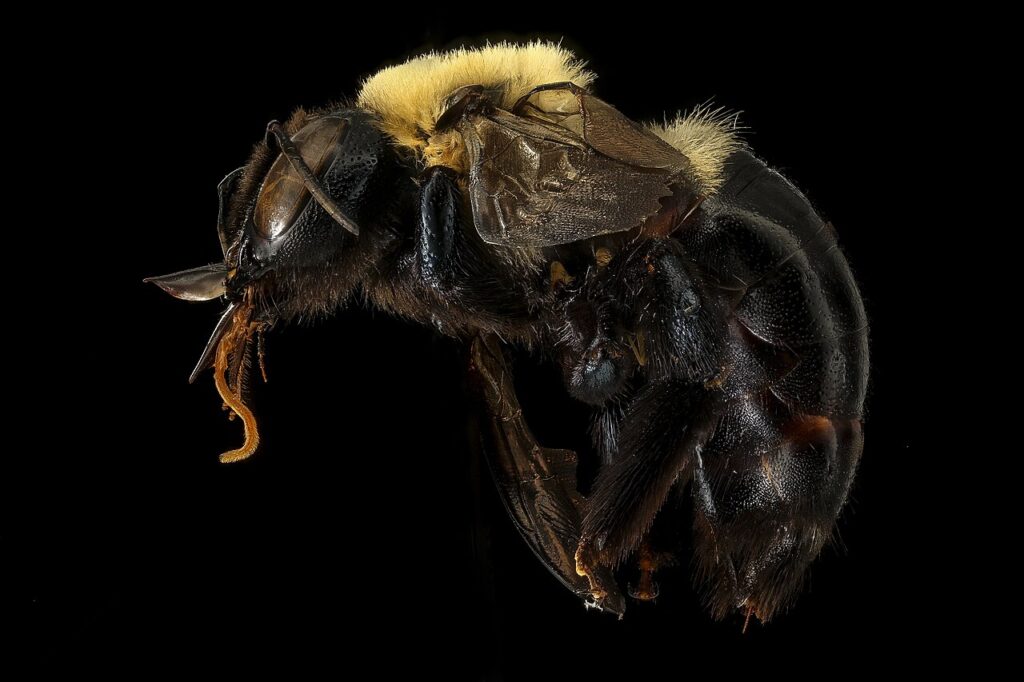
Table of Contents
What Carpenter Bees Look Like
- Size: 1/2 to 1 inch long, about the size of a bumble bee.
- Abdomen: shiny black and mostly bare. A bumble bee’s abdomen is fuzzy with yellow and black bands.
- Thorax: covered in yellow hair.
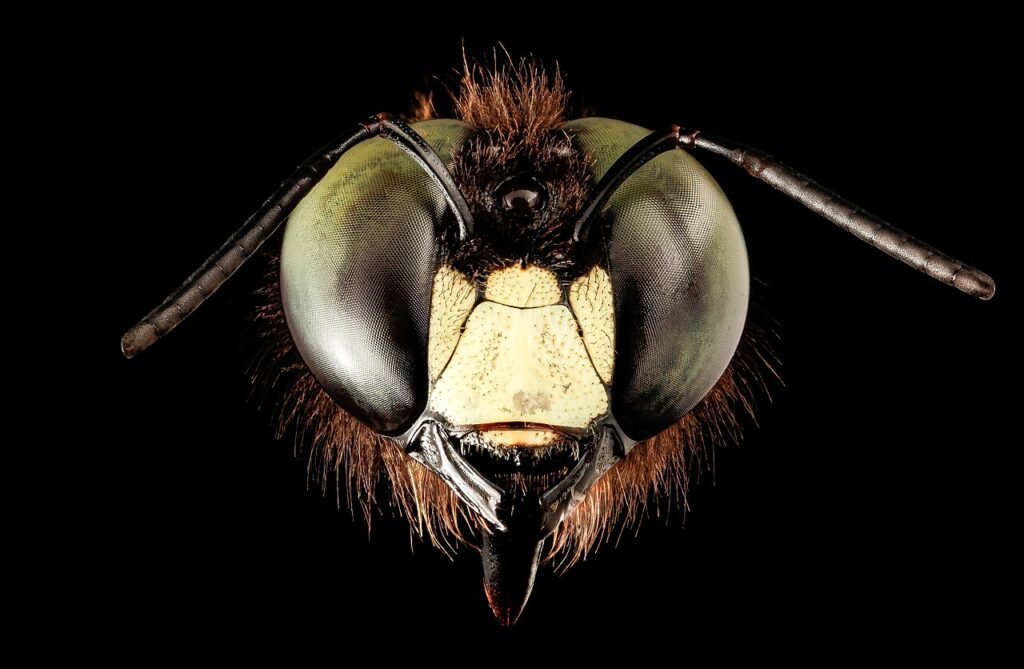
- Face: males have a white or yellow patch on the face; females have an all-black face.
- Behavior: hover in front of eaves, decks and porch rails in spring, and chase or dive at people who come close.
Carpenter bee vs bumble bee
| Feature | Carpenter bee | Bumble bee |
|---|---|---|
| Abdomen | Shiny black, mostly hairless | Fuzzy, with yellow and black bands |
| Nest | Tunnels drilled into wood | Usually in the ground, old rodent burrows or thick grass |
| Sting | Males can’t sting; females rarely do | Females sting to defend the nest |
| Damage | Holes, sawdust and stains on wood | No damage to buildings |
Signs of Carpenter Bees
- Round, clean-edged holes about 1/2 inch across, roughly the width of a little finger, on the underside or edge of boards.
- Small piles of coarse sawdust on the ground or deck below the holes.
- Yellow-brown streaks of droppings staining the wood under the entrance.
- Bees hovering around the same spot on your eaves, fascia, fence or deck every spring.
- Ragged, torn wood along a line of holes in fall or winter, where woodpeckers have dug for larvae.
How Carpenter Bee Tunnels Work
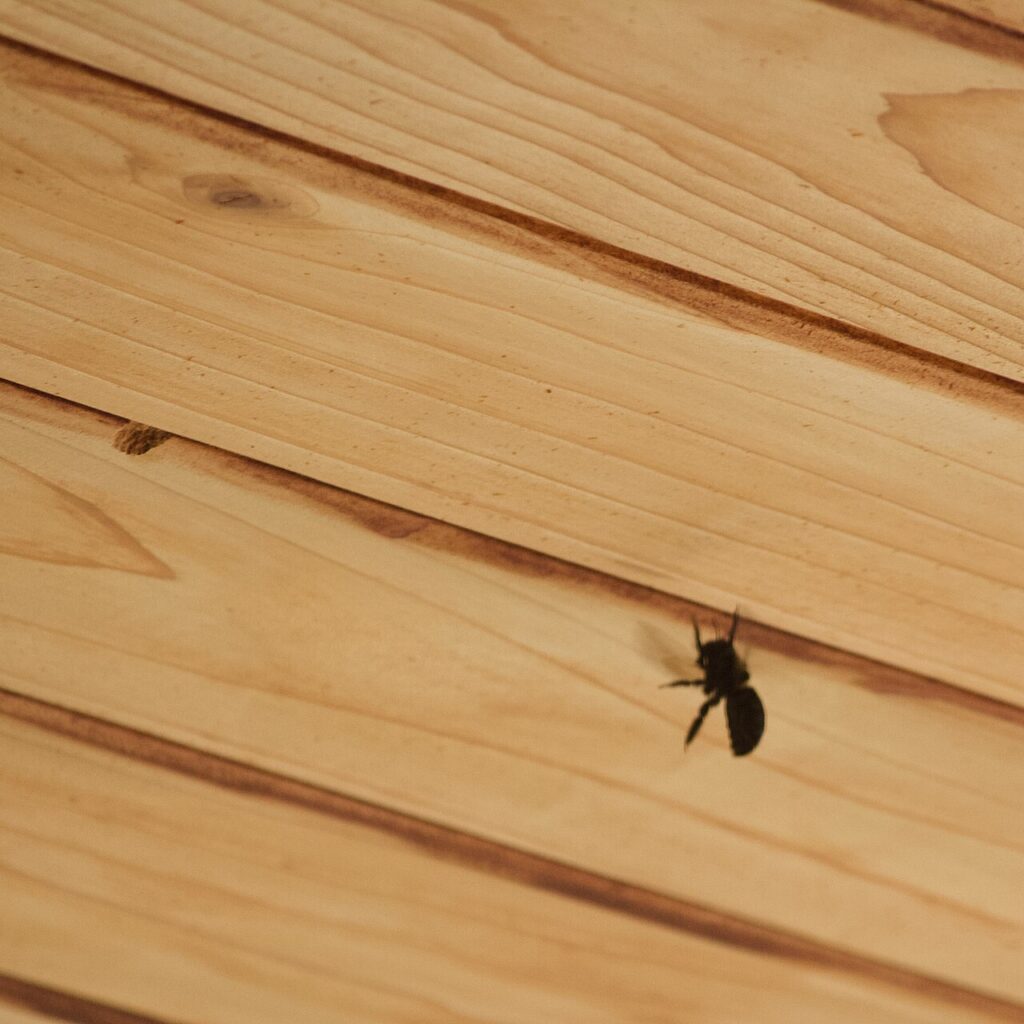
The female chews an entrance straight into the wood, across the grain, then turns 90 degrees and tunnels along the grain. Inside, she builds a row of about five to eight cells, each stocked with a ball of pollen and nectar and a single egg. In its first year, a new tunnel runs about 6 to 7 inches. Bees reuse the same entrance in later years and branch off it, so an old nest can extend several feet into a beam.
Carpenter bee life cycle by season
- Spring: adults that spent the winter in old tunnels come out, mate, and females drill new tunnels or clean out old ones. This is when you see hovering males.
- Early summer: eggs hatch and larvae feed on their pollen stores inside the wood.
- Late summer: a new generation of adults chews out and feeds on flowers.
- Fall and winter: adults crawl back into tunnels to spend the winter.
What Wood Carpenter Bees Attack
Carpenter bees prefer bare, weathered or stained softwood, often in boards more than 2 inches thick. Cedar, cypress, and redwood get attacked despite their reputation for resisting insects. Painted and pressure-treated wood are less popular but not immune.
Common targets include eaves and fascia boards, the underside of deck rails, porch ceilings, fences, sheds, wooden outdoor furniture, window trim and doors.
Do Carpenter Bees Cause Damage?
One season of nesting does little harm. The damage builds when bees return to the same wood year after year and extend the tunnels. Over several years, this can weaken thin boards and trim, let water into the wood and start rot, and stain siding below the holes. Woodpeckers that hunt the larvae often do more damage than the bees by tearing the tunnels open.
Carpenter bees chew wood but don’t eat it. Wood that crumbles, sounds hollow, or has mud tubes running across it points to termites; see signs of termites.
How to Get Rid of Carpenter Bees
1. Dust the holes, then plug them
This is the method extension services recommend, and it works best in spring, when you first see bees at the holes.
- Work at dusk or after dark, when the bees are inside. Use a flashlight with a red filter so you don’t stir them up.
- Use a bulb duster to puff an insecticide dust labeled for carpenter bees into each hole. Extension guides list products containing carbaryl, deltamethrin, bifenthrin or cyfluthrin. Follow the label.
- Leave each hole open for 24 to 36 hours so bees crawling in and out pick up the dust.
- Plug the hole with a wooden dowel coated in carpenter’s glue, wood putty or exterior caulk.
- Paint or varnish the patched area and the surrounding bare wood.
Check again in midsummer and early fall, when the new generation comes out, and treat any reopened holes.
2. Spray bare wood surfaces
An insecticide spray on bare wood near old nests deters new drilling, but it only lasts about three to four weeks outdoors. Use it as a short-term fix during spring nesting while you plan to paint.
3. Hang carpenter bee traps
Traps are wooden boxes with angled 1/2-inch holes that lead into a clear jar. Bees looking for a nest crawl in and can’t find the way out. Hang them in early spring near the corner of the eaves or deck that was attacked before. Traps catch adults but don’t reach larvae already in the wood, so treat and plug existing holes as well.
4. Paint, cover or replace the wood
Paint is the most reliable long-term fix, since carpenter bees avoid solid painted surfaces far more than bare or stained wood. On boards that keep getting hit, cover the wood with aluminum flashing or replace it with composite, vinyl or fiber cement trim.
How to Prevent Carpenter Bees
- Paint all exposed wood on eaves, fascia, rails and trim, and repaint before the old coat wears through.
- Fill every old hole, even empty ones, so next year’s bees can’t reuse it.
- Keep garage and shed doors closed in spring, when females look for nest sites.
- Inspect eaves, porch ceilings and deck rails each spring for fresh sawdust.
- Use composite or vinyl for new decks, fences and trim in areas with heavy carpenter bee activity.
Do Carpenter Bees Sting?
Male carpenter bees have no stinger. Their hovering and dive-bombing are all bluff, meant to chase off rivals near the nest. Females can sting but rarely do unless you grab one or trap it against your skin. A black-and-yellow insect that stings repeatedly around a nest is more likely a yellowjacket; see how to get rid of wasps.
If you are stung, wash the spot with soap and water, hold ice on it for 10 minutes, and use an antihistamine or hydrocortisone cream for itching. Call emergency services if you have trouble breathing, swelling of the face or throat, or dizziness.
Should You Kill Carpenter Bees?
Carpenter bees are native pollinators that visit fruit trees, garden flowers, and wildflowers. If they nest in a dead tree, an old fence post or a woodpile away from the house, leave them alone. Treat only when they drill into your home, deck, or furniture.
Carpenter Bee Removal Cost
Professional carpenter bee treatment costs about $75 to $500, according to Angi’s 2026 cost data. Most jobs involve dusting the holes, returning to plug them, and treating nearby wood. Repairs cost extra: replacing damaged soffit runs about $6 to $20 per linear foot.
Doing it yourself costs the price of a duster, a can of dust, dowels or putty, and paint. It is a reasonable job for holes you can reach safely from the ground or a short ladder.
Carpenter bee supplies
- Bulb duster for puffing dust into holes
- Carpenter bee insecticide dust (check the label for carpenter bees)
- Carpenter bee traps to hang near eaves and decks
- 1/2-inch wooden dowels and exterior wood filler to plug holes
As an Amazon Associate, Pestbugs earns from qualifying purchases.
FAQs
Bare, weathered or stained wood. Females look for exposed softwood on eaves, fascia, decks, fences and porch ceilings to drill nest tunnels, and they reuse old holes year after year.
Males cannot sting; they only hover and dive at people near the nest. Females have a stinger but rarely use it unless they are handled or trapped against skin.
In spring, when adults that spent the winter in old tunnels come out to mate and drill new nests. A new generation emerges in late summer, feeds on flowers, then returns to the wood to spend the winter.
Not in one season. A single tunnel does little harm, but bees reuse and extend the same tunnels every year, and over several years that weakens thin boards, lets water in and draws woodpeckers that tear the wood open.
Traps catch adult bees looking for nest sites and help most when hung in early spring near wood that was attacked before. They do not kill larvae already in tunnels, so pair them with treating and plugging the holes.
No. Dust the hole first and leave it open for a day or two so bees crawling in and out pick up the dust. Then plug it with a glued wooden dowel or wood putty and paint over the patch.
Sources
- Penn State Extension: Carpenter Bees
- University of Kentucky Entomology: Carpenter Bees (ENTFACT-611)
- NC State Extension: Carpenter Bees
- Angi: How Much Does Bee Removal Cost? (2026)
Facts in this guide are checked against the sources above and reviewed when they change. See how we research in our editorial policy.