
To get rid of groundhogs (woodchucks), protect gardens with a sturdy fence buried 12 inches deep with the bottom bent outward, and trap persistent groundhogs with a live trap at least 10 x 10 x 24 inches baited with fresh fruit or vegetables near the main burrow. Groundhogs eat garden crops, especially tomatoes, beans and squash, and their burrows can undermine sheds, decks and foundations. Rules on trapping and moving groundhogs vary by state, and some states don’t allow relocation because groundhogs can carry rabies, so check with your state wildlife agency first.

Table of Contents
How to Tell You Have Groundhogs
- Large burrow holes: the main entrance is 10 to 12 inches across with a big mound of fresh dirt beside it. There are usually one to three hidden back entrances with no mound.
- Burrows under sheds, decks and porches, or along fences and foundations.
- Garden damage: plants eaten down to stubs, chewed tomatoes, beans, peas and squash, often over a few nights.
- Daytime sightings, mostly early morning and evening, often sitting up on the dirt mound.
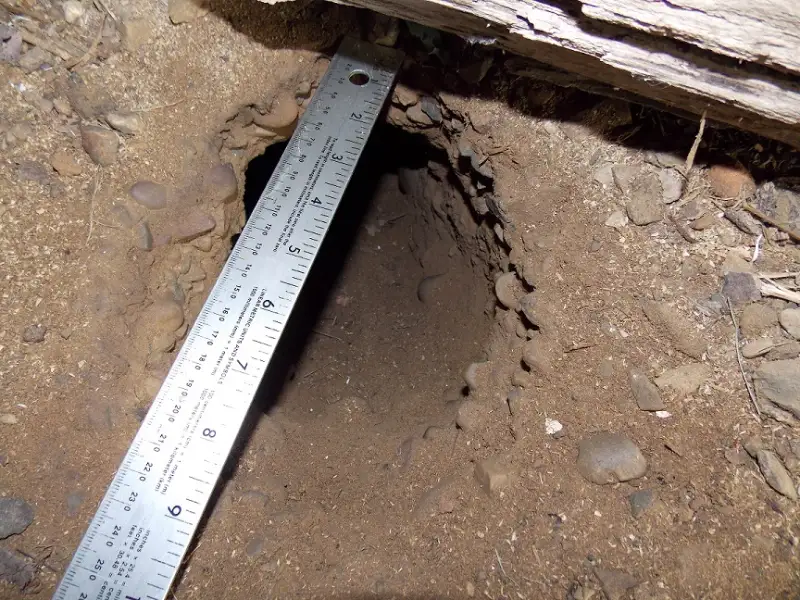
Smaller, clean holes about 2 inches across with no dirt pile are chipmunks.
Groundhog Facts That Matter for Control
- Adults weigh about 5 to 10 pounds, with a 16- to 20-inch body and a 4- to 7-inch tail.
- Burrows can go 5 feet deep, and the tunnels are used for several years.
- They usually feed within 50 to 150 feet of the den.
- They hibernate from about late October or November to late February or March, then breed in March and April. Litters of two to six young, usually four, are born in spring.
How to Get Rid of Groundhogs
1. Fence the garden
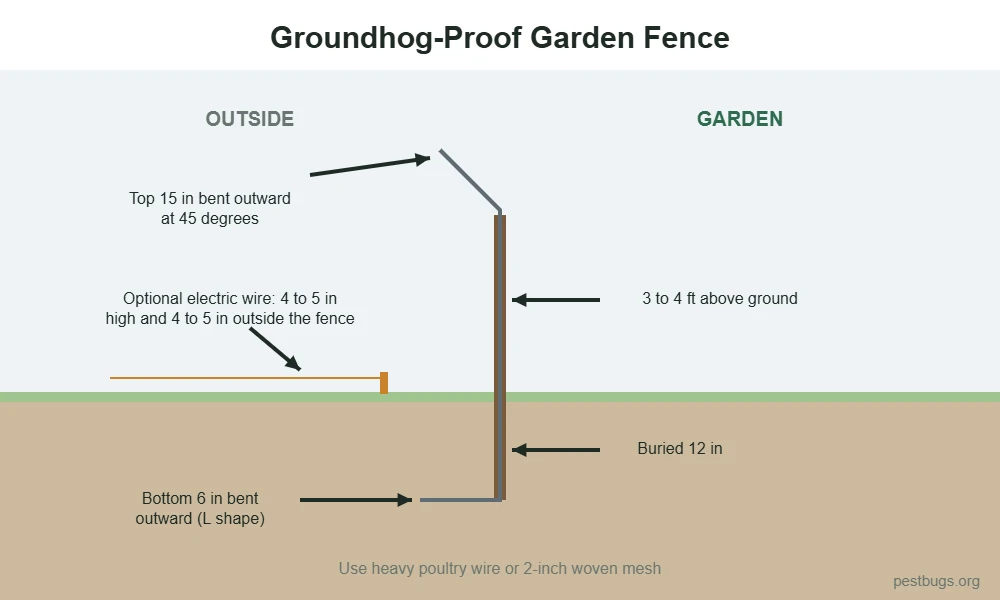
Use a sturdy fence of heavy poultry wire or 2-inch woven mesh, 3 to 4 feet above the ground. Bury the bottom 12 inches, with the lowest 6 inches bent outward in an L shape so groundhogs can’t dig under. Bend the top 15 inches outward at a 45-degree angle to stop climbing. An electric wire 4 to 5 inches off the ground and 4 to 5 inches outside the fence adds protection.
2. Trap persistent groundhogs
- Use a live trap at least 10 x 10 x 24 inches.
- Bait with apple slices, carrots with tops, cantaloupe, lettuce, cabbage or fresh peas, and replace bait daily.
- Pre-bait for several days with the trap unset so the groundhog gets used to feeding there.
- Set the trap near the main burrow entrance, cover it with dark canvas or grass, and use logs or boards to guide the groundhog in.
- Check traps at least twice a day, morning and evening.
Before you trap, check your state’s rules. Some states, such as Pennsylvania, don’t allow trapped groundhogs to be moved to other properties because they are a potential rabies carrier. In Maryland, no permit is needed to trap, but you need the landowner’s permission to release a groundhog elsewhere. Avoid relocating in spring, when young are in the den, or in fall just before hibernation.
3. Close burrows under buildings
Once the groundhog is gone, fill or block burrows under sheds and decks, and close the space with buried wire mesh so another animal doesn’t move in.
Gas Cartridges and Repellents
Gas cartridges are a general-use pesticide for groundhog burrows: they are lit, placed in the burrow, and all entrances are sealed. They work best in spring before young leave the burrow, but they must never be used in burrows under sheds, decks or buildings because of the fire risk. In Pennsylvania, no repellents or toxic baits are registered for groundhogs.
Groundhog control supplies
- Large live trap (at least 10 x 10 x 24 inches)
- 2-inch woven wire fencing
- Heavy poultry wire
- Garden electric fence kit
As an Amazon Associate, Pestbugs earns from qualifying purchases. Check your state’s rules on trapping and relocation.
FAQ
Protect gardens with a fence buried 12 inches deep with the bottom bent outward, and trap persistent groundhogs with a large live trap baited with fresh fruit or vegetables, following your state’s wildlife rules.
Apple slices, carrots with tops, cantaloupe, lettuce, cabbage or fresh peas. Replace the bait daily.
It depends on your state. Some states, such as Pennsylvania, prohibit moving trapped groundhogs to other properties because they can carry rabies. Check with your state wildlife agency.
Burrows can be up to 5 feet deep, with a main entrance about 10 to 12 inches across and one to three hidden back entrances.
From about late October or November until late February or March, depending on how far north you live.
Yes. Groundhog and woodchuck are two names for the same animal, Marmota monax, a large member of the squirrel family.