
To get rid of wasps, find the nest and treat it after dark or very early in the morning, when the wasps are inside and slow. Use a wasp and hornet aerosol on nests hanging in the open, and an insecticide dust in the entrance of nests in the ground or in a wall. Cover your whole body and protect your eyes. Call a professional for nests inside walls, high up, or close to a door, or if anyone in the house is allergic to stings. You can knock down small paper wasp nests in spring, and you can leave nests out of the way, since every colony dies in the fall.
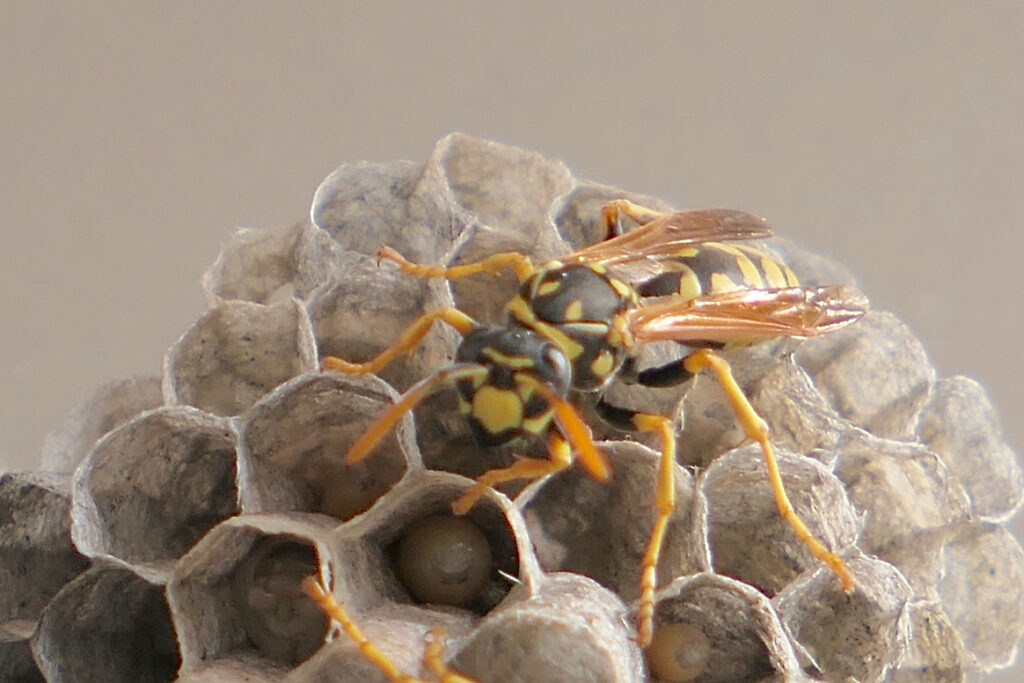
Table of Contents
Types of Wasps Around the House
Knowing which wasp you have tells you how risky the nest is and how to treat it.
| Wasp | What it looks like | Nest | How aggressive |
|---|---|---|---|
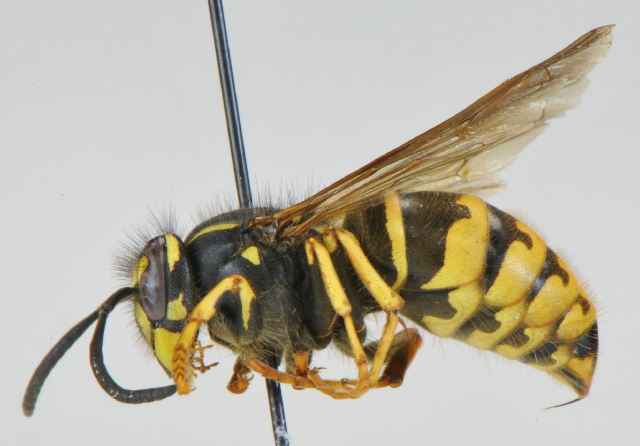
| Yellowjacket | About 1/2 inch, stout, bright yellow and black bands | Paper nest wrapped in a gray envelope, in the ground, wall voids, attics or sheds; one entrance hole | Most aggressive; defends the nest and scavenges food in late summer |
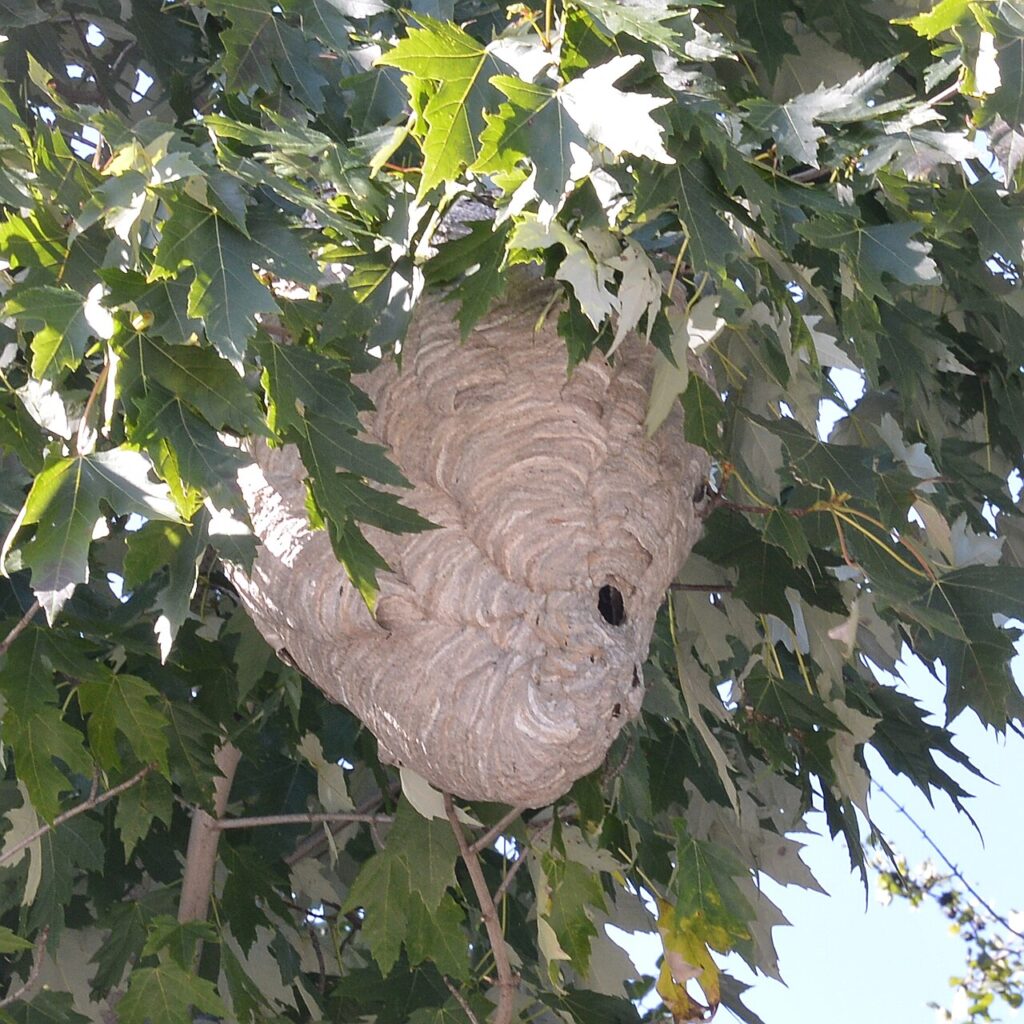
| Bald-faced hornet | About 7/8 inch, black with white markings on the face and tail | Gray, football-shaped paper nest in trees, shrubs or under eaves | Defends the nest fiercely |
| Paper wasp | 1/2 to 1 inch, slender, long legs that dangle in flight, brown with yellow or red marks | Single open comb shaped like an umbrella, under eaves, rails and grills | Mild unless the nest is touched |
| Mud dauber | Black and yellow or metallic blue, with a thread-thin waist | Tubes or lumps of mud on walls, ceilings and eaves | Rarely stings and doesn’t defend its nest |
| Cicada killer | About 2 inches, black with pale yellow markings | Burrows in sunny, bare, well-drained soil | Not aggressive; males can’t sting |
Wasps vs Bees: How to Tell Them Apart
- Wasps are smooth and shiny with a narrow waist, and fold their wings lengthwise when they land. They hunt insects and, later in summer, go after sugary food.
- Bees are fuzzy, hold their wings flat over the body, and feed only on nectar and pollen.
A cloud of stinging insects pouring out of a hole in the lawn in late summer is usually a yellowjacket nest. Solitary ground bees nest in bare soil too, but they rarely sting. Large black bees drilling into wood are carpenter bees, and tiny bees landing on sweaty skin are sweat bees.
Why Wasps Get Worse in Late Summer
Each nest starts in spring with a single queen. She builds a small comb and raises the first workers, who take over building and hunting. A yellowjacket colony grows to 1,500 to 15,000 wasps by late summer, while a paper wasp nest stays at 15 to 200.
Through spring and early summer, workers hunt insects to feed the larvae. By late summer, the colony is at its largest, insect prey is scarcer, and the wasps need large amounts of sugar. That is when yellowjackets crowd picnics, trash cans and soda cans, and when they defend the nest hardest.
The colony dies when temperatures drop into the mid-to-upper 20s °F in fall. Only new, mated queens survive, overwintering in sheltered spots, and they never reuse the old nest.
How to Find a Wasp Nest
- Watch wasps in the morning or late afternoon sun. Workers fly in a straight line to and from the nest.
- Check under eaves, deck rails, porch ceilings, shutters, grills and play equipment for paper wasp combs.
- Look for wasps going in and out of a single hole in the lawn, a gap in siding, a vent or a crack near the roofline.
- Look up into trees and dense shrubs for gray, football-shaped hornet nests.
- Mark the spot in daylight so you can find it again after dark.
How to Get Rid of a Wasp Nest
Before you start
- Wear long sleeves, long pants, gloves and eye protection; a bee veil protects your face and neck.
- Treat after dark or at first light, and use a flashlight with a red filter.
- Keep children and pets indoors and plan a clear route to walk away.
- Don’t work from a ladder. If you can only reach a nest from a ladder, it’s a job for a professional.
Exposed nests: paper wasps and hornets
- Stand at the distance the label recommends and soak the nest opening with a wasp and hornet aerosol. Extension guides list products with tetramethrin or prallethrin.
- Walk away and leave the nest overnight.
- Check for activity the next day. Treat again if wasps are still flying in and out.
- Once the nest is quiet, knock it down with a long pole and seal it in a bag for the trash.
For a small paper wasp nest of a dozen or so wasps, a strong spray of soapy water works too.
Ground nests: yellowjackets
At night, puff an insecticide dust, such as one containing permethrin, into and around the entrance hole. Wasps carry the dust into the nest. Don’t block the hole or stand on it, and don’t dig. The nest can sit well away from the visible entrance and hold thousands of wasps. Never pour gasoline into a nest or set it on fire.
Nests inside walls and attics
Don’t seal the entrance of a nest inside a wall until every wasp is dead. Trapped yellowjackets chew through drywall and come out inside the house. Wall and attic nests are worth hiring a professional for.
Treated wasps that survive stay agitated and may sting the next day, so keep people away from the area for at least a day after treating.
Early spring knockdown
Knock down new paper wasp combs under eaves and rails as soon as you see them in spring. A queen with only a few cells will usually move elsewhere.
Wasp Traps and Lures
Lure traps baited with heptyl butyrate catch mainly western yellowjackets, so they help most in the West. Hang them around the edges of the yard, away from where people sit, and space them about 200 feet apart on large properties. A homemade trap with protein bait hung 1 to 2 inches above soapy water also catches yellowjackets.
Traps cut the number of foraging wasps but won’t wipe out a nest. Treat the nest itself if it is near people.
How to Keep Wasps Away
- Keep trash in cans with tight lids and empty them often.
- Feed pets indoors, and cover food and drinks outside; pour soda into a clear cup.
- Clean grills and pick up fallen fruit.
- Knock down new nests in spring before they grow.
- Seal gaps in siding, soffits and vents in winter, after the colonies have died.
Wasp Stings: What to Do
Wasps don’t leave their stinger behind, so one wasp can sting several times. Walk away from the area quickly, then:
- Wash the sting with soap and water.
- Hold a cold pack on it for 10 minutes.
- Take an antihistamine or use hydrocortisone cream for itching and swelling, and a pain reliever if needed.
Most stings cause sharp pain, redness and swelling that ease within hours. Swelling that keeps growing over a day or two is a moderate reaction and can last up to a week.
Call emergency services for trouble breathing, a swollen tongue or throat, hives across the body, chest tightness or dizziness. These signs of anaphylaxis usually start within 15 minutes to an hour. Use an epinephrine auto-injector right away if one has been prescribed. More than a dozen stings can also cause nausea, vomiting and fever, and children, older adults and people with heart or breathing problems need medical care after multiple stings.
Wasp Nest Removal Cost
Professional wasp nest removal costs about $525 on average, with most homeowners paying $300 to $700, according to Angi’s 2026 data. A small nest can cost as little as $100, and large or hard-to-reach nests can reach $1,300.
| Wasp type | Typical cost |
|---|---|
| Paper wasps | $100 to $200 |
| Hornets | $300 to $400 |
| Mud daubers | $300 to $400 |
| Yellowjackets | $500 to $750 |
| Bald-faced hornets | $625 to $750 |
Nests inside walls cost $250 to $800 to remove, and opening and repairing a wall or ceiling to reach a nest adds $300 to $1,000. Call a professional for nests in walls or attics, ground nests near paths and play areas, nests above ladder height, very large nests, or when anyone in the household has a sting allergy.
Wasp control supplies
- Wasp and hornet spray for exposed nests
- Yellowjacket traps for yards and patios
- Bulb duster and insecticide dust for ground nests
- Bee veil and gloves for protection
As an Amazon Associate, Pestbugs earns from qualifying purchases.
FAQs
Late evening after dark, or very early morning. Wasps are back in the nest and slower in the cool, so more of them contact the spray and fewer fly out at you.
No. Yellowjacket, hornet and paper wasp nests are used for one season only. The colony dies with the first hard freezes in fall, and new queens build fresh nests the next spring.
Yes, by late fall. Only mated queens survive the winter, hidden in sheltered spots. A nest in an out-of-the-way place can be left until it dies off.
Food and shelter. Wasps hunt insects and, in late summer, scavenge sweet drinks, ripe fruit, garbage, pet food and grill scraps. Eaves, deck rails, sheds and holes in the lawn give them nest sites.
Yes. Wasps don’t leave their stinger behind, so one wasp can sting several times, and a disturbed nest can send out many wasps at once.
It works on small paper wasp nests. Soap breaks down the water’s surface tension so it coats the wasps and blocks their breathing pores. It is not a safe choice for large yellowjacket or hornet nests.
Sources
- UC IPM: Yellowjackets and Other Social Wasps (Pest Notes)
- University of Minnesota Extension: Wasps and Bees
- University of Maryland Extension: Cicada Killer Wasps
- Mayo Clinic: Bee Stings
- Angi: Wasp Nest Removal Cost (2026)
Facts in this guide are checked against the sources above and reviewed when they change. See how we research in our editorial policy.