
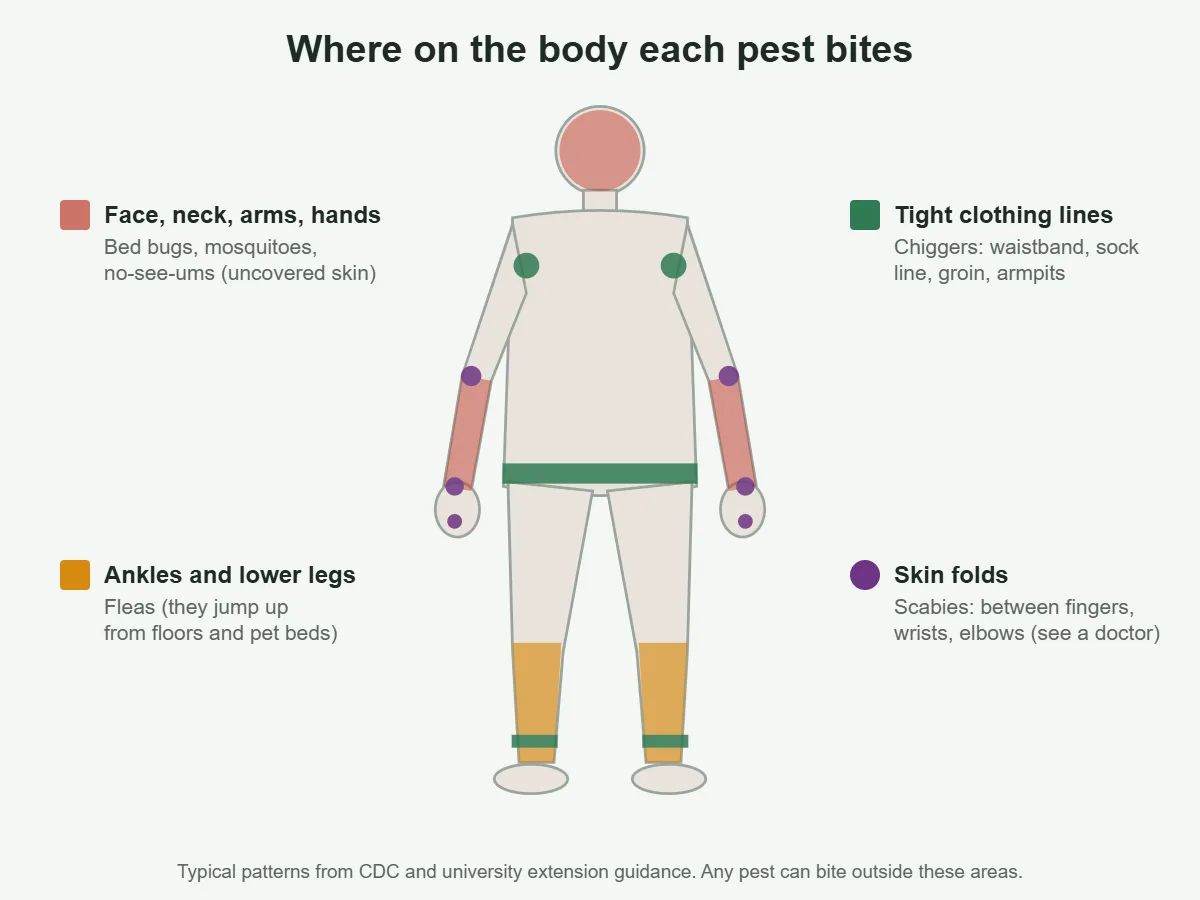
Bed bugs, fleas, mosquitoes and no-see-ums cause most bites people find in the morning. The fastest way to tell them apart is when the bites appear and where they land on your body. Bed bugs bite skin that touched the bed, fleas go for ankles, mosquitoes and no-see-ums hit exposed skin near open windows, and chiggers settle along tight clothing. If you itch with no bug in sight, the cause may be scabies or a rash from carpet beetle larvae, neither of which a pest spray fixes.
Answer five questions below to narrow it down, then use the chart and checks further down the page to confirm it.
What's Biting Me? Bite Identifier
Answer 5 quick questions about when and where the bites appear. You'll get the most likely culprit, how to confirm it, and what to read next. Nothing is stored or sent anywhere.
Call 911 now for trouble breathing, swelling of the lips, tongue or throat, or dizziness after a bite. These are signs of a severe allergic reaction.
Bug bite identification chart
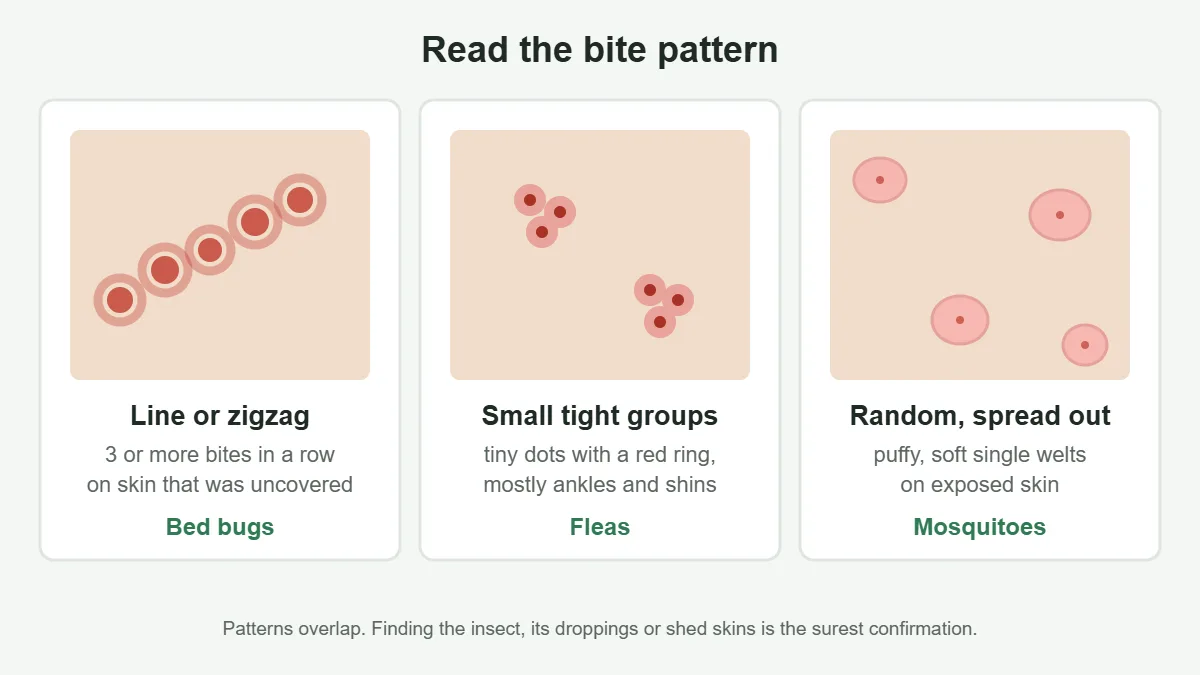
Match your bites against the row that fits best. Timing and body location separate the suspects better than how a single bump looks, because most bites are red, raised and itchy.
| Culprit | When bites appear | Where on the body | Pattern | Proof to look for |
|---|---|---|---|---|
| Bed bugs | Overnight; you notice them on waking | Skin that touched the bed: face, neck, arms, hands, back | Line, zigzag or tight cluster | Rust or black spots and blood smears on sheets, shed skins in mattress seams |
| Fleas | Any time at home, often after sitting on the floor or couch | Ankles, feet, lower legs | Small groups of tiny dots with a red ring | Pets scratching, black specks (flea dirt) in pet bedding |
| Mosquitoes | Evening and night, near open windows | Uncovered skin | Single puffy welts spread out at random | Buzzing at night, standing water outside |
| No-see-ums (biting midges) | Dawn and dusk | Uncovered skin, often face, neck and arms | Many small red welts at once | Tiny gnat-like flies near lights; damp ground nearby |
| Chiggers | Hours after time in grass, brush or the garden | Sock line, waistband, groin, behind knees, armpits | Groups along tight clothing | Recent outdoor time; nothing found indoors |
| Bird or rodent mites | Night, in the rooms nearest a nest | Anywhere | Scattered itchy bumps | Bird nest in eaves or vents, or mice or rats recently removed |
| Scabies (mites living in skin) | Constant itch, worst at night | Between fingers, wrists, elbows, waist | Pimple-like rash, sometimes thin wavy lines | Partner or family itching too; a doctor confirms it |
| Carpet beetle larvae (rash, no bite) | Any time | Under clothing | Scattered bumps with no bite mark | Fuzzy brown larvae, shed skins, holes in wool or rugs |
| Spider | One event | Anywhere | One bite | A spider seen at the time |
Bites you find when you wake up
New bites every morning point first to bed bugs. They feed at night and cannot bite through clothing or sheets, so the bites appear on skin that touched the bed: arms, legs, back, face and neck. Bites often form a row or zigzag because one bug feeds several times as it moves. Cleveland Clinic lists small blood stains and black or rust-colored spots on bedding as the signs to check for (Cleveland Clinic).
Bed bug reactions vary. Some people develop welts within hours, others after several days, and some never react at all (Orkin). One partner can have the bugs in the bed with no marks while the other wakes up covered, so check the mattress even if only one of you is itching.
Two other causes produce morning bites:
- Fleas. Fleas living in a pet’s bed or the bedroom carpet bite at night too, but they stay low: ankles, feet and calves. Most flea bites land below the knee. See bed bug vs flea, mosquito and spider bites for side-by-side photos.
- Bird and rodent mites. These mites live in nests. When birds leave a nest in the eaves, or after mice or rats are trapped or poisoned, the mites wander indoors and bite people. University of Kentucky entomologists describe them as about the size of the period at the end of a sentence, small but visible without a magnifier (UKY ENTFACT-637).
Bites you never see happen
When the bites show up after an evening at home and no bug is ever seen, the usual suspects are mosquitoes and no-see-ums.
Mosquito bites are soft, puffy welts, usually single and spread out on skin left uncovered (Cleveland Clinic). A mosquito in the bedroom gives itself away by buzzing near your ear with the lights off. Check window screens for tears and empty any standing water outside: plant saucers, gutters, pet bowls and buckets.
No-see-ums, also called biting midges, punkies or sand flies, are flies less than 1/16 inch long. They are most active at dawn and dusk, breed in damp soil and overwatered lawns, and pass straight through standard window screens (University of Arizona Extension). University of Arizona entomologists note that no-see-ums get through standard 16 x 16 or 18 x 16 mesh and recommend finer mesh where these midges are a problem (UA no-see-um guide). The bites can burn, and sensitive people may develop itchy sores that last for days. Midges are weak fliers, so a ceiling or box fan in the bedroom keeps them off you (Terminix). The midge and gnat bites guide covers treatment for the itch.
Bites after being outdoors
An intensely itchy band of bites around the sock line or waistband after yard work, hiking or a picnic points to chiggers. Chiggers are the larvae of a mite. They climb onto skin from grass and brush, then stop and feed where clothing presses tight. Texas A&M AgriLife lists the sock line, waist and groin as the most common sites, followed by the backs of the knees and the armpits (Texas A&M AgriLife).
Chiggers live outdoors in vegetation, not in beds or houses, so indoor pest treatments do nothing for them. Shower with soap after outdoor time and wash those clothes in hot water.
Ticks belong in this group too. A tick usually stays attached, so a single bite with the tick still in the skin is easy to identify. Remove it with fine-tipped tweezers and watch the area for a rash over the following weeks.
Itching with no bug found
Sometimes the house is clean, the traps stay empty and the itching continues. Four causes come up most often.
Scabies
Scabies is a microscopic mite that burrows into the top layer of skin. The CDC lists intense itching, especially at night, and a pimple-like rash as the main symptoms, most often between the fingers, in the folds of the wrist, elbow, knee or armpit, and around the waist, buttocks and shoulder blades (CDC). It spreads through prolonged skin-to-skin contact, so a partner or children often itch too. The first time someone gets scabies, symptoms can take 3 to 6 weeks to appear (CDC). Scabies needs a prescription treatment from a doctor, and everyone in close contact should be treated at the same time.
Carpet beetle larvae
Carpet beetle larvae do not bite. Their tiny barbed hairs cause an allergic rash that people mistake for bites, sometimes with irritation of the eyes and airways (Penn State Extension). A 2021 report in the CDC journal Emerging Infectious Diseases described households where the rash appeared under clothing and affected some family members but not others, and where it had been confused with bed bug or flea bites (Simon et al., EID). Look for fuzzy brown larvae and shed skins along carpet edges, under furniture and in closets with wool. The carpet beetle guide shows the larvae.
Dust mites
Dust mites do not bite. They can trigger an allergic, itchy rash in sensitive people, which gets blamed on bites. See dust mite “bites” and rashes.
Skin conditions
Dry skin, eczema, hives and reactions to a new detergent or soap can all feel like bites. If two weeks of searching turns up no insect, take photos of the bumps to a doctor or dermatologist.
Is it a spider bite?
Spiders get blamed for far more bites than they cause. In a study of 182 emergency room patients who reported a spider bite, doctors diagnosed 7 (3.8%) with an actual spider bite and 156 (85.7%) with a skin infection (Journal of Emergency Medicine). Spiders rarely bite sleeping people, and a single spider does not return night after night. A painful sore that keeps growing, drains pus or comes with a fever needs a doctor whatever caused it. For the two spiders that matter medically in the US, see brown recluse and black widow, and the bite comparison chart for spider vs bed bug photos.
How to catch what’s biting you
A captured specimen ends the guessing. These checks take a few minutes each and cover the common suspects.
- Inspect the bed with a flashlight. Strip the sheets and check mattress seams, box spring corners and headboard joints for live bugs, pale shed skins and black spots. See what bed bugs look like.
- Put interceptor cups under the bed legs for one to two weeks. They catch bed bugs climbing up to feed.
- Comb your pet over white paper. Black specks that turn reddish when dampened are flea dirt.
- Walk the carpet in white socks for a few minutes, then check them for jumping fleas.
- Set sticky traps along the walls of the rooms where bites happen. Texas A&M entomologists recommend this for collecting biting mites, which tend to bite only in rooms near the nest (Texas A&M AgriLife).
- Photograph the bites each morning for a week. A dated photo series shows the pattern and helps a doctor if you need one.
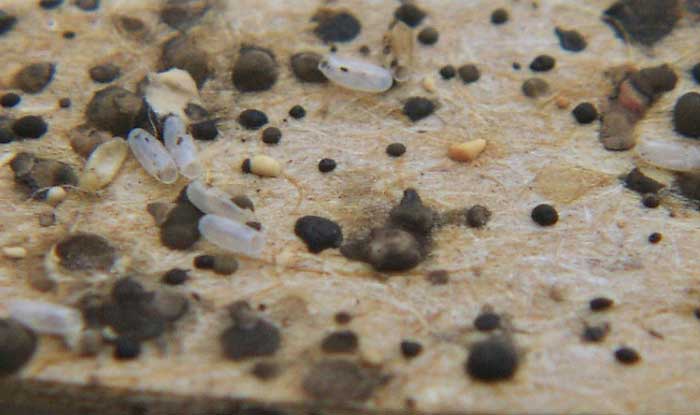
Seal anything you catch in a jar or zip bag. A pest professional or your county extension office can identify it.
When to worry about a bug bite
Most bites itch for a few days and fade. Call 911 or go to an emergency room for:
- Trouble breathing or swallowing
- Swelling of the face, lips, tongue or throat
- Hives spreading across the body, dizziness or a racing heart
See a doctor the same day for:
- Redness or swelling that keeps growing more than 48 hours after the bite
- Red streaks spreading from the bite, which can signal a spreading infection
- Pus, increasing pain, or a fever of 100.4°F or higher
- A bite whose center turns dark or opens into a sore
- A tick attached for more than 36 hours, or a rash and fever in the weeks after a tick bite
These warning signs follow guidance from Texas Health Resources and the American Academy of Pediatrics insect bite symptom checker. For a child, use the symptom checker or call your pediatrician.
Next steps once you know
- Bed bugs: how to get rid of bed bugs and heat treatment
- Fleas: how to get rid of fleas in your house and fleas vs bed bugs
- Mosquitoes: mosquito vs bed bug bites
- Dust mites: how to get rid of dust mites
- Bird or rodent mites: remove the nest first, then see how to get rid of mice
Sources
- Centers for Disease Control and Prevention. About Scabies and Symptoms of Scabies.
- Cleveland Clinic. What to know about bed bugs.
- University of Arizona Cooperative Extension. Something’s Biting Me, but I Can’t See It; No-See-Ums IPM short.
- Texas A&M AgriLife Extension. Chiggers (E-365); Biting Mites.
- Potter, M.F. University of Kentucky. ENTFACT-637: Parasitic Mites of Humans.
- Jacobs, S. Penn State Extension. Carpet Beetle Dermatitis.
- Simon L. et al. Anthrenus sp. and an Uncommon Cluster of Dermatitis. Emerging Infectious Diseases, 2021.
- “Spider bite” lesions are usually diagnosed as skin and soft-tissue infections. Journal of Emergency Medicine, 2011.
- Texas Health Resources. When Is a Bug Bite Something Serious.
- American Academy of Pediatrics, HealthyChildren.org. Insect Bite symptom checker.