
A black widow is a shiny black spider with a round abdomen about 1/2 inch long and a red hourglass on its underside; the female spans about 1 1/2 inches, including legs. It builds a messy, tangled web in dark spots like woodpiles, sheds, and garages. Black widows are shy and bite only when pressed, but their venom affects the nerves, so anyone bitten should get medical care. Deaths are extremely rare.
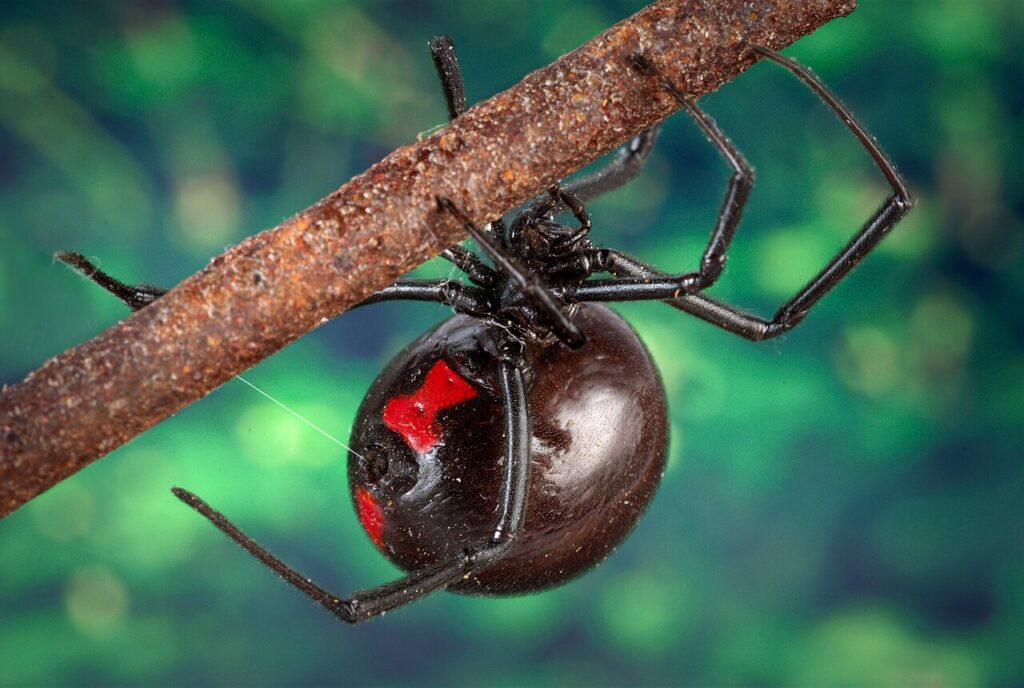
Table of Contents
How to Identify a Black Widow
- Adult female: glossy jet black, round abdomen, body about 3/8 to 1/2 inch, legs spanning about 1 1/2 to 2 inches.
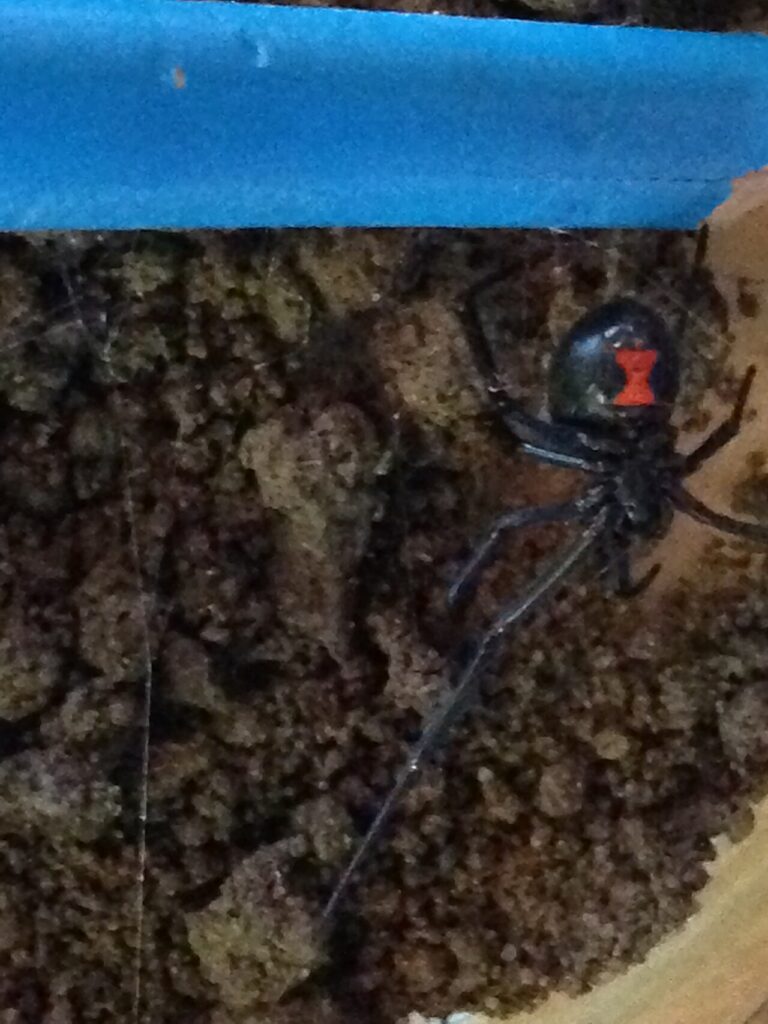
- Hourglass: a red or orange-red hourglass on the underside of the abdomen. You often see it when the spider hangs upside down in its web.
- Male: about half the size of the female or less, with longer legs and red or white spots instead of a full hourglass. Males rarely bite, and their fangs are too small to break skin.
- Young widows: start white or tan, often with white stripes, and darken with each molt. The hourglass begins whitish and turns red.
Types of widow spiders in the U.S.
| Species | Range | Markings |
|---|---|---|
| Southern black widow | Southeast, north to Ohio and west to Texas | Complete red hourglass |
| Northern black widow | Northeast and upper Midwest | Hourglass split into two pieces, often with red spots down the back |
| Western black widow | West, from Canada to Mexico | Hourglass varies from bold to faint; well-fed females can look brown or plum |
| Brown widow | Florida, the Gulf Coast and Southern California | Mottled tan, brown and gray with an orange hourglass; spiky egg sacs |
Black widows live in every state except Alaska and Hawaii, and are most common in the warm South and West.
Black Widow Webs and Hiding Places
Widow webs are irregular, tough and sticky, with no neat pattern, and usually have a small funnel retreat at one side where the spider hides. The silk feels strong when you brush through it.
- Woodpiles, rock piles, stumps and rodent burrows
- Sheds, garages, barns, basements and crawl spaces
- Under eaves, decks and fences
- Lawn chairs, picnic tables, plant pots, toys and trash can handles
Widows rarely move into a house’s living areas. Most bites happen when someone reaches into a stored box, picks up firewood, or slides on a glove or shoe left in a garage.
Egg Sacs and Life Cycle
A black widow egg sac is round to teardrop-shaped, about 1/2 inch across, cream to tan and papery, and hangs in the web. Each holds about 200 to 800 eggs. Females guard their sacs through summer, which is when most bites occur. Spiderlings leave by drifting on silk threads. Females can live about a year and a half; males live a few months. In colder areas, the adults die at the first freeze, and the egg sacs survive the winter.
A spiky, bumpy egg sac that looks like a large pollen grain belongs to a brown widow.
Black Widow Bite
The bite can be painless or feel like a pinprick, and may leave two tiny red marks with little swelling. Within about one to two hours, pain spreads from the bite, followed by symptoms throughout the body:
- Muscle cramps and spasms, often in the belly, back, and chest
- A hard, rigid stomach that can be mistaken for appendicitis
- Sweating, nausea, and vomiting
- Raised blood pressure and a fast heartbeat
- Trouble breathing in severe cases
Symptoms usually ease within about four days, though they can last a week. About 2,600 bites a year are reported to U.S. poison centers, and deaths are extremely rare. Children, older adults, pregnant people and people with heart or breathing problems face the greatest risk.
First aid for a black widow bite
- Wash the bite with soap and water.
- Apply ice wrapped in a cloth and keep the limb raised.
- Don’t try to suck out venom or cut the skin.
- Call Poison Control at 1-800-222-1222 and get medical care right away.
- If you can do it safely, catch the spider or take a photo so it can be identified.
Doctors treat most bites with pain relief and muscle relaxants. An antivenom exists, but because it is made from horse serum and can cause allergic reactions, doctors usually reserve it for severe cases.
How to Get Rid of Black Widows
- Wear gloves when moving firewood, boxes, rocks, or anything stored in garages and sheds.
- Vacuum webs, spiders, and egg sacs, then seal the vacuum bag and empty it outside.
- Clear clutter: stack firewood away from the house, and cut back leaf litter and dense ground cover near walls.
- Store items off the floor in taped boxes or closed bins.
- Shake out shoes, gloves, and clothing kept in garages before wearing them.
- Seal gaps in the foundation and around doors and windows, and repair screens.
- Redirect lights: aim outdoor lights away from the house, since light draws the insects widows eat.
Spider sprays kill widows on contact but don’t provide lasting control. Removing webs and hiding places matters more. Call a professional for heavy infestations in sheds or crawl spaces.
Black widow safety supplies
- Heavy-duty work gloves for garages, sheds and woodpiles
- Shop vacuum for webs and egg sacs
- Sticky traps for garages and basements
- Firewood rack to keep wood off the ground and away from walls
As an Amazon Associate, Pestbugs earns from qualifying purchases.
FAQs
The adult female is glossy jet black with a round abdomen about 1/2 inch long and a red hourglass on the underside. Males are much smaller, often brown or gray with spots, and young widows are tan or white with stripes.
Rarely. About 2,600 bites a year are reported to U.S. poison centers, and deaths are extremely rare; Penn State notes none recorded in the United States since 1983. Bites still need medical care, especially for children, older adults and people with heart or breathing problems.
The bite may feel like a pinprick. Within an hour or two, pain spreads from the bite, followed by muscle cramps, a rigid stomach, sweating, nausea and raised blood pressure. Symptoms usually ease within a few days.
They hide in dark, undisturbed outdoor spots: woodpiles, rock piles, sheds, garages, barns, under eaves and decks, in plant pots, and under outdoor furniture. They rarely live in a home’s main living areas.
Brown widows are mottled tan, brown and gray with an orange hourglass, and their egg sacs are covered in spiky bumps. Their bite is much milder than a black widow’s.
Wear gloves when cleaning, vacuum webs, spiders and egg sacs, clear woodpiles and clutter away from the house, seal gaps, and aim outdoor lights away from doors. Sprays give only short-term control.
Sources
- UC IPM: Widow Spiders and Their Relatives
- UF/IFAS: Southern Black Widow
- Penn State Extension: Southern Black Widow Spider
- Missouri Department of Conservation: Black Widow Spiders
- Cleveland Clinic: Black Widow Spider Bite
- CDC/NIOSH: Venomous Spiders
Facts in this guide are checked against the sources above and reviewed when they change. See how we research in our editorial policy.