
German cockroaches are small, tan roaches about 1/2 to 5/8 inch long with two dark stripes on the shield behind the head. They are the most common roach in homes and apartments, live almost entirely indoors in kitchens and bathrooms, and breed faster than any other house roach. Getting rid of them takes gel baits placed in many small dots, rotated between active ingredients, plus sanitation, sealing and monitoring with sticky traps. Sprays and bug bombs fail because German roaches are highly resistant to common insecticides.
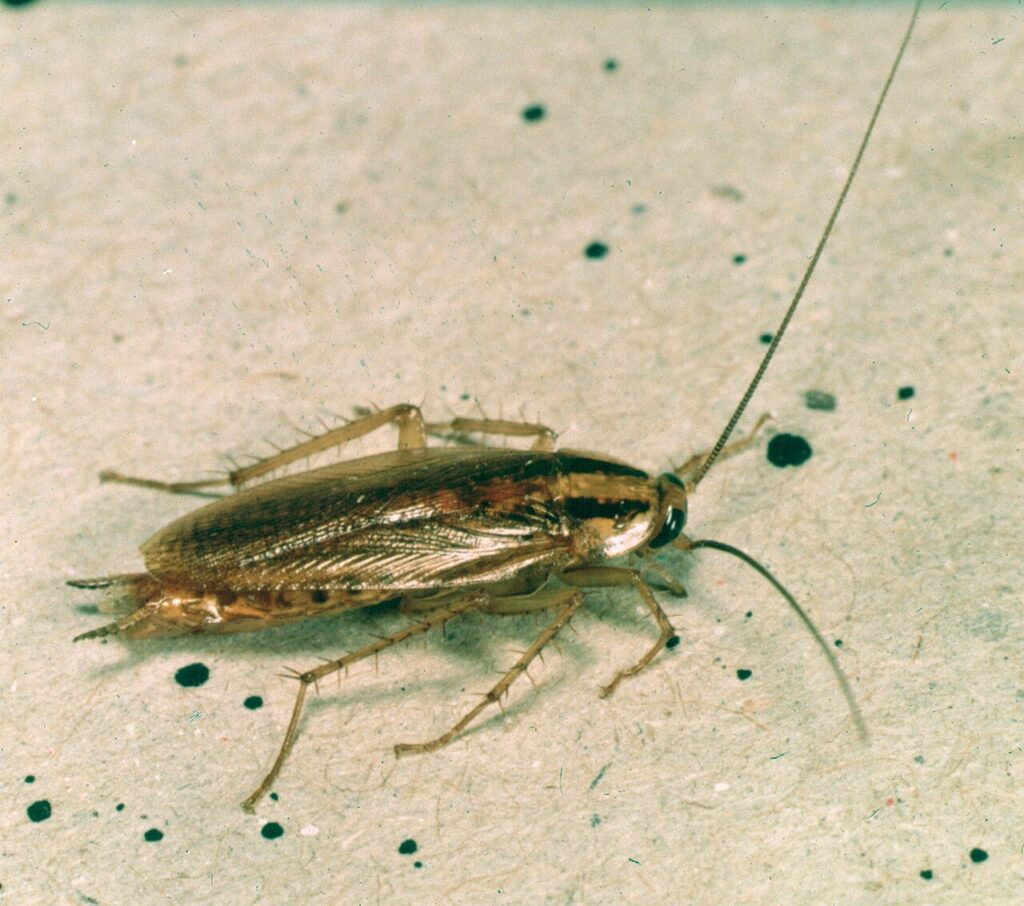
Table of Contents
How to Identify a German Cockroach
- Size: about 1/2 to 5/8 inch long.
- Color: tan to light brown.
- Key mark: two dark parallel stripes on the shield (pronotum) behind the head.
- Wings: full wings, but it doesn’t fly; it runs fast.
- Nymphs: smaller, darker brown to black, wingless, with dark stripes running down the body. See baby cockroaches.
- Egg case: a light brown, purse-shaped capsule under 1/4 inch, carried by the female at the tip of her abdomen until just before it hatches.
German cockroach look-alikes
The Asian cockroach looks nearly identical but flies and is attracted to lights; it lives mostly outdoors in the Southeast. Brownbanded cockroaches are similar in size but have light bands across the body instead of stripes behind the head. Larger roaches such as American and oriental cockroaches are compared in how to get rid of cockroaches.
Signs of a German Cockroach Infestation
- Tiny pepper-like droppings and dark smears in cabinet corners, hinges, drawers and around appliances
- Light brown egg cases and shed skins
- Many small dark nymphs in sticky traps
- A musty, oily smell in heavy infestations
- Roaches out in daytime, usually a sign of a large population
Where German Cockroaches Hide
German cockroaches need warmth, moisture and food, so they cluster in kitchens and bathrooms: under and behind refrigerators, stoves, dishwashers and microwaves, inside cabinets and drawers, under sinks, around water heaters and pipes, and inside appliances and electronics. They fit into cracks about 1/16 inch wide and spend most of their lives tucked into gaps that small.
How Fast German Cockroaches Breed
- A female carries an egg case holding about 30 to 40 eggs, protecting them from many treatments.
- She produces a new case roughly once a month, up to about eight in her life.
- Nymphs grow into adults in about 50 to 60 days at room temperature, and a full generation takes about 100 days.
- Females live about 20 to 30 weeks.
Extension entomologists estimate that one female and her offspring can produce tens of thousands of roaches in a year if nothing stops them.
Why German Cockroaches Are So Hard to Kill
- Hitchhikers: they arrive in grocery bags, cardboard boxes, beverage cases, used appliances, furniture and suitcases.
- Apartment spread: they move between units through shared walls, plumbing and wiring, and spraying can push them next door.
- Insecticide resistance: resistance to the pyrethroids in most store sprays and foggers is widespread. A 2024 University of Kentucky and Auburn study found consumer sprays killed fewer than 20% of German cockroaches in 30 minutes.
- Bait aversion: some populations have inherited a taste change that makes the sugar in baits taste bitter, so they avoid it.
- Protected eggs: the egg case shields developing young until hatching.
How to Get Rid of German Cockroaches
- Monitor: place numbered sticky traps at wall-floor edges, in cabinets and behind appliances to find hot spots and track progress.
- Clean up: remove crumbs and grease, store food sealed, empty trash nightly, fix leaks and get rid of cardboard. Vacuum roaches, droppings and egg cases.
- Seal: caulk cracks around pipes, under sinks, along backsplashes and baseboards.
- Bait: apply gel bait in many pea-sized dots close to hiding spots. Don’t spray anything near the bait. Rebait every one to two weeks.
- Rotate baits: if roaches stop eating a bait, or after a month, switch to a bait with a different active ingredient. Use one bait at a time.
- Add a growth regulator: an IGR stops nymphs from maturing and makes females drop egg cases early, sending them back to the bait. Expect four to six weeks for full effect.
- Keep going: continue until traps catch nothing for several weeks.
In side-by-side tests, fipronil gel baits cut German cockroach numbers by 70 to 93% within a month, while total-release foggers left more than 62% of exposed roaches alive. Foggers also raise indoor pesticide levels and are a fire hazard near gas appliances.
When to Call a Professional
German cockroaches are one of the few pests where professional help often pays off. Call a licensed pest control company for heavy infestations, roaches in more than one room, or if a month of baiting hasn’t worked. Renters should notify the landlord or building manager first, since roaches spread between units and the whole building may need treatment.
German cockroach control supplies
- German cockroach gel bait (rotate active ingredients)
- Insect growth regulator for kitchens and bathrooms
- Sticky monitoring traps to track progress
- Kitchen and bath caulk to seal cracks
As an Amazon Associate, Pestbugs earns from qualifying purchases.
FAQs
A small, tan to light brown roach about 1/2 to 5/8 inch long with two dark parallel stripes on the shield behind its head. It has wings but doesn’t fly. Nymphs are darker, wingless and striped, and females often carry a light brown egg case at the tip of the abdomen.
They breed fast, hide in cracks as thin as 1/16 inch, ride into homes in bags, boxes and appliances, and have become highly resistant to common spray insecticides. Some populations have also learned to avoid sugary baits.
A female carries an egg case holding about 30 to 40 eggs and produces a new one roughly every month, so she can have a few hundred offspring in her life. Nymphs become adults in about two months at room temperature.
Rarely. German cockroaches depend on people and live almost entirely indoors, in kitchens, bathrooms and anywhere with food, warmth and water.
Gel baits applied in many small dots near hiding spots, rotated between active ingredients, combined with sanitation, sealing cracks and an insect growth regulator. In tests, fipronil gel baits cut populations by 70 to 93% in a month, while foggers had little effect.
Usually several weeks. Baits show results in two to three weeks, growth regulators take four to six weeks, and you should keep baiting until sticky traps catch nothing.
Sources
- University of Florida IFAS: German Cockroach, Blattella germanica
- University of Florida IFAS: Assessment-Based Pest Management of German Cockroaches
- Penn State Extension: German Cockroaches
- Rutgers NJAES: German Cockroach Control (FS1322)
- UC IPM Pest Notes: Cockroaches
- University of Kentucky: Consumer Sprays and German Cockroach Resistance (2024)
- NC State Extension: Bug Bombs Are Ineffective at Killing Roaches Indoors
Facts in this guide are checked against the sources above and reviewed when they change. See how we research in our editorial policy.