
A palmetto bug is a cockroach. In the Southeast, “palmetto bug” is a regional nickname for large outdoor cockroaches, mainly the Florida woods cockroach but also the American and smokybrown cockroaches. The small tan German cockroach that infests kitchens isn’t usually called one. Palmetto bugs live outdoors in palms, trees, mulch and leaf litter and wander indoors for water and shelter. Keep them out by sealing gaps, fixing moisture and clearing mulch from the foundation.
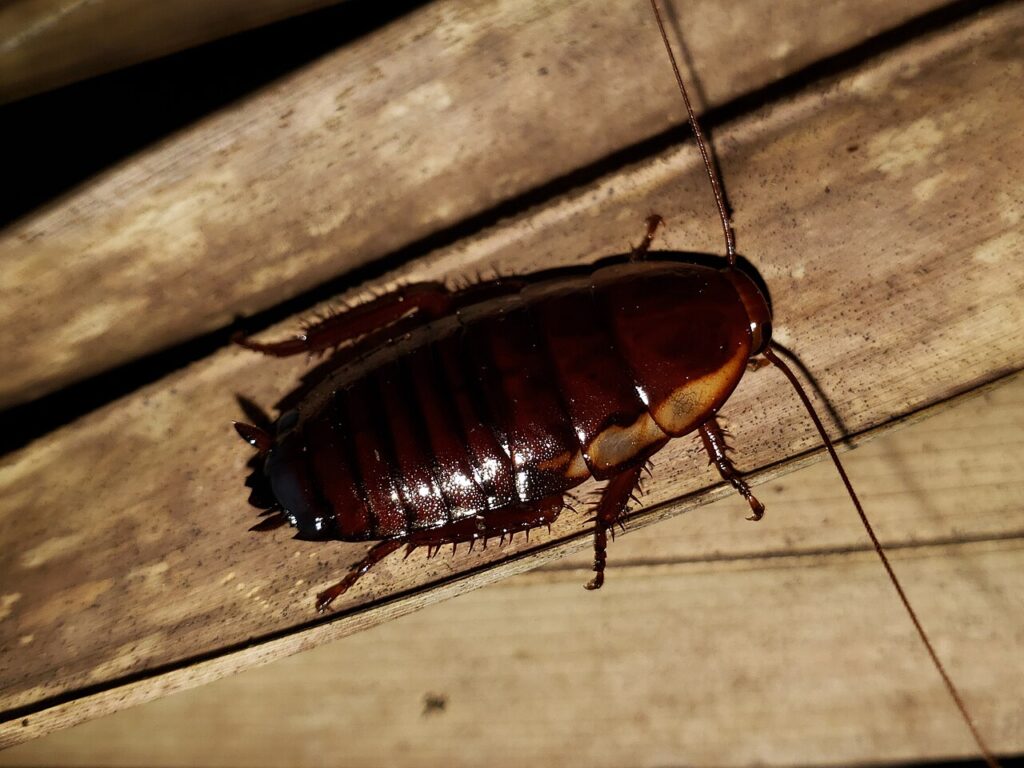
Table of Contents
Palmetto Bug vs Cockroach: The Short Answer
| “Palmetto bug” | Typical indoor cockroach (German) | |
|---|---|---|
| What it is | Nickname for large outdoor roaches | Small indoor roach |
| Species | Florida woods, American, smokybrown, sometimes Australian or oriental | German cockroach |
| Size | About 1 1/4 to 2 inches | 1/2 to 5/8 inch |
| Color | Reddish-brown to nearly black | Tan with two dark stripes behind the head |
| Where it lives | Outdoors: palms, trees, mulch, woodpiles, sewers | Indoors only: kitchens, bathrooms |
| Breeds indoors? | Rarely | Yes, rapidly |
| Region | Southeast and Gulf Coast | Everywhere |
Which Cockroaches Are Called Palmetto Bugs?
Florida woods cockroach
The original palmetto bug. It is a broad, slow-moving roach about 1 1/4 to 1 1/2 inches long, reddish-brown to almost black, with short wing pads that don’t cover its abdomen and no ability to fly. Older nymphs often have yellow edges on the thorax. It lives in tree and stump cavities, under bark, in leaf litter, dense shrubs, woodpiles and at the base of palms, in most of Florida and along the Gulf Coast of Georgia, Alabama and Mississippi. It eats decaying plant matter, lichens and molds, takes about five months to grow from egg to adult and lives more than a year.
American cockroach
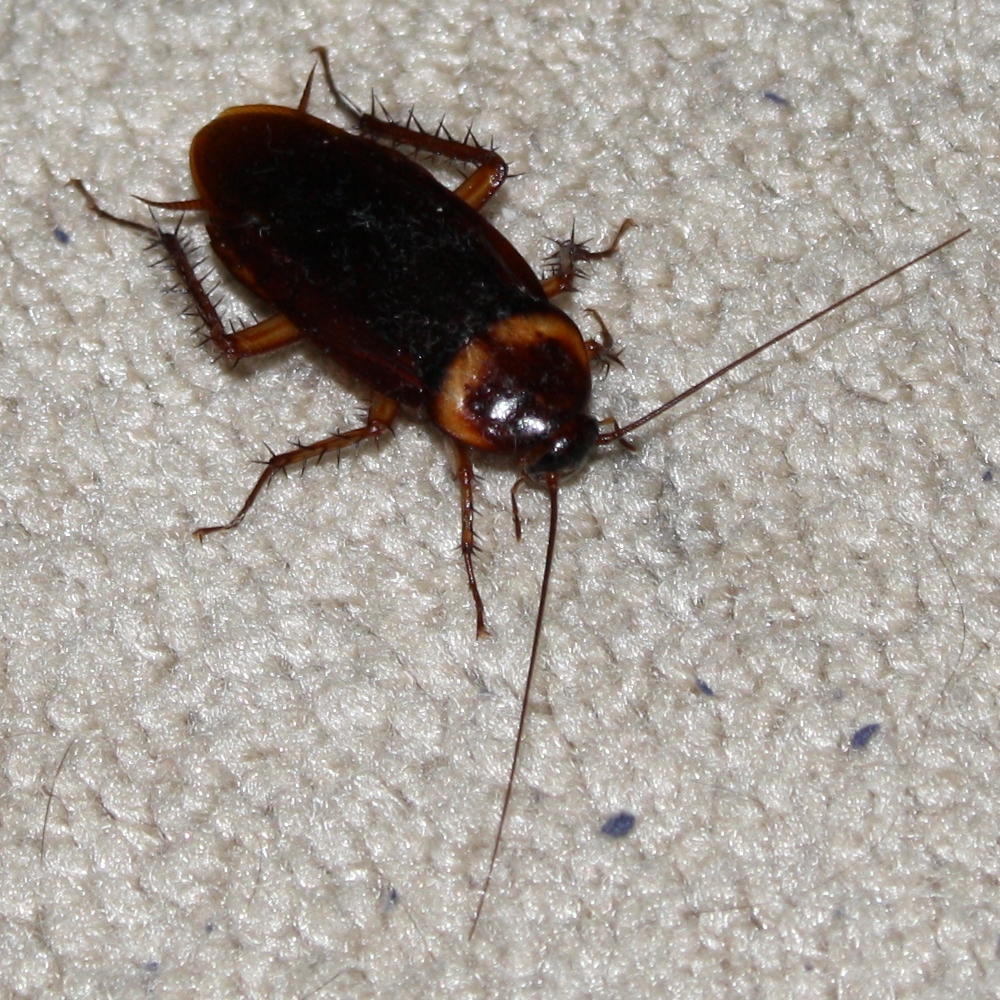
About 1 1/2 to 2 inches long, reddish-brown with a pale yellow band around the shield behind its head. It lives in sewers, storm drains and damp basements and enters through drains and pipes. It can glide and occasionally flies.
Smokybrown cockroach
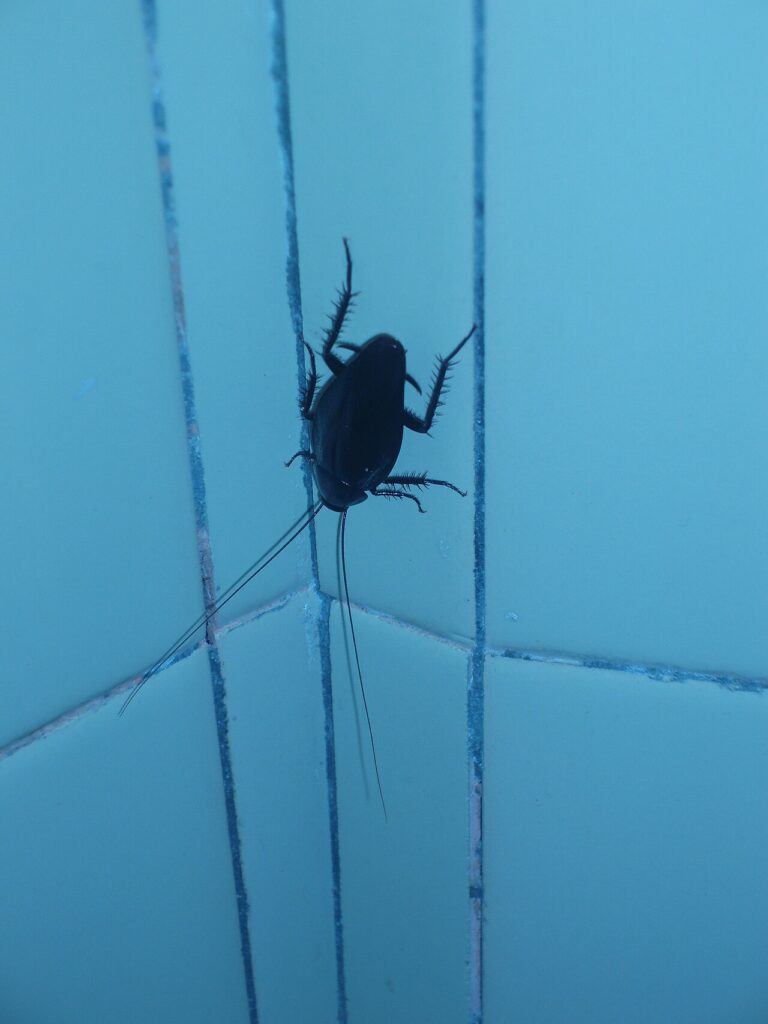
About 1 1/4 to 1 1/2 inches long and uniform dark mahogany. It flies on warm, humid evenings, sometimes toward people, and lives outdoors in trees, gutters and mulch, especially in older neighborhoods with big hardwood trees. It gets into attics, often where roof leaks keep things damp.
For the other species, see types of cockroaches.
The Palmetto Bug’s Smell
The Florida woods cockroach is also called the stinkroach or skunk cockroach. When threatened, adults spray an oily, foul-smelling liquid from a gland under the abdomen, reaching from a few centimeters up to about 3 feet with some aim. The spray strongly irritates skin and eyes. The gland can take up to a month to refill, and young nymphs can’t spray.
Do Palmetto Bugs Fly?
- Florida woods cockroach: no; it has only short wing pads.
- Smokybrown cockroach: yes, especially on warm, humid evenings.
- American cockroach: it can glide and sometimes flies, but rarely does.
Why Palmetto Bugs Come Inside
Most palmetto bugs are occasional invaders. They come in looking for water and shelter, after heavy rain or during dry spells, or get carried in on firewood. Smokybrown cockroaches move into attics where leaks keep wood damp, and American cockroaches come up through floor drains and damaged pipes. The Florida woods cockroach rarely establishes indoors and doesn’t survive long inside.
Are Palmetto Bugs Dangerous?
Not seriously. The Florida woods cockroach’s spray is the main hazard, so don’t pick one up. Big outdoor roaches are mostly a startling nuisance, but any cockroach that walks through kitchens can carry bacteria such as Salmonella and leave allergens that worsen asthma.
How to Get Rid of Palmetto Bugs
- Seal entry points: door sweeps, weatherstripping, caulk around windows, pipes and utility lines, screens on vents, and repairs where the roof meets the walls.
- Fix moisture: repair roof and plumbing leaks, clean gutters, and dry out crawl spaces.
- Clear the perimeter: pull mulch, leaf litter and palm debris back from the foundation, trim branches touching the roof, and store firewood away from the house.
- Bait outside: scatter a granular cockroach bait in mulch beds and along the foundation.
- Bait inside: place gel bait near drains, under sinks and in the garage or attic where you see them.
- Skip bug bombs and broad spraying: foggers don’t work, and blanket spraying kills the tiny parasitic wasps that destroy many roach egg cases outdoors.
If small tan roaches are breeding in the kitchen, you have German cockroaches, not palmetto bugs, and need a different plan: German cockroach control. Full steps for all roaches: how to get rid of cockroaches.
Palmetto bug control supplies
- Outdoor granular roach bait for mulch beds
- Cockroach gel bait for drains and garages
- Door sweeps for exterior doors
- Drain covers for floor drains
As an Amazon Associate, Pestbugs earns from qualifying purchases.
FAQs
Yes. “Palmetto bug” is a Southern nickname for large cockroaches that live outdoors, mainly the Florida woods cockroach but also American, smokybrown and other big roaches. It is a polite way of saying cockroach.
Because some of them, especially the Florida woods cockroach, live in palm and palmetto trees. The name probably started with the Florida woods cockroach and spread to other large outdoor roaches.
It depends on the species. The Florida woods cockroach can’t fly. Smokybrown cockroaches fly readily on warm evenings, and American cockroaches can glide.
Not seriously. The Florida woods cockroach can spray an oily, foul-smelling liquid that irritates the skin and eyes. Like all cockroaches, big outdoor roaches can carry bacteria and allergens if they get into kitchens, so keep them out.
They wander in looking for water, warmth or shelter, often after heavy rain or in dry spells, or ride in on firewood. Smokybrown cockroaches get into leaky, damp attics. Most outdoor palmetto bugs don’t survive or breed long indoors.
Seal gaps around doors, windows, pipes and the roofline, fix leaks, pull mulch and leaf litter back from the foundation, keep firewood outside, and use granular baits outdoors and gel baits indoors. Bug bombs don’t work.
Sources
- University of Georgia CAES: Is That a Roach or a Palmetto Bug?
- University of Florida IFAS: Florida Woods Cockroach
- University of Florida Entomology: Florida Woods Cockroach
- University of Georgia IPM: Cockroach Fact Sheet
- Texas A&M Urban Entomology: Smokybrown Cockroach
- Texas A&M Urban Entomology: American Cockroach
- UC IPM Pest Notes: Cockroaches
Facts in this guide are checked against the sources above and reviewed when they change. See how we research in our editorial policy.