
To get rid of crickets in the house, vacuum them up, put sticky traps along walls and in basement and garage corners, seal gaps under doors and around windows and pipes, switch outdoor lights to yellow bulbs or turn them off, and clear grass and debris from the foundation. Camel crickets in damp basements also need a dehumidifier. Crickets don’t bite and aren’t dangerous. Field crickets invade in late summer and fall, drawn by lights, while camel crickets come in for moisture.
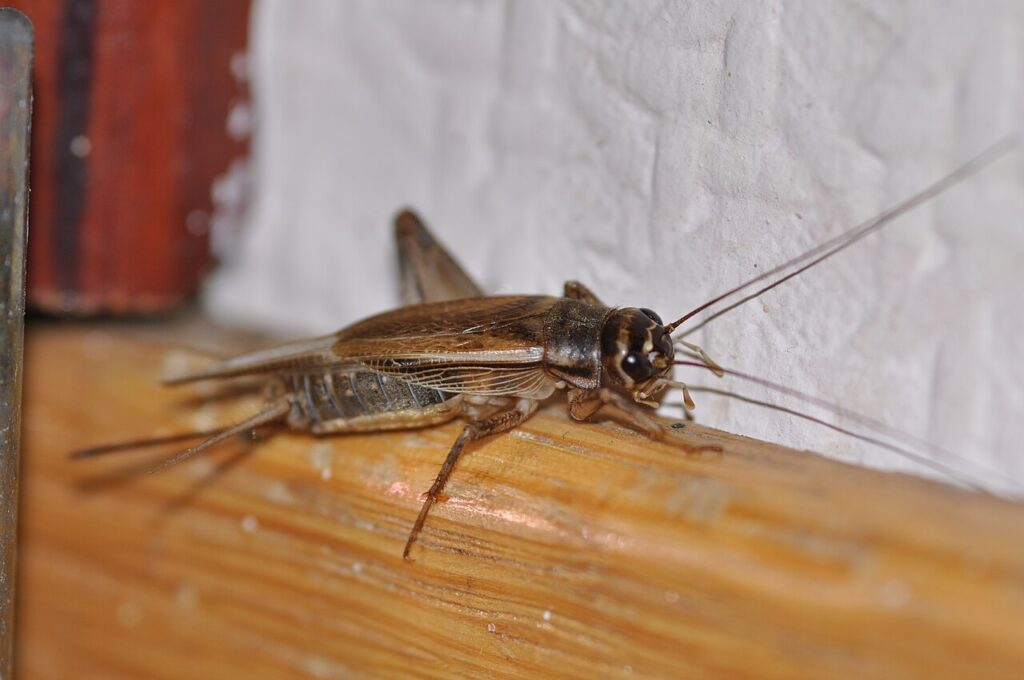
Table of Contents
Types of Crickets in the House
| House cricket | Field cricket | Camel cricket | |
|---|---|---|---|
| Size | 3/4 to 1 inch | 1/2 to 1 1/4 inches | About 1/2 to 1 1/2 inches |
| Look | Light yellowish-brown, three dark bands across the head | Usually black, sturdy, wings nearly cover the body | Humpbacked, tan to brown, very long legs and antennae |
| Wings | Long, pointed | Rounded | None |
| Chirps? | Yes (males) | Yes (adult males) | No |
| Attracted to lights? | Yes | Yes, strongly | No |
| Breeds indoors? | Yes | No; eggs laid in soil | In damp, dark basements |
| Found | Kitchens, near heat, behind baseboards | Garages, ground floors, near doors | Basements, crawl spaces, garages, laundry rooms |
House crickets
House crickets are light yellowish-brown, about 3/4 to 1 inch long, with three dark bands across the head, long wings and antennae longer than the body. They came from Europe and are the classic “cricket on the hearth”: in winter they hide near fireplaces, water heaters, furnaces and kitchens. Males chirp at night. They can live their whole life indoors.
Field crickets
Field crickets are black, sturdier and 1/2 to 1 1/4 inches long. They live outdoors and lay eggs in soil, but invade homes in large numbers in late summer and fall, especially after dry springs and summers. Outdoor lighting is the biggest single cause of heavy invasions. Swarms usually last four to six weeks.
Camel crickets
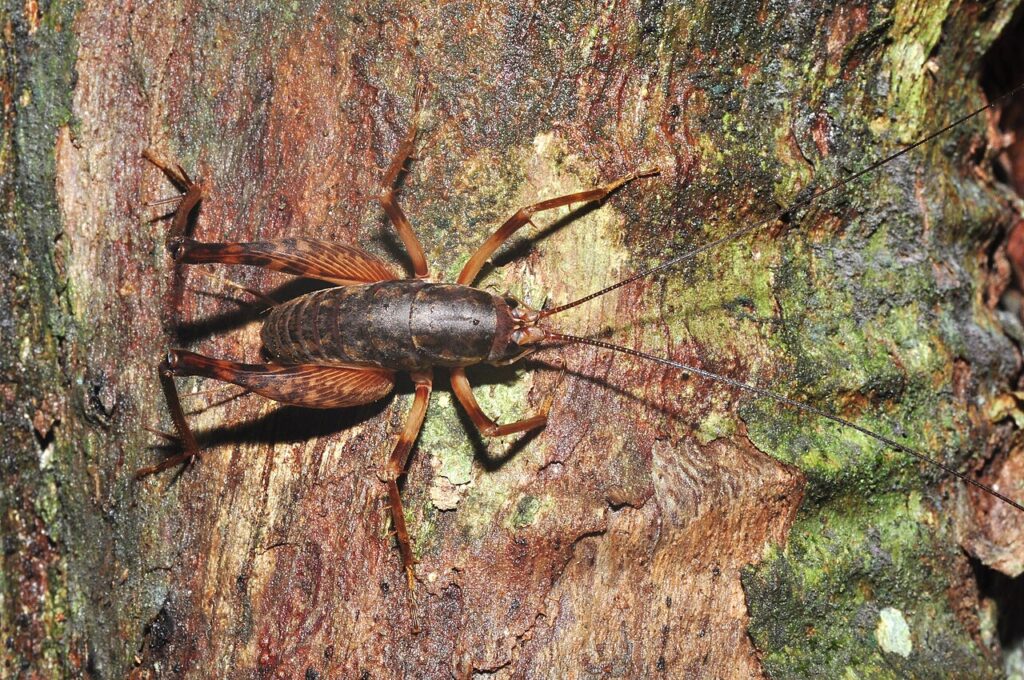
Camel crickets, also called cave crickets or spider crickets, are humpbacked, wingless and tan to dark brown, with antennae much longer than the body and long, spidery legs built for jumping. They don’t chirp and are active almost entirely at night. They live in damp, dark places: basements, crawl spaces, garages, and in dry weather laundry rooms and bathrooms.
The greenhouse camel cricket, an Asian species first recorded in the U.S. in the 1800s, has become the most common camel cricket in and around homes east of the Mississippi. In an NC State survey, more than 90% of people reported it as the camel cricket they see most.
Why Crickets Come Indoors
- Cooling weather: field and house crickets move toward buildings in late summer and fall.
- Lights: porch lights and bright windows pull in field and house crickets by the hundreds.
- Moisture: camel crickets seek humid basements and crawl spaces, especially in heavy rain or long hot, dry spells.
- Easy entry: gaps under doors, around basement windows, dryer vents, pipes, weep holes and crawl space vents.
Do Crickets Bite or Cause Damage?
Crickets don’t bite or sting people and aren’t harmful. Indoors they can:
- Chew cotton, linen, silk, wool and fur, especially items soiled with food or sweat, leaving roughened or eaten patches.
- Eat paper and cardboard; camel crickets in large numbers can damage stored boxes, garments and linens.
- Leave droppings and dark smears, and stain clothing and drapes.
- Create a bad smell when many die indoors.
- Keep you awake with chirping (house and field crickets only).
Damage is usually minor unless dozens are present. Lots of camel crickets in a basement often signals a moisture problem.
How to Get Rid of Crickets in the House
- Vacuum them. Vacuum crickets you find and empty or throw out the bag outdoors so they don’t crawl back out.
- Set sticky traps. Glue traps along walls, in corners, behind appliances and near doors work well, especially for camel crickets.
- Dry out damp areas. Run a dehumidifier or fan in the basement, ventilate crawl spaces, and fix leaks. This matters most for camel crickets.
- Store things off the floor. Put boxes on shelves or pallets away from walls, and use plastic bins instead of cardboard.
- Use cricket or roach bait indoors where children and pets can’t reach it; don’t put bait where you have sprayed.
How to Keep Crickets Out
- Change outdoor lights: use yellow “bug” bulbs or sodium vapor lights, or turn lights off at night, and close blinds so indoor light doesn’t shine out.
- Seal gaps: fit door sweeps and weatherstripping, caulk around basement windows, dryer vents and pipes, screen crawl space vents, and stuff steel wool in weep holes.
- Clear the foundation: mow tall grass and weeds near the house, keep mulch about a foot back from the walls, and move firewood, bricks, boards and leaf piles away.
- Raise garbage cans off the ground.
Do you need insecticide?
Indoor sprays do little and aren’t usually recommended. For heavy field cricket invasions, an outdoor perimeter treatment, sprayed in a band about a foot out from the foundation and a foot up the wall, can help, but only alongside sealing and changing the lights; otherwise more crickets keep coming.
Crickets often arrive with other fall invaders like millipedes and house centipedes; the same sealing and moisture fixes help with all of them.
Cricket control supplies
- Sticky traps for basements and garages
- Basement dehumidifier for camel crickets
- Yellow bug-light bulbs for porches
- Door sweeps for exterior doors
As an Amazon Associate, Pestbugs earns from qualifying purchases.
FAQs
Vacuum the ones you find, set sticky traps along walls and in corners of basements and garages, seal gaps under doors and around windows and pipes, switch outdoor lights to yellow bulbs or turn them off, and clear grass, weeds and debris away from the foundation. For camel crickets, run a dehumidifier.
Field and house crickets move toward buildings in late summer and fall as nights cool, and outdoor lights draw them in large numbers. Camel crickets aren’t attracted to light; they come in looking for moisture and live in damp basements, crawl spaces and garages.
No. House, field and camel crickets don’t bite or sting people and aren’t harmful. The main problems are chirping, chewed fabric or paper, and smells from dead crickets.
Camel crickets, also called cave or spider crickets, are humpbacked, wingless, tan to brown crickets with very long legs and antennae. They don’t chirp. The greenhouse camel cricket, an Asian species, is now the most common camel cricket in homes in the eastern U.S.
House crickets can live and breed indoors, and camel crickets breed in dark, damp basements. Field crickets lay their eggs in soil outdoors and don’t breed inside.
Field and house crickets chew cotton, linen, silk and wool, especially fabric stained with food or sweat, along with fur, paper and dead insects. Camel crickets mostly eat paper, debris and other insects.
Sources
- University of Minnesota Extension: Crickets
- University of Missouri Extension: House-Invading Crickets (G7366)
- NC State Extension: Camel Crickets
- NC State University: Asian Camel Crickets Now Common in U.S. Homes
- Clemson HGIC: House and Field Crickets
- Clemson HGIC: Camel Crickets
- Texas A&M AgriLife Extension: Cricket Control in the Fall
- University of Florida IFAS: Crickets
Facts in this guide are checked against the sources above and reviewed when they change. See how we research in our editorial policy.