
Lawn grubs are the C-shaped white larvae of beetles such as Japanese beetles, masked chafers and May/June beetles. They eat grass roots and can kill patches of lawn in late summer and fall. Check by lifting a square foot of sod: about 10 or more grubs per square foot can kill grass, while a few is normal. Timing matters more than the product. Preventive grub killers work when applied from late May to early August, curative ones in August and September, and spring treatments generally don’t work.
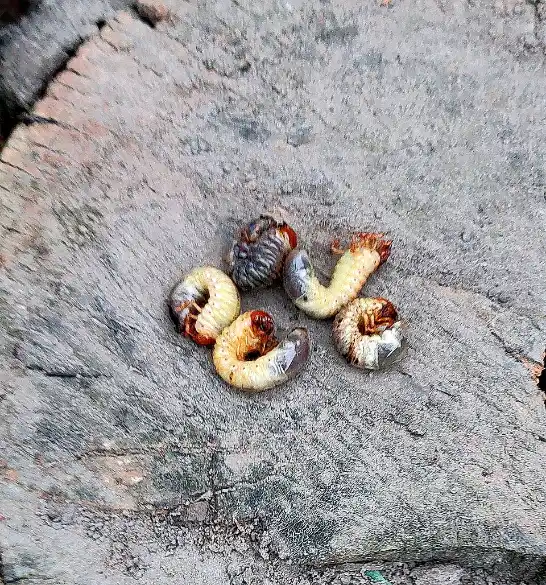
Table of Contents
Signs of Grub Damage
- Wilting and gray-green grass that looks like drought stress, even after watering.
- Irregular brown patches that spread in late summer and fall.
- Turf that lifts like a carpet: with the roots eaten, dead grass rolls back easily, showing grubs underneath.
- Animals digging: raccoons, skunks and birds such as crows tear up patches of lawn to eat grubs.
Most grub damage shows up in September or October, after a summer of feeding. Brown patches can also come from drought, disease or dog urine, so check for grubs before you treat.
Lawn tunnels and mounds are a different problem: raised ridges and round mounds point to moles, crescent-shaped mounds to gophers, and narrow surface runways to voles.
How to Check for Grubs
- In a few spots at the edge of struggling grass, cut three sides of a 1-foot square of sod with a shovel and fold it back.
- Count the grubs in the soil and roots.
- About 10 or more per square foot can kill grass; around 5 to 10 may need treatment depending on your grass and grub type. Fewer than that usually don’t. Most lawns can lose 10 to 15 percent of their grass without much change in how they look.
When to Apply Grub Killer
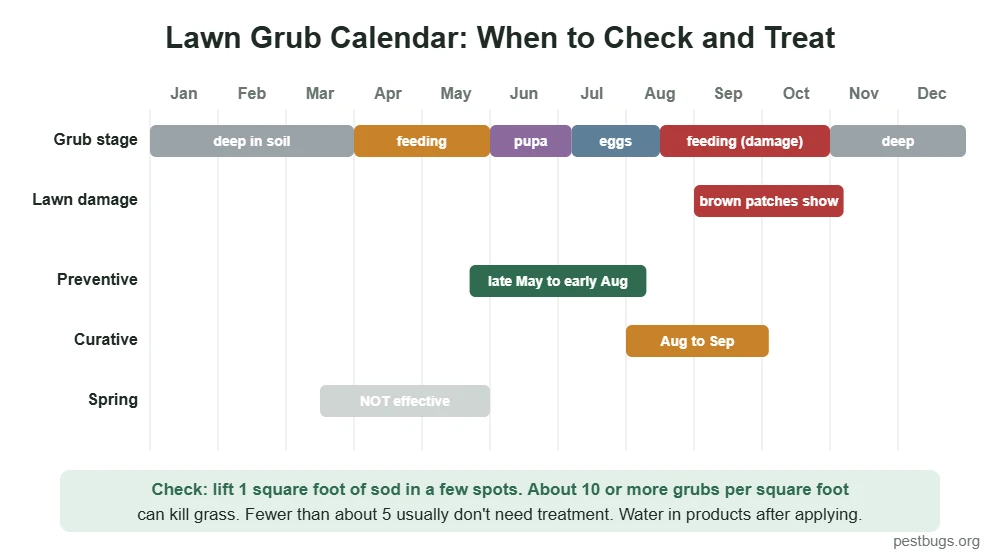
| Type | Common active ingredients | When to apply | Notes |
|---|---|---|---|
| Preventive | Chlorantraniliprole, imidacloprid, Bacillus thuringiensis galleriae | Late May to early August (chlorantraniliprole often best in May or June) | For lawns with a history of grubs. Kills young grubs after eggs hatch. |
| Curative | Trichlorfon, carbaryl | August to September; not after early October | For grubs you have found. Fast-acting but less effective than preventive. |
| Spring treatments | Any | Generally not effective | Grubs are large and close to pupating; damage is already done. |
Water any grub product in with at least 1/2 inch of irrigation or rain right after applying, so it reaches the root zone. Always follow the label. Some products, such as imidacloprid, are restricted to certified applicators in some states.
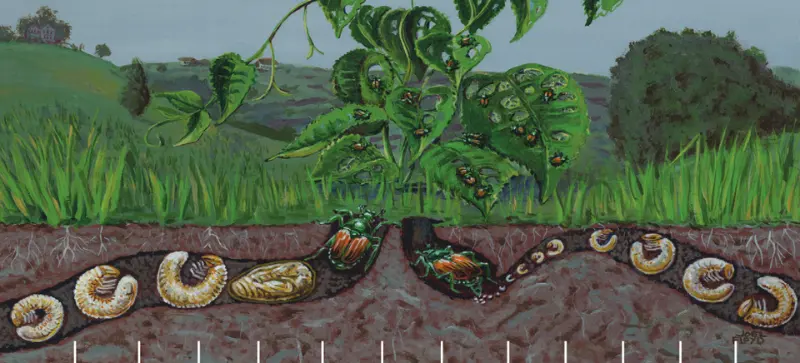
Natural and Biological Grub Control
- Beneficial nematodes: microscopic worms that infect grubs. They work best in moist, loamy soil and less well in dry or clay soil. Apply at dusk, dawn or on a cloudy day and water them in. Match the species to your grub: Heterorhabditis bacteriophora is used for Japanese beetle and masked chafer grubs.
- Milky spore: targets only Japanese beetle grubs, and commercial products have not been shown to effectively suppress Japanese beetle grubs in lawns.
- Healthy turf: well-watered, properly mowed grass with deep roots tolerates more grubs before it browns.
Grubs and Moles
Killing grubs won’t get rid of moles. Moles eat mainly earthworms, and even grub-free lawns keep their moles. Treat grubs only when grubs themselves are damaging the lawn. To deal with moles, see how to get rid of moles.
Grub control products
- Preventive grub control (chlorantraniliprole)
- Curative grub killer (trichlorfon)
- Beneficial nematodes (Heterorhabditis)
- Broadcast spreader
As an Amazon Associate, Pestbugs earns from qualifying purchases. Read and follow the label, and water products in.
FAQ
Preventive products work best from late May to early August, before young grubs start feeding. Curative products go on in August or September when you find grubs. Spring applications usually don’t work.
About 10 or more grubs per square foot can kill grass. Around 5 to 10 may need treatment depending on grass and grub type. A few grubs are normal.
Gray-green, wilting grass that turns into irregular brown patches in late summer or fall. Dead turf peels back like a carpet, and animals may dig up the lawn.
Milky spore only affects Japanese beetle grubs, and commercial products have not been shown to effectively control them in lawns.
No. Moles eat mostly earthworms, so they stay even when grubs are gone.
Yes. Once grubs are controlled, rake out dead grass and reseed or resod in early fall, and keep the area watered.
Sources
- University of Minnesota Extension: White grub control in lawns
- University of Maryland Extension: White Grubs in Lawn and Garden Soil
- Purdue University: How do I get rid of moles in my lawn?
- University of Maryland Extension: Moles