
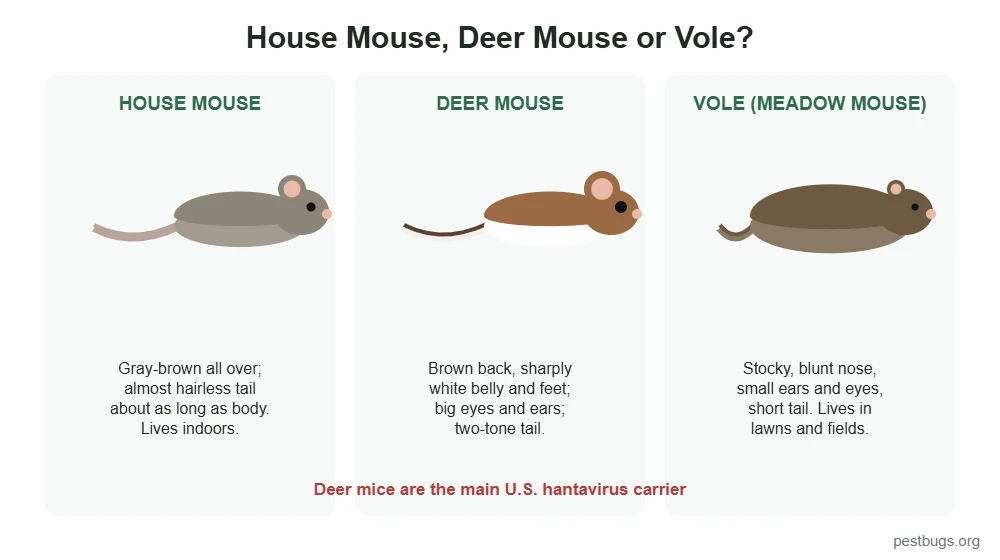
“Field mice” usually means deer mice and white-footed mice: native mice with a brown back, a sharply white belly and feet, big eyes and ears, and a two-tone tail that is dark on top and white below. They live in fields and woods but move into cabins, sheds, garages and homes near open land, especially in fall. Deer mice matter more than house mice because they are the main carrier of hantavirus in the U.S. To get rid of them, seal gaps wider than 1/4 inch, clear brush and woodpiles away from buildings, trap them with snap traps, and clean their droppings wet, never by sweeping.
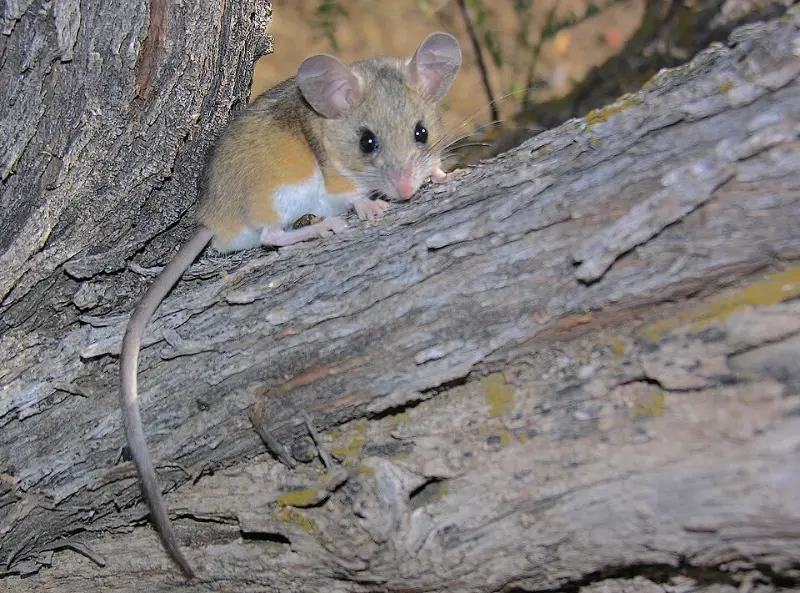
Table of Contents
What Are Field Mice?
“Field mouse” isn’t one species. People use it for several outdoor mice, mostly deer mice (Peromyscus maniculatus) and white-footed mice (Peromyscus leucopus). Some people also call voles “field mice” or “meadow mice,” though voles are a different kind of rodent; see voles.
- Deer mouse: about 3 to 4 inches long plus a tail that can be as long as the body. Found across most of North America.
- White-footed mouse: about 3 1/2 to 4 inches plus the tail. Found in the U.S. east of the Rocky Mountains, except parts of the Southeast.
- Telling them apart: the two look so alike that even experts have trouble without a close look. Both cause the same problems and need the same control.

Field Mice vs House Mice
| Deer / white-footed mouse | House mouse | |
|---|---|---|
| Color | Brown back, sharply white belly and feet | Gray-brown, slightly lighter belly |
| Tail | Two-tone: dark on top, white below; furred | One color, almost hairless |
| Eyes and ears | Large | Smaller |
| Smell | No strong mousy odor | Musky odor |
| Where | Fields, woods; cabins, sheds, garages, rural homes | Inside homes and buildings |
| Health concern | Main U.S. hantavirus carrier | Salmonella, LCMV, allergens |
Why Deer Mice Get Inside
Deer mice nest in tree hollows, stumps, logs and rock piles, and sometimes in buildings. They are most common near forests, fields and farms, and less common in towns unless parks or open land are nearby. Their small size lets them get into cabins, sheds, garages and vacant homes, where they nest and store food. They gather and store seeds most actively in fall. They are most active at night, so keep garage and shed doors closed after dark.
Females can breed at about six weeks old and usually have litters of three to six young. In the wild, deer mice rarely live more than two years.
Field Mice and Hantavirus
Deer mice are the main carrier of Sin Nombre virus, the hantavirus behind most U.S. cases of hantavirus pulmonary syndrome. They shed the virus in saliva, urine and droppings, and people are infected mainly by breathing in contaminated dust. That is why opening and cleaning a closed-up cabin or shed with mouse droppings carries the most risk. Full details: hantavirus from mice.
How to Get Rid of Field Mice
- Seal entry points: close any opening larger than 1/4 inch with hardware cloth, sheet metal, cement or caulk. Steel wool works as a temporary plug. Plastic, rubber, foam and wood don’t stop mice.
- Clear cover near buildings: trim overgrown shrubs and weeds, and keep woodpiles and brush piles away from walls. This reduces numbers but won’t eliminate them, because deer mice range over a third of an acre to several acres.
- Trap them: use snap traps baited with peanut butter, about 10 feet apart where you see droppings, and a dozen or more for a large problem. Keep a few traps set afterward to catch newcomers. See the best mouse traps.
- Skip glue boards: they greatly increase hantavirus exposure risk. Ultrasonic devices and commercial repellents don’t work well either.
- Clean up safely before and after trapping (below).
Deer mice and white-footed mice are native wildlife. Controlling them around buildings is usually allowed, but check with your state wildlife agency if you are unsure. Rodent baits labeled only for house mice and rats should not be used on deer mice where the label doesn’t allow it.
Opening a Cabin, Shed or Garage With Mouse Droppings
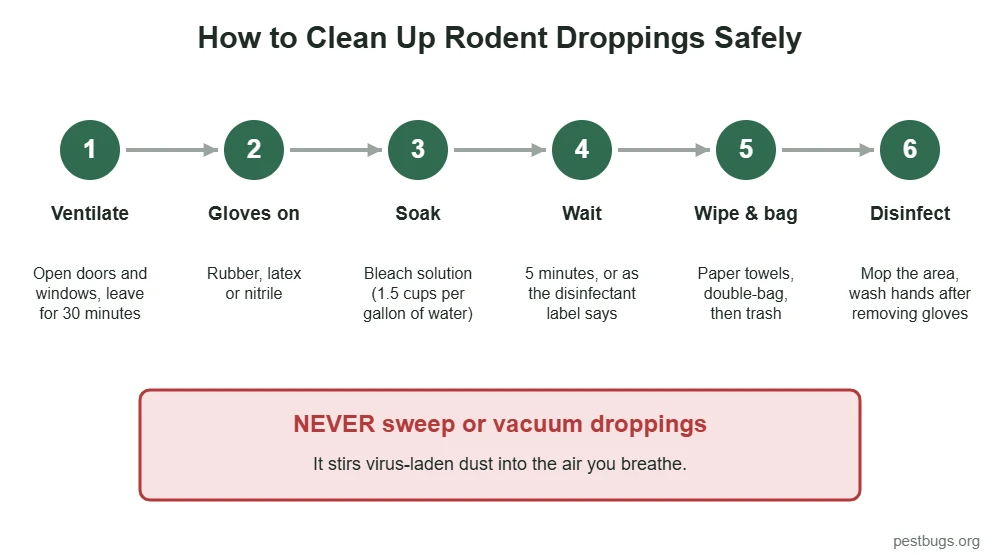
- Open doors and windows and leave for at least 30 minutes before you go in. A fan helps.
- Wear rubber or plastic gloves. Don’t sweep or vacuum. A cloth or paper mask gives little protection; only a respirator with HEPA filters fully protects you.
- Soak droppings, nests and any dead mice with a bleach solution (1 1/2 cups of bleach per gallon of water) or a disinfectant. Let it soak at least 5 minutes; UC IPM suggests 10 minutes.
- Wipe up with damp paper towels, double-bag everything, then mop or sponge the area. Wash your hands well after removing gloves.
Field mouse control supplies
- Mouse snap traps
- 1/4-inch hardware cloth
- Copper or steel mesh for small gaps
- Respirator with HEPA (P100) filters for heavy cleanups
- Disposable gloves
As an Amazon Associate, Pestbugs earns from qualifying purchases.
FAQ
Field mice, mainly deer mice and white-footed mice, have a brown back, a sharply white belly and feet, big eyes and ears and a two-tone tail. House mice are gray-brown all over with a nearly hairless, one-color tail.
Deer mice are the main carrier of hantavirus in the U.S. Because field mice are hard to tell apart, clean all their droppings wet, with gloves, and never sweep or vacuum them.
Homes near fields, woods or farms are easy for field mice to reach, especially in fall when they look for shelter and store food. Gaps larger than 1/4 inch let them in.
Seal gaps, keep doors closed at night, move birdseed and pet food into sealed bins, clear brush and woodpiles nearby, and set snap traps along the walls.
Sources
- UC IPM Pest Notes: Deer Mouse
- Internet Center for Wildlife Damage Management: Deer and White-footed Mice
- CDC: About Hantavirus
- CDC: How to Clean Up After Rodents