
Rat poison sold to homeowners in the U.S. must come in ready-to-use, tamper-resistant bait stations, and can contain only certain active ingredients: bromethalin, chlorophacinone, cholecalciferol, diphacinone, warfarin or zinc phosphide. The strongest second-generation anticoagulants, such as brodifacoum, are for professionals only. All rat poisons can harm children, pets and wildlife, and poisoned rats often die inside walls. Indoors, snap traps are usually the better choice. If a child or pet eats rat poison, call Poison Control (1-800-222-1222) or your vet right away.
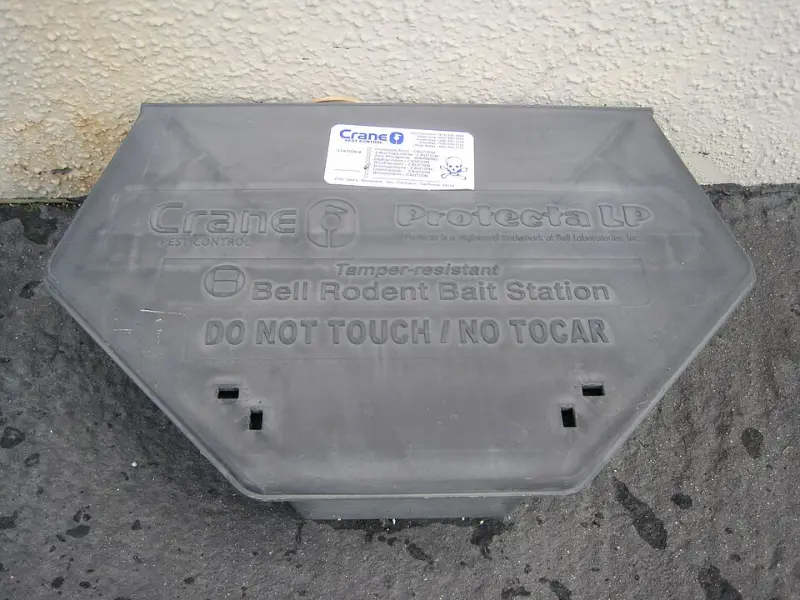
Table of Contents
Types of Rat Poison
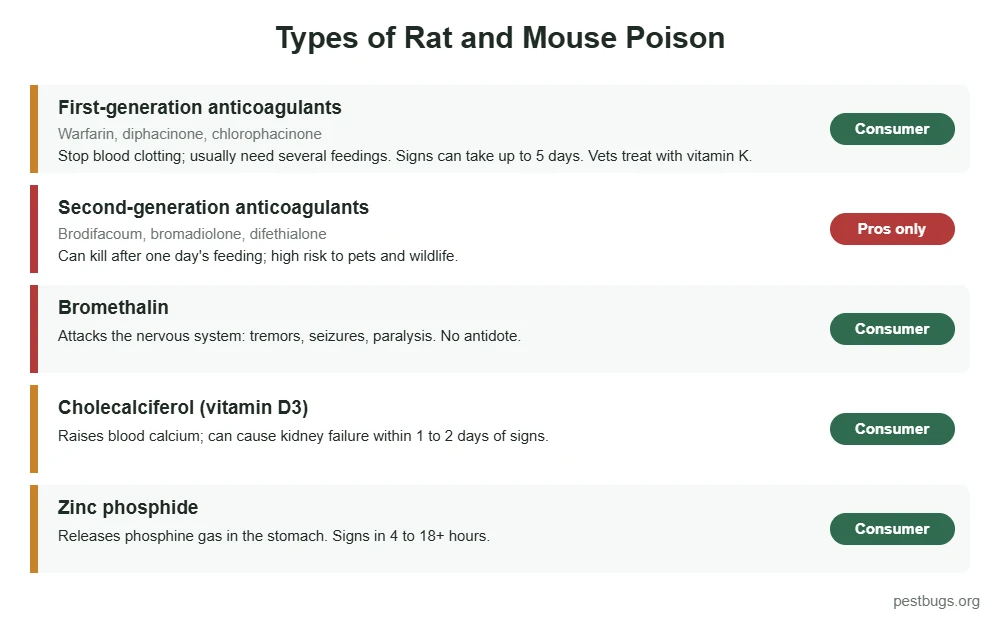
| Type | Active ingredients | How it works | Sold to homeowners? |
|---|---|---|---|
| First-generation anticoagulants | Warfarin, diphacinone, chlorophacinone | Block blood clotting; usually need several feedings | Yes, in bait stations |
| Second-generation anticoagulants | Brodifacoum, bromadiolone, difethialone, difenacoum | Block clotting; can kill after one day’s feeding | No, professionals only |
| Bromethalin | Bromethalin | Stops nerve cells from making energy; brain swelling and paralysis | Yes, in bait stations |
| Cholecalciferol | Vitamin D3 | Raises blood calcium to toxic levels; affects heart and kidneys | Yes, in bait stations |
| Zinc phosphide | Zinc phosphide | Turns into phosphine gas in the stomach | Yes, in bait stations |
Rules for Using Rat Poison Safely
- Use only ready-to-use bait stations as sold, and follow the label exactly. Refillable stations can come with up to one pound of refill bait.
- Place stations only where children and pets can’t reach them, such as behind appliances, in locked areas or along exterior walls.
- Store poison in a locked cabinet or shed, never near food or pet food.
- Remove dead rodents promptly, wearing gloves, so pets and wildlife don’t eat them.
- Seal entry points first, so rats don’t die inside your walls.
Why Poison Isn’t Always the Best Choice
- Dead rodents in walls: poisoned rats and mice often die in hidden places, causing strong odors and attracting flies.
- Pets: dogs and cats can eat bait or poisoned rodents. Rodenticides are a common cause of pet poisoning.
- Wildlife: hawks, owls and other predators can be poisoned by eating poisoned rodents, often after repeated small doses.
- Rodents keep coming: poison doesn’t fix the gaps that let rodents in.
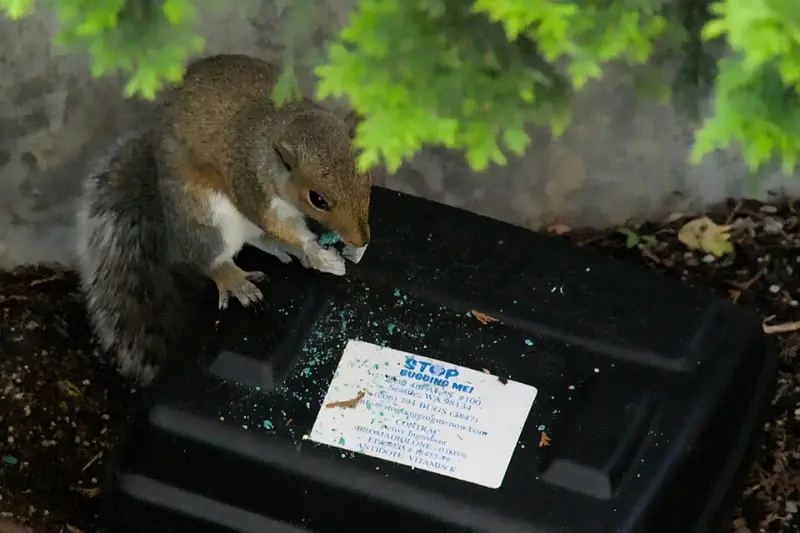
For most homes, sealing gaps and trapping is safer and works better indoors. See how to get rid of rats and the best mouse traps.
Signs of Rat Poison in Pets
- Anticoagulants: weakness, lethargy and trouble breathing; less often bleeding gums, bruising or seizures. Signs can be delayed up to 5 days.
- Bromethalin: muscle tremors, seizures, sensitivity to light or noise, and later loss of control of the hind legs. Signs can appear from 8 to 12 hours to several days after eating it.
- Cholecalciferol: vomiting, weakness, loss of appetite, more thirst and urination, starting 12 to 36 hours after exposure.
- Zinc phosphide: vomiting (sometimes with a garlic smell), anxiety, staggering and convulsions.
What to Do If a Pet or Child Eats Rat Poison
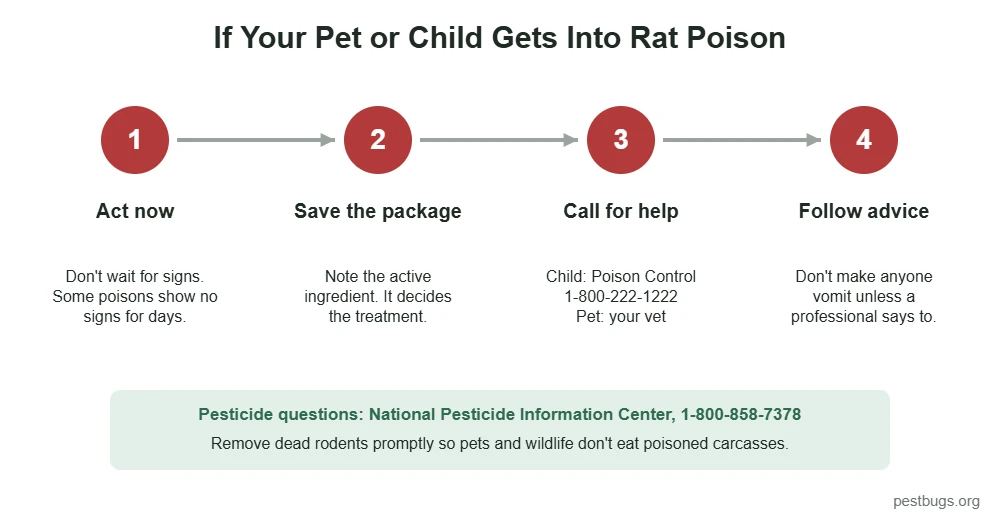
Don’t wait for symptoms. Keep the package so you can tell the professional the active ingredient. For a person, call Poison Control at 1-800-222-1222. For a pet, call your vet or an emergency animal hospital. Vets can treat anticoagulant poisoning with vitamin K, but there is no antidote for bromethalin, so fast care matters. For pesticide questions, the National Pesticide Information Center is at 1-800-858-7378.
Safer rodent control supplies
- Large rat snap traps
- Tamper-resistant bait stations (also useful as trap covers)
- 1/4-inch hardware cloth for sealing gaps
- Disposable gloves
As an Amazon Associate, Pestbugs earns from qualifying purchases. Always read and follow pesticide labels.
FAQ
Homeowners can buy baits with bromethalin, cholecalciferol, diphacinone, chlorophacinone, warfarin or zinc phosphide in bait stations. Second-generation anticoagulants like brodifacoum are restricted to professionals.
It depends on the type. Many anticoagulants need several feedings, and signs can take days to appear. Other types act faster. Poisoned rats often die hidden inside walls or burrows.
No rat poison is completely safe around pets. Use only tamper-resistant stations placed where pets can’t reach them, and remove dead rodents promptly.
Call your vet or an emergency animal hospital right away, even if your dog seems fine, and bring the package. Treatment depends on the active ingredient.
Consumer rat and mouse poisons must come inside ready-to-use bait stations, with refill bait only for refillable stations. Loose bait for open use is not sold to homeowners.
Indoors, usually yes. Traps let you confirm the catch and remove the body, so you avoid odors from rodents dying in walls and the risk of poisoning pets.
Sources
- U.S. EPA: Safely Use Rodent Bait Products
- U.S. EPA: Rodent Control Pesticide Safety Review
- National Pesticide Information Center: Rodenticides Fact Sheet
- Cornell Wildlife Health Lab: Rodenticide Toxicity
- UC IPM Pest Notes: Rats