
To get rid of voles, remove the tall grass, weeds, and mulch they hide in, protect trees and beds with 1/4-inch hardware cloth, and trap them with mouse snap traps set across their runways. Voles are small, stocky rodents that make narrow runways through the grass and gnaw on roots, bulbs, and tree bark. They breed fast, with 5 to 10 litters a year, so act early. Repellents, sonic devices and flooding don’t reliably work.
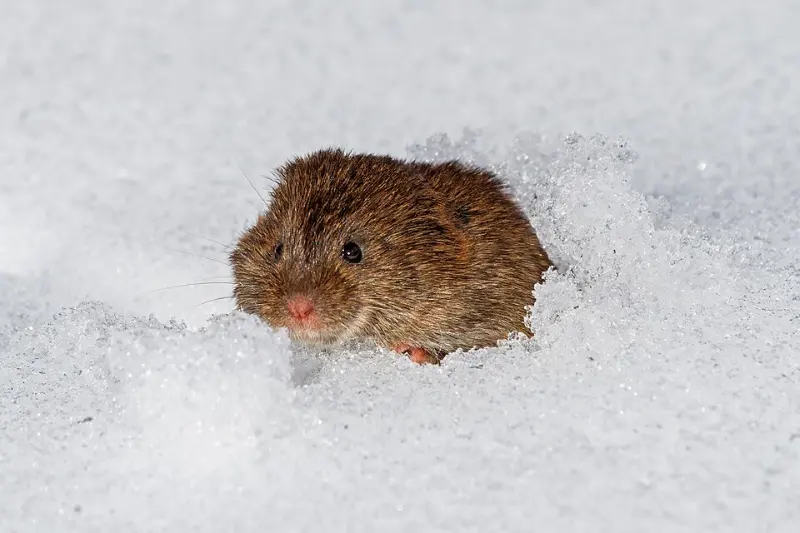
Table of Contents
What Are Voles?
Voles, also called meadow mice or field mice, are rodents about 5 to 8 inches long including the tail. Compared with house mice, they have a stockier body, a short tail, small ears and small eyes. They rarely come indoors. Instead they live in lawns, gardens, orchards and fields, where they eat grass, roots, seeds, bulbs and bark.
Signs of Voles
- Runways: narrow, worn paths through the grass, often easiest to see in spring after the snow melts.
- Burrow openings: small open holes about 1 1/2 to 2 inches across, with no mound of soil.
- Droppings: about 3/16 inch long, green when fresh and turning brown or gray, along runways.
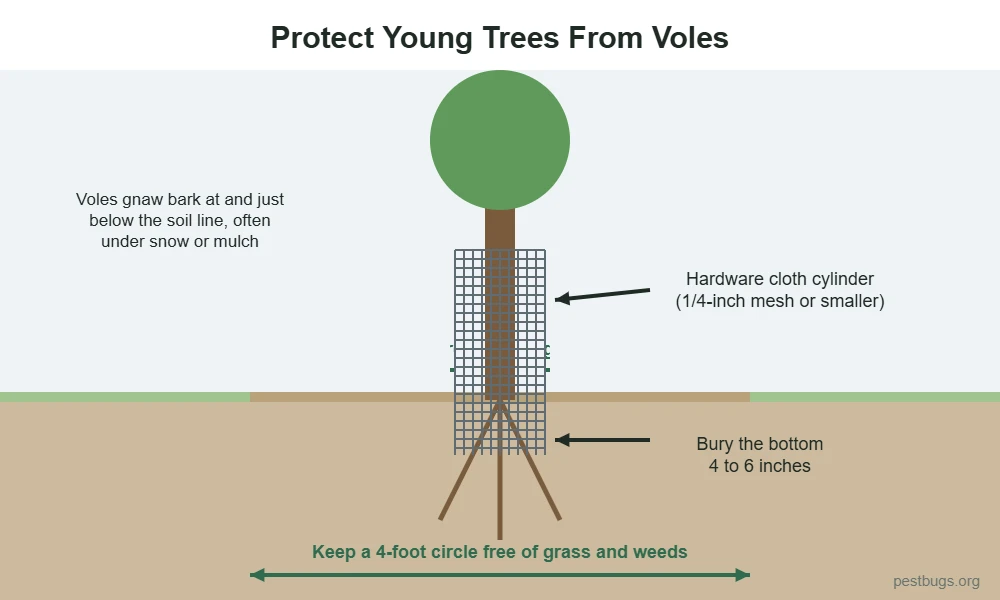
- Gnawed bark: small gnaw marks about 1/8 inch wide at the base of trees and shrubs, from a few inches above the ground to a few inches below it.
- Missing bulbs and roots: plants that wilt or pull up easily because voles ate the roots.
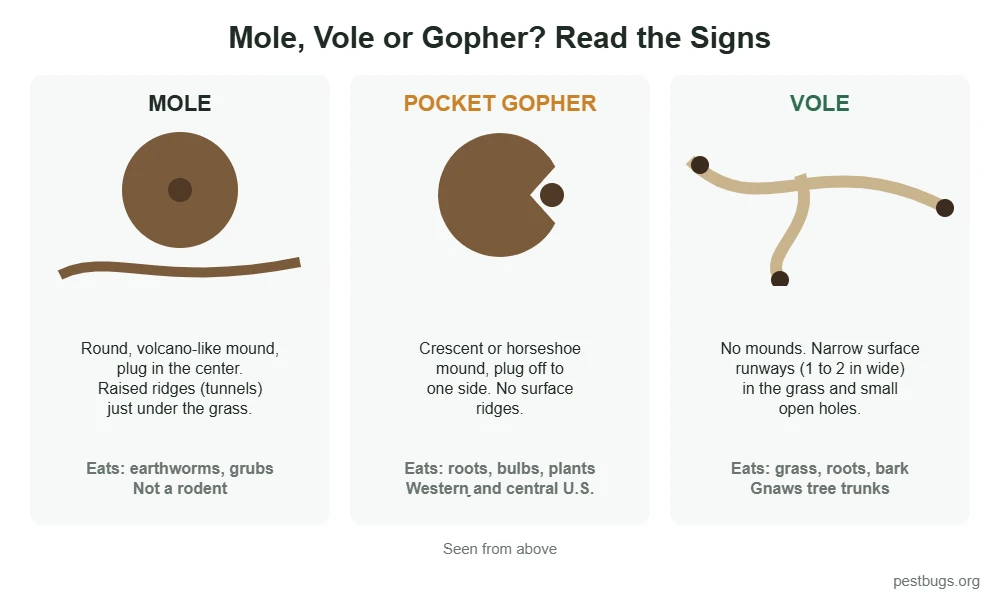
If you see raised ridges and round mounds instead, you likely have moles; see how to get rid of moles. Crescent-shaped mounds point to gophers.
Why Voles Are a Problem
Voles girdle young trees by chewing the bark around the trunk or roots, which can kill the tree. They also eat bulbs and tubers, damage lawns and gardens, and can chew holes in drip irrigation lines. Their numbers can explode: females can breed at 35 to 40 days old and have 5 to 10 litters of 3 to 6 young a year, and in peak years, which come every 3 to 6 years, there can be several thousand voles per acre.
How to Get Rid of Voles in Your Yard
1. Remove cover
Voles avoid open ground, where hawks, owls, cats and other predators can catch them. Mow regularly, remove weeds and heavy ground cover, keep mulch thin and pulled away from trunks, and keep a circle about 4 feet across around young trees free of vegetation.
2. Protect trees and beds
Wrap young trees with cylinders of hardware cloth, sheet metal or heavy plastic, buried 4 to 6 inches deep. To protect a garden bed, use a fence of 1/4-inch or smaller wire mesh at least 12 inches high, with the bottom 6 to 10 inches buried.
3. Trap them
Use ordinary mouse snap traps. Set them at right angles across runways, with the trigger in the path, and bait with peanut butter. Cover each trap with a box or board to protect birds and pets. A small garden may need about a dozen traps, and larger areas many more. After catches stop in one spot, move the traps 15 to 20 feet away. See the best mouse traps.
4. Baits only with care
Toxic vole baits are restricted in many places and can poison pets and wildlife. Professionals mostly use them in non-residential areas. For most homeowners, habitat changes, barriers and trapping are safer and work better.
What Doesn’t Work on Voles
- Repellents: results are questionable, and they have to be applied before damage starts.
- Gas cartridges: not effective for voles.
- Ultrasonic and electromagnetic devices.
- Flooding burrows.
Vole control supplies
- 1/4-inch hardware cloth for tree guards and fences
- Tree trunk guards
- Mouse snap traps for runways
- Trap covers to protect birds and pets
As an Amazon Associate, Pestbugs earns from qualifying purchases.
FAQ
Trap them with mouse snap traps set across their runways, and at the same time remove the tall grass, weeds and mulch they use for cover.
Voles are rodents that eat plants, roots and bark and leave surface runways and small open holes. Moles are insect-eaters that dig tunnels and leave raised ridges and round mounds.
Rarely. Voles live outdoors in grass, gardens and orchards. A small rodent indoors is usually a house mouse or deer mouse.
Voles are sometimes called meadow mice or field mice, but they are a different kind of rodent, with a stockier body, a shorter tail and smaller ears than true mice.
Often in fall and winter, when they feed under snow or mulch on bark and roots. You usually notice the damage in spring.
Vole numbers rise and fall in cycles every few years, but in a good year for voles, damage can be severe. Removing cover and trapping early keeps numbers down.
Sources
- UC IPM Pest Notes: Voles (Meadow Mice)
- University of Maryland Extension: Moles (mole vs vole damage)
- UC IPM Pest Notes: Pocket Gophers