
Hantavirus is a rare but serious virus that people in the U.S. catch mainly by breathing in dust contaminated with the urine, droppings or saliva of infected rodents, most often deer mice. Symptoms start 1 to 8 weeks after exposure with fever, fatigue and muscle aches, and can progress to severe breathing problems (hantavirus pulmonary syndrome). The CDC says about 38 percent of people who develop breathing symptoms may die. U.S. hantaviruses don’t spread from person to person. The best protection is keeping rodents out and cleaning up droppings wet, never by sweeping or vacuuming.
This page is general information, not medical advice. If you think you have been exposed and feel sick, contact a doctor.
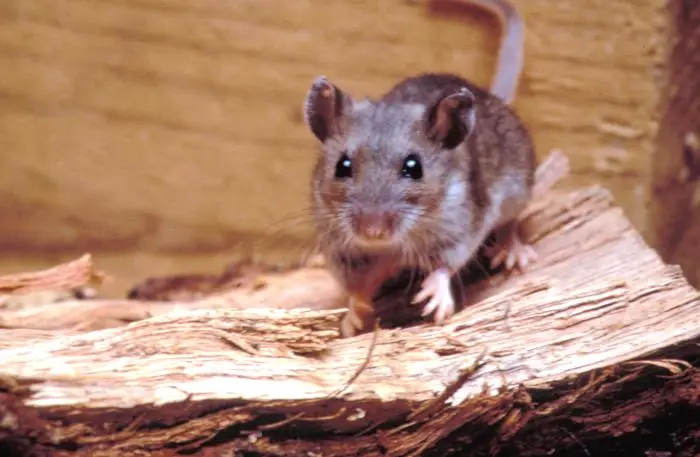
Table of Contents
Hantavirus in the News (2026)
In May 2026, the CDC issued health alerts about a cluster of Andes virus infections among passengers and crew of a cruise ship in the Atlantic Ocean. As of May 15, the World Health Organization had reported 10 cases, including 3 deaths. Andes virus is found in parts of South America and is the only hantavirus known to spread between people, rarely and usually after close, prolonged contact. The CDC said the risk to the American public was extremely low. The hantaviruses found in the U.S. are spread by rodents, not by people.
How Hantavirus Spreads
People mostly get hantavirus by breathing in the virus. When infected rodent urine, droppings or nesting material dries, sweeping, vacuuming or moving stored items can stir tiny particles into the air. Less often, people are infected by touching contaminated surfaces and then their nose or mouth, by eating contaminated food, or through a rodent bite or scratch.
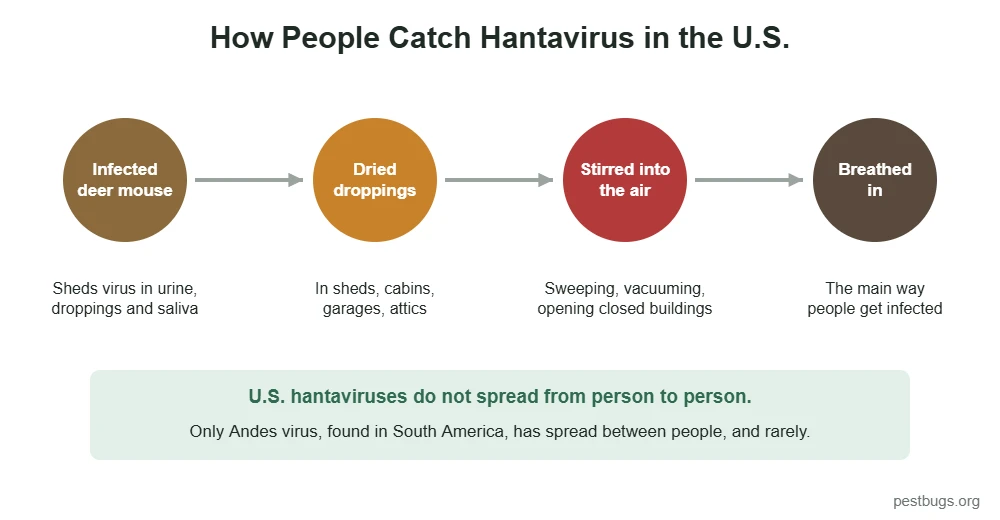
Rodents in and around the home are the main risk. Cases mostly happen in rural areas where forests, fields and farms give rodents habitat. Higher-risk tasks include opening and cleaning cabins, sheds, barns, garages and attics that have been closed up with mice inside.
Which Mice Carry Hantavirus?
In the U.S., the deer mouse is the most common source of the hantavirus that causes hantavirus pulmonary syndrome. Deer mice have a brown back, a sharply white belly and feet, big eyes and ears, and a tail that is dark on top and white below. House mice, which are the usual mice inside homes, are not the main carrier, but their droppings still carry other germs and should be cleaned up safely. See field mice and deer mice to tell them apart.
Rats can carry other diseases, such as leptospirosis; see how to get rid of rats.
Hantavirus Symptoms
- Early (1 to 8 weeks after exposure): fatigue, fever and muscle aches, especially in the thighs, hips, back and shoulders. About half of patients also have headaches, dizziness, chills or stomach problems such as nausea, vomiting, diarrhea or abdominal pain.
- Late (4 to 10 days after early symptoms): coughing, shortness of breath and tightness in the chest as the lungs fill with fluid.
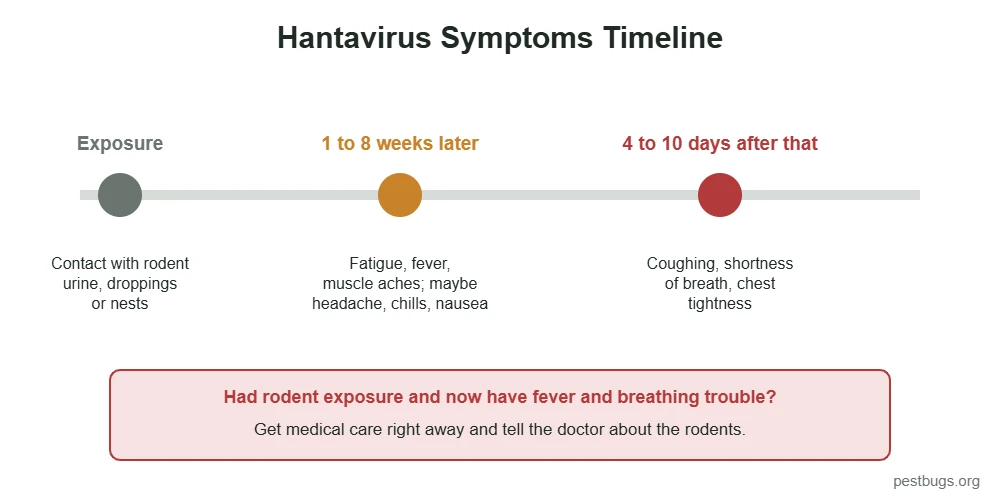
There is no specific treatment or cure, but early care in a hospital, including breathing support, improves the chance of survival. If you have been around rodents and develop these symptoms, see a doctor right away and mention the rodent exposure.
How to Clean Up Safely and Prevent Hantavirus
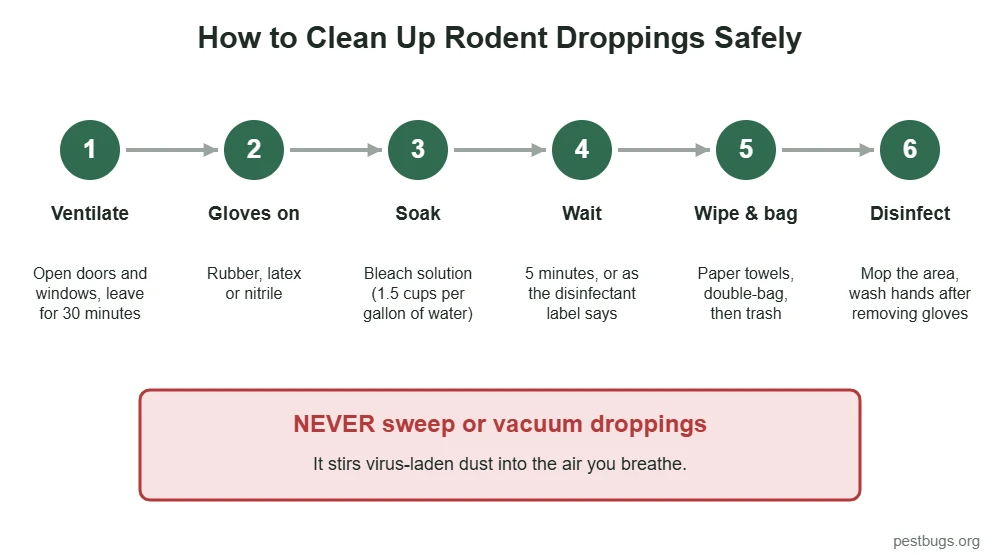
- Air it out: open doors and windows and leave the area for at least 30 minutes before cleaning, especially in closed cabins, sheds or garages.
- Wear gloves (rubber, latex or nitrile). Don’t sweep or vacuum droppings, nests or dead mice.
- Soak with disinfectant: spray droppings, urine, nests and dead mice with a bleach solution (1.5 cups of bleach per gallon of water) or an EPA-registered disinfectant until wet, and let it sit for at least 5 minutes or as the label says.
- Wipe and bag: pick up material with paper towels, double-bag it and throw it out. Then disinfect the area and wash your hands after removing gloves.
- Keep rodents out: seal gaps wider than 1/4 inch, store food in sealed containers, and trap rodents with snap traps (not glue traps).
For heavy infestations or closed buildings full of droppings, a regular dust mask offers little protection. Consider a respirator with HEPA filters or hire a professional. More detail: mouse droppings vs rat droppings and safe cleanup and how to get rid of mice.
FAQ
Mostly by breathing in dust contaminated with the urine, droppings or saliva of infected rodents, usually deer mice. Less often, through touching contaminated surfaces and then your face, contaminated food, or a rodent bite.
House mice are not the main carrier in the U.S.; deer mice are. But it can be hard to tell mice apart, and house mouse droppings carry other germs, so clean all rodent droppings the safe, wet way.
Fatigue, fever and muscle aches 1 to 8 weeks after exposure, sometimes with headache, dizziness, chills, nausea or stomach pain. Breathing problems can follow 4 to 10 days later.
Not the hantaviruses found in the U.S. Only Andes virus, found in South America, has spread between people, and rarely.
Yes, many people do, especially with early hospital care. But hantavirus pulmonary syndrome is serious: about 38 percent of people who develop breathing symptoms may die.
It varies with conditions, so treat all old droppings as possibly infectious. Always soak them with disinfectant before cleaning, and never sweep or vacuum them.
Sources
- CDC: About Hantavirus
- CDC: Clinician Brief, Hantavirus Pulmonary Syndrome
- CDC Health Alert Network: 2026 Hantavirus Outbreak (HAN 00529)
- CDC: How to Clean Up After Rodents
- UC IPM Pest Notes: Deer Mouse