
Millipedes come into houses when heavy rain, drought or fall weather drives them out of the soil, mulch and leaf litter next to the foundation. They are slow, rounded, brownish-black creatures about an inch long with two pairs of legs on most body segments, and they curl into a coil when disturbed. They don’t bite, can’t breed indoors and die within a few days from drying out. Sweep or vacuum them up, seal gaps under doors, and move mulch and leaves away from the house.
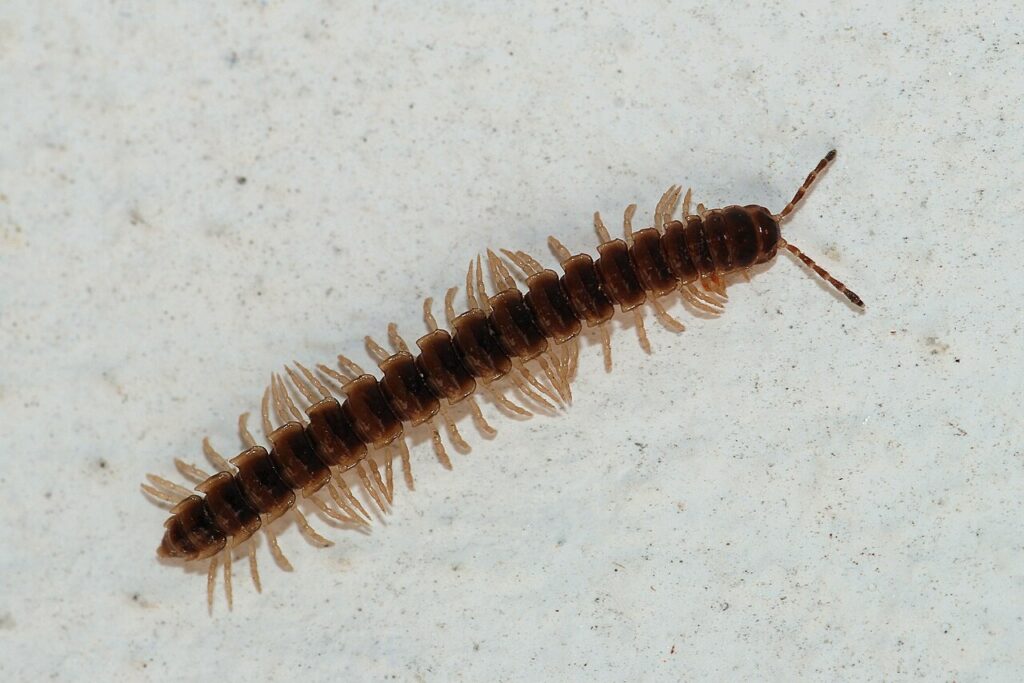
Table of Contents
What Millipedes Look Like
- Size: usually about 1/2 to 1 1/2 inches long and very slim.
- Body: long, rounded rather than flat, with many segments.
- Legs: two pairs on most body segments; the first few segments have one pair. Most species have far fewer than the thousand legs the name suggests, usually 30 to 300.
- Color: brownish-black or mottled with orange, red or brown.
- Behavior: slow-moving; curls into a tight coil or C shape when touched or when it dies.
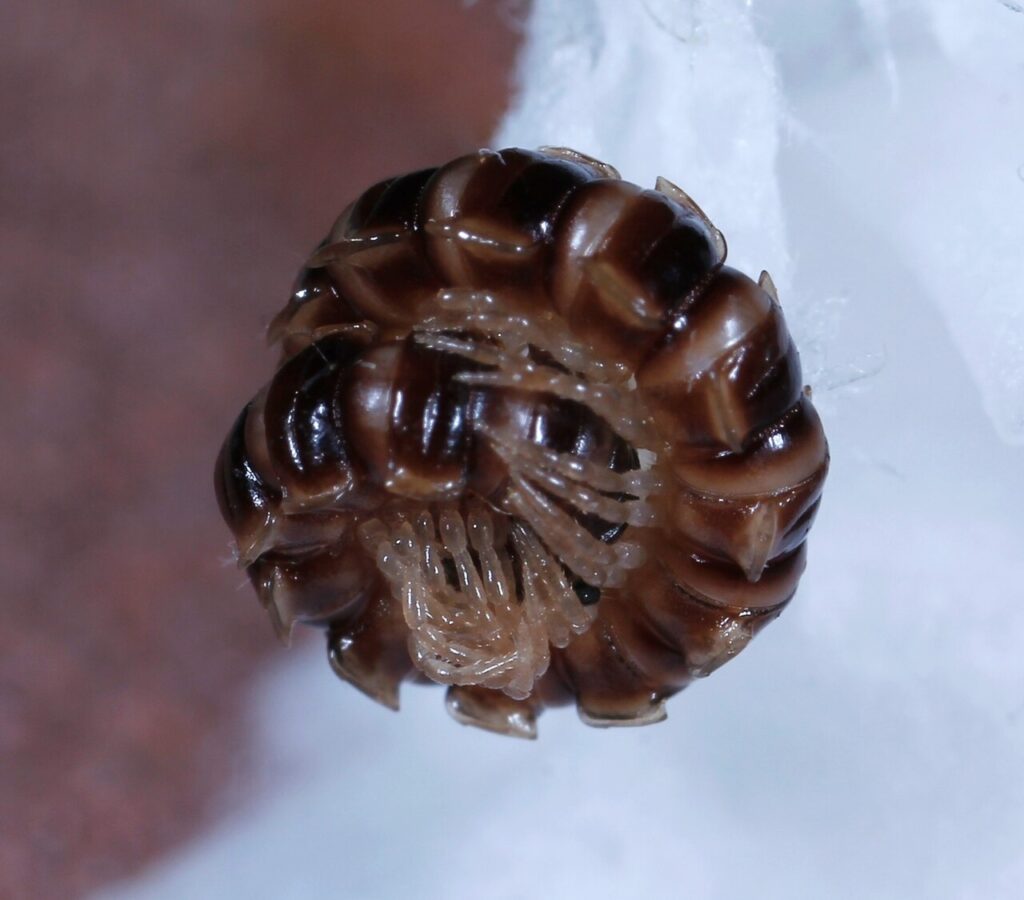
The greenhouse millipede, a flat-backed, light brown species introduced from Asia, is the one most often found inside homes. Garden millipedes and other dark, rounded species also wander in. Giant species such as the North American giant millipede grow to about 4 inches but live in woods and rarely come indoors.
Millipede vs centipede
| Millipede | Centipede | |
|---|---|---|
| Legs per segment | Two pairs | One pair |
| Body | Rounded, cylindrical | Flattened |
| Speed | Slow; curls up | Fast |
| Antennae | Short | Long |
| Diet | Decaying leaves and wood | Insects and other small animals |
| Bites? | No | Can bite, mild like a bee sting |
For the long-legged centipede often seen in basements, see house centipedes; other species are in types of centipedes.
Why Millipedes Come Into Your House
Millipedes live outdoors in damp soil, mulch, leaf litter, compost and under rocks and boards, where they eat decaying plant matter. They end up indoors when something pushes them out:
- Heavy rain: soaked soil and leaf litter drive them to the surface and toward buildings.
- Drought: very dry conditions also send them looking for moisture.
- Fall migration: in cool, rainy weather in September and October they move in large numbers, possibly looking for winter shelter. A second, smaller wave can come in mid-spring.
- Mulch and debris against the house: thick mulch, leaf piles and woodpiles next to the foundation put large populations right at your doors.
Millipedes can travel 50 feet or more from woods or fields, and some climb walls and fences. They get in under doors, through foundation cracks, weep holes and gaps around basement windows.
Why Millipedes Die Indoors
A house is too dry for millipedes. They can’t reproduce inside and dry out and die within hours to a few days, often leaving piles of curled-up bodies in basements and along doorways. Outdoors, some species live several years.
Are Millipedes Poisonous or Dangerous?
- Bites: millipedes don’t bite or sting.
- Defensive fluid: many species give off a smelly liquid when handled or crushed. It can cause a burning or blistering reaction on sensitive skin, stain skin brown and may be harmful if rubbed into the eyes. Wash your hands after touching one.
- Stains: crushed millipedes stain rugs and fabrics.
- Pets: millipedes don’t attack pets, and their smell usually keeps animals from eating them.
- Your home: they don’t damage structures, furniture or food.
How to Get Rid of Millipedes in the House
- Sweep or vacuum them up. That is all you need to do for the ones inside; they won’t survive or breed indoors.
- Seal entry points. Add door sweeps and weatherstripping, caulk foundation cracks and gaps around basement windows, and screen weep holes.
- Clear the foundation. Pull mulch, leaf litter, compost, woodpiles and paving stones back from the walls. A raked, bare strip about 3 feet wide lets the soil dry.
- Remove plastic under mulch. Weed barrier plastic holds moisture that millipedes love.
- Fix moisture. Repair leaky faucets, gutters and downspouts, point downspouts away from the house, and ventilate crawl spaces.
Do you need insecticide?
Indoor sprays, fogs and bug bombs don’t stop millipedes coming in and aren’t needed. For heavy, repeated invasions, a perimeter treatment applied outdoors in a band around the foundation can cut numbers, but on its own it often disappoints. Fixing mulch and moisture is what lasts.
Other Fall Invaders
Millipedes often show up alongside Asian lady beetles, stink bugs, cluster flies and western conifer seed bugs. Sealing the house in late summer helps keep all of them out.
Millipede control supplies
- Door sweeps and weatherstripping for exterior doors
- Exterior caulk for foundation cracks
- Downspout extensions to move water away from the foundation
- Small shop vacuum for basements and garages
As an Amazon Associate, Pestbugs earns from qualifying purchases.
FAQs
Millipedes wander indoors when their outdoor habitat changes: heavy rain that floods the soil, drought that dries it out, or fall migrations as they look for winter shelter. They come in under doors and through foundation cracks from mulch, leaf litter and lawns next to the house.
Millipedes don’t bite or sting. Many release a smelly defensive fluid that can irritate or stain skin and may be harmful if rubbed into the eyes, so wash your hands after touching one. They aren’t dangerous to people or pets.
No. Millipedes can’t reproduce indoors and dry out and die within hours to a few days. Large numbers inside mean conditions outdoors are driving them in.
Millipedes have two pairs of legs on most body segments, a rounded body, short antennae and move slowly, often curling up. Centipedes have one pair of legs per segment, a flatter body and long legs, move fast and hunt insects.
Sweep or vacuum them up, seal gaps under doors and around the foundation, and fix the conditions outside: pull mulch, leaves and woodpiles back from the foundation, fix gutters and leaks, and let a strip of soil next to the house dry out.
Usually not. Indoor sprays and bug bombs don’t help. For heavy, repeated invasions, an outdoor perimeter treatment around the foundation can reduce numbers, but fixing moisture and mulch matters more.
Sources
- University of Kentucky Entomology: Centipedes & Millipedes in & Around the Home (ENTFACT-645)
- Ohio State University Extension: Millipedes
- Iowa State University Extension: Millipedes
- Colorado State University Extension: Millipedes, Centipedes and Sowbugs
- NC State Plant Disease and Insect Clinic: Heavy Rains Bring Masses of Millipedes
- Penn State Extension: Millipedes
- Missouri Department of Conservation: Millipedes
Facts in this guide are checked against the sources above and reviewed when they change. See how we research in our editorial policy.