
Fungus gnats are tiny, dark, mosquito-like flies about 1/8 inch long that hover around houseplants and run across damp potting soil. Their larvae live in the top layer of wet soil. To get rid of them, let the top inch or two of soil dry between waterings, catch adults with yellow sticky traps, and kill the larvae by watering with a Bti product such as Mosquito Bits. They are harmless to people and don’t bite. Overwatering is almost always the cause, and problems peak in fall and winter when plants come indoors.
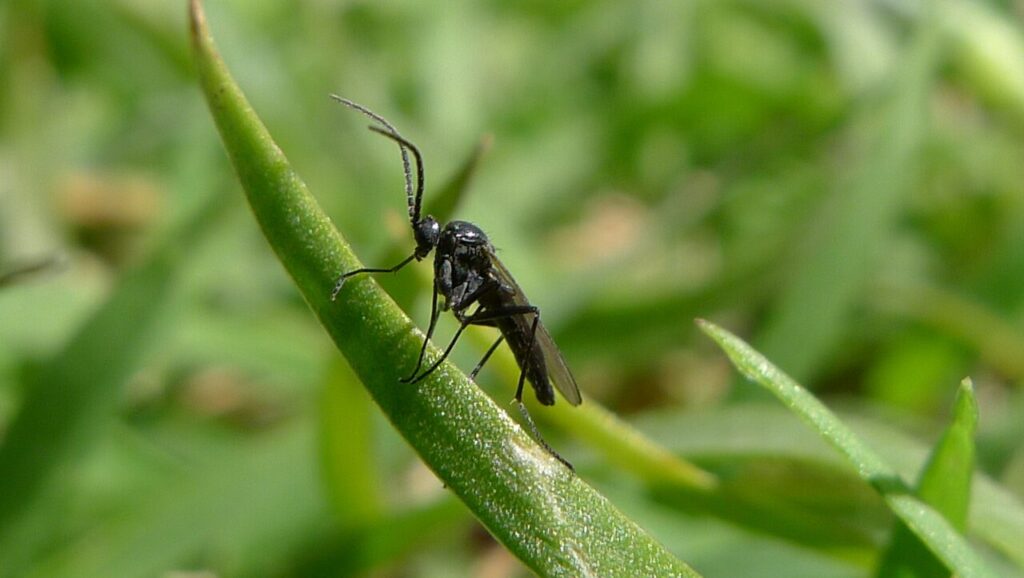
Table of Contents
Fungus Gnat or Something Else?
| Fungus gnat | Fruit fly | Drain fly | |
|---|---|---|---|
| Look | Slender, dark gray to black, long legs and antennae, mosquito-like | Tan body, dark abdomen, red eyes | Fuzzy, moth-like, wings held like a roof |
| Size | 1/16 to 1/8 inch | 1/16 to 1/8 inch | About 1/12 inch |
| Where you see them | Around houseplants and windows, running on soil | Around ripe fruit, trash, recycling, drinks | Near sinks, tubs, floor drains |
| Breeds in | Damp potting soil | Fermenting fruit, vegetables and spills | Slime in drains and pipes |
| Quick fix | Dry soil, Bti, sticky traps | Remove ripe produce and clean bins | Scrub and flush drains |
A quick test: water a plant and watch the soil. If small dark flies run across it and up the sides of the pot, they are fungus gnats breeding there.
Fungus Gnat Identification
Adults
- About 1/16 to 1/8 inch long, dark and delicate
- Long legs and antennae; look like tiny mosquitoes
- Clear to smoky gray wings with a Y-shaped vein, folded flat over the back
- Weak fliers that stay near pots, run across soil and gather at windows
Larvae
- Legless, clear to white bodies with a shiny black head
- Up to about 1/4 inch long
- Live in the top layer of moist potting soil, usually the top inch or two
- Heavy infestations can leave shiny slime trails on the soil surface
Fungus Gnat Life Cycle
Females lay up to about 200 eggs in tiny clusters in cracks on moist soil. Eggs hatch in three to six days, larvae feed on fungi and decaying organic matter in the soil for one to two weeks, then pupate. Adults emerge a few days later and live about a week. Egg to adult takes about three to four weeks, and generations overlap indoors, so gnats appear continuously.
Why Fungus Gnats Appear in Fall and Winter
- Plants come indoors: houseplants that spent summer outside often bring gnats in with them.
- Overwatering: plants use less water on short, cloudy winter days, so watering on a fixed schedule keeps soil soggy.
- Rich potting mix: peat-heavy or not fully composted mixes stay wet and feed larvae.
- Poor drainage: pots without holes, and water sitting in saucers.
- New plants and old potting soil: infested plants from stores or open bags of potting mix stored outside.
Are Fungus Gnats Harmful?
Adult fungus gnats don’t bite people or pets and don’t spread disease. Larvae feed mainly on fungi and decaying matter, but in large numbers they eat root hairs and can stunt or kill seedlings, cuttings and young plants. Established houseplants rarely suffer real damage. A wilting plant is more often suffering from overwatering or root rot than from gnats.
How to Get Rid of Fungus Gnats
- Let the soil dry. Allow the top inch or two of potting soil to dry out before watering again. Dry soil kills eggs and young larvae and makes the pot less attractive.
- Water from below. Set pots in a tray of water and let them soak up moisture from the bottom so the surface stays drier, then empty the tray.
- Catch adults with yellow sticky traps. Cut traps into small squares on sticks and place them just above the soil. Replace them every few days. They reduce adults and show whether the problem is improving, but won’t solve it alone.
- Kill larvae with Bti. Bti (Bacillus thuringiensis subspecies israelensis) is a natural soil bacterium that kills fungus gnat larvae. Soak Mosquito Bits or crumbled Mosquito Dunks in water for about 30 minutes, then water the plants with it; Gnatrol is a liquid version. Follow the label and repeat every five to seven days. It doesn’t affect eggs, pupae or adults, so results take a few weeks.
- Cover the soil. A 1/2- to 1-inch layer of coarse sand or fine gravel on top of the soil keeps the surface dry and makes it harder for females to lay eggs.
- Repot badly infested plants. Remove the old soil, rinse the roots, and replant in fresh, sterile potting mix in a clean pot.
Other options
- Beneficial nematodes: Steinernema feltiae nematodes, sold for fungus gnats, kill larvae in moist soil between 60 and 90°F. They are perishable, so use them promptly.
- Hydrogen peroxide: some gardeners drench soil with one part 3% hydrogen peroxide to four parts water. It is lightly studied; try drying the soil and Bti first, and don’t use it on seedlings.
- Insecticides: rarely needed or effective indoors. If used, choose a pyrethrin product labeled for houseplants and never fog the room.
Apple cider vinegar traps catch fruit flies, not fungus gnats.
How to Prevent Fungus Gnats
- Water only when the top of the soil is dry, and use pots with drainage holes.
- Use sterile or pasteurized potting mix, never garden soil.
- Store bags of potting mix sealed and off the ground.
- Check new plants, and keep them apart with a sticky trap for a few weeks.
- Remove fallen leaves and debris from the soil surface.
- Inspect plants for gnats before bringing them back indoors in fall.
Fungus gnat control supplies
- Mosquito Bits (Bti) to kill larvae in soil
- Yellow sticky traps for pots
- Beneficial nematodes for larger collections
- Sterile indoor potting mix for repotting
As an Amazon Associate, Pestbugs earns from qualifying purchases.
FAQs
Let the top inch or two of potting soil dry out between waterings, set yellow sticky traps at soil level to catch adults, and drench the soil with a Bti product such as Mosquito Bits soaked in water to kill the larvae. Repeat the Bti every five to seven days.
Yes. Mosquito Bits and similar products contain Bti, a natural soil bacterium that kills fungus gnat larvae in the soil. Soak the granules in water for about 30 minutes, then water the plants with it, and repeat about weekly. Bti doesn’t kill eggs, pupae or adults, so it takes a few weeks.
Small dark gnats around houseplants and windows are usually fungus gnats breeding in damp potting soil. Problems often start in fall, when plants come indoors, and when plants are overwatered in winter. Gnats around fruit or trash are fruit flies; fuzzy flies near sinks are drain flies.
The adults are harmless: they don’t bite people, spread disease or damage plants. Large numbers of larvae can feed on roots and stunt seedlings, cuttings and young plants, though this is uncommon on established houseplants.
Push a few chunks of raw potato, cut side down, into the soil surface and check them after a few days. Fungus gnat larvae, clear-white with shiny black heads, will be feeding on the underside.
Some gardeners drench soil with one part 3% hydrogen peroxide to four parts water, and one extension article mentions it. Most extension guides recommend drying the soil and using Bti instead, and peroxide should not be used on seedlings.
Sources
- UC IPM Pest Notes: Fungus Gnats
- University of Wisconsin Extension: Fungus Gnats on Houseplants
- Colorado State University: Fungus Gnats
- University of Minnesota Extension: Managing Insects on Indoor Plants
- NC State Extension: Fungus Gnats, Tiny Pests in Houseplants
- Oregon State University Extension: Fungus Gnats Everywhere
- U.S. EPA: Bti for Mosquito Control
- University of Minnesota Extension: Moth (Drain) Flies
Facts in this guide are checked against the sources above and reviewed when they change. See how we research in our editorial policy.
Related guides
- How to Get Rid of Gnats in the House: Fruit Flies, Fungus Gnats & Drain Flies
- How to Get Rid of Cluster Flies in Your House (and Where They Come From)
- Biting Midges (No-See-Ums): Bites & How to Get Rid of Them
- Pantry Moths (Indian Meal Moths): How to Get Rid of Them for Good
- Silverfish: What They Are, What They Eat & How to Get Rid of Them