
For most homes, the best mouse traps are simple snap traps, wooden or plastic, baited with a small dab of peanut butter and set in numbers along the walls where you see droppings. They are cheap, fast and reliable. Choose an electronic trap if you don’t want to see or touch the mouse, or a live-catch trap if you don’t want to kill it. Skip glue traps: the CDC advises against them because trapped mice panic and urinate, which spreads germs.
| Trap type | How it works | Best for | Downsides |
|---|---|---|---|
| Snap trap (wood or plastic) | Spring bar kills the mouse when it takes the bait | Most homes; set many at once | You see and handle the mouse; can snap fingers |
| Electronic trap | Battery-powered shock inside a covered box | People who don’t want to see or touch mice | Costs more; needs batteries |
| Live-catch trap (single or multi-catch) | Mouse walks in and a door or ramp keeps it inside | People who don’t want to kill mice | Must check daily and release mice far away |
| Bucket trap | Mouse walks up a ramp and falls into a bucket | Garages, sheds and barns with many mice | Bulky; water versions drown mice |
| Glue trap | Mouse gets stuck on a sticky board | Not recommended | CDC advises against; inhumane |
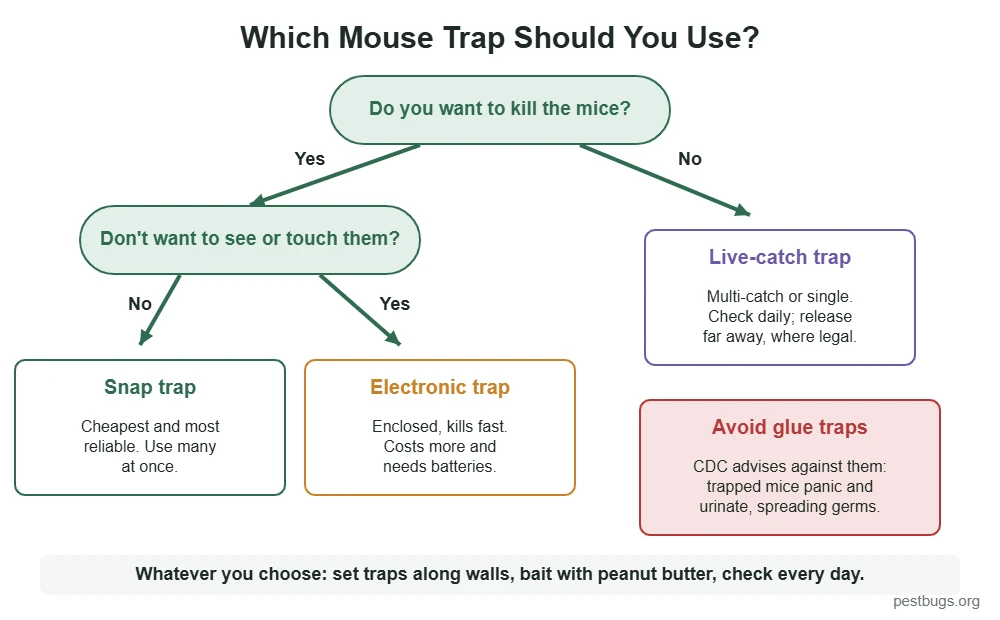
Table of Contents
Snap Traps: The Best Choice for Most Homes
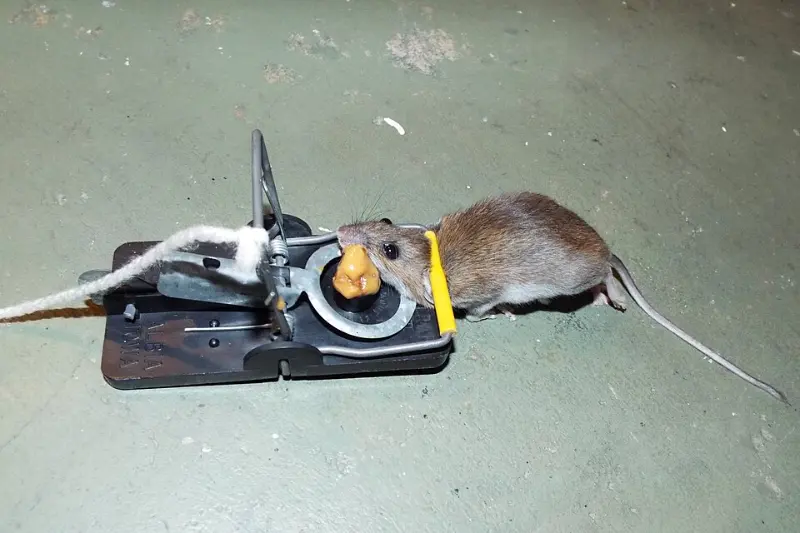
Snap traps have been used for over a century because they work. They kill quickly, cost little, and you can set a dozen or more at once, which matters because a new infestation in an average house may need a couple dozen traps. Plastic snap traps are easier to set than wooden ones and can be washed and reused. Look for traps with a large, sensitive trigger.
Dealing with rats instead? Mouse traps are too small; use large rat traps and the pre-baiting method in how to get rid of rats. For mice in the yard or garden, see voles, which are trapped with the same snap traps.
Electronic Mouse Traps
Electronic traps lure the mouse into a covered chamber and kill it with a high-voltage shock. Many have a light that tells you when a mouse is inside, so you can empty the trap without seeing the mouse. They cost more than snap traps and need batteries, so most people use a few of them alongside snap traps.
Live-Catch and Multi-Catch Traps
Live-catch traps hold the mouse alive. Single-catch traps close a door behind the mouse; multi-catch traps can hold several mice at once. Check them at least once a day, because trapped mice get stressed and can die of cold, hunger or thirst. Release mice well away from your home, and check local rules first. Mice released close by often find their way back in.
Bucket Traps
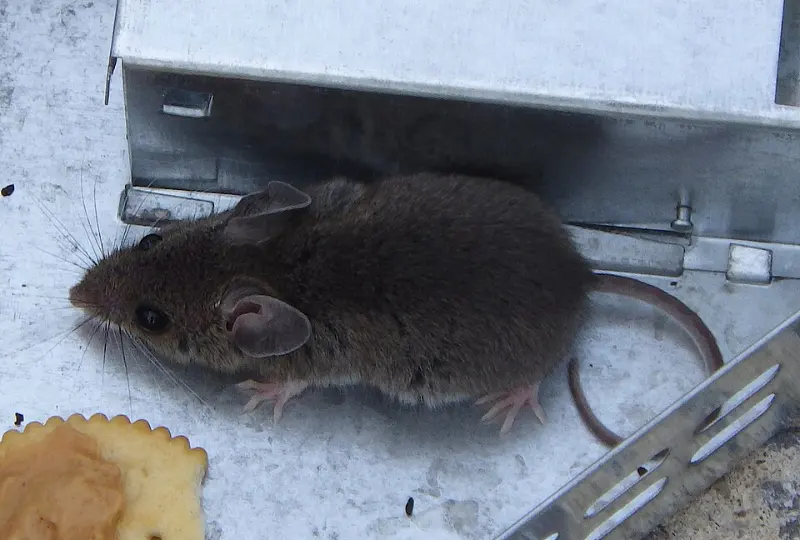
Bucket traps use a ramp and a rolling or tipping lid to drop mice into a bucket. They can catch many mice and work well in garages, sheds and barns. Versions filled with water drown the mice, which is slow and not humane. A dry bucket with smooth sides holds mice alive, but check it daily.
Why to Avoid Glue Traps
The CDC advises against glue traps because mice caught in them panic and urinate, which raises the chance of spreading germs. Mice can also suffer for a long time on the board, and adult mice often learn to avoid them. Use snap, electronic or live-catch traps instead.
Best Bait for Mouse Traps
- Peanut butter: the most popular bait. Use a pea-size dab so the mouse has to work at it and trips the trigger.
- Other foods: hazelnut spread, chocolate, nuts, oats or a small piece of bacon.
- Nesting material in cold weather: a cotton ball or a bit of dental floss tied to the trigger can attract mice looking for nest material.
- Wear gloves when setting and baiting traps, and don’t use so much bait that mice can eat without setting off the trap.
How Many Traps and Where to Put Them
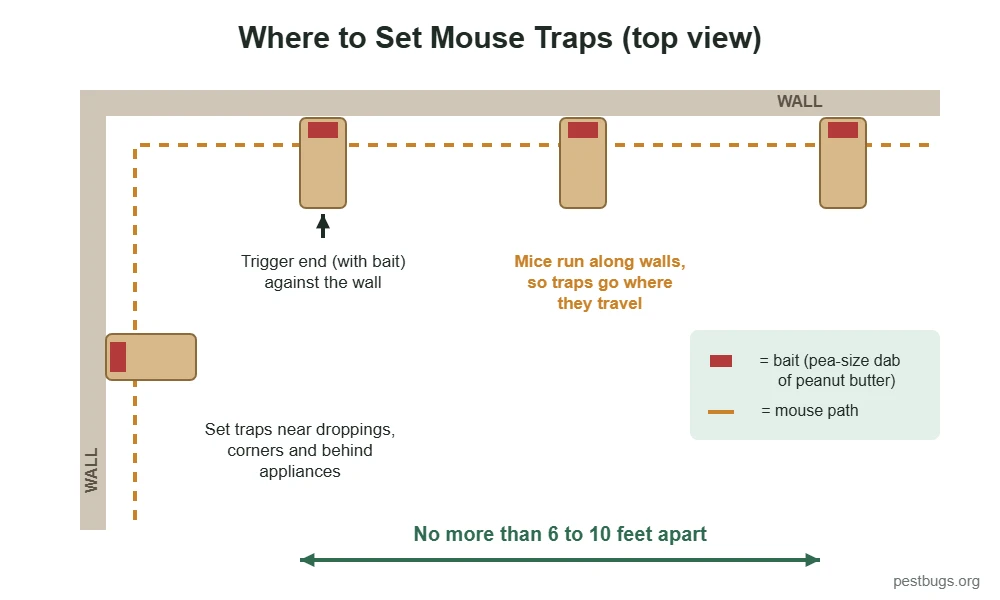
Mice are curious about new objects, so you can set traps right away. Put them along walls where you see droppings or gnaw marks, behind appliances and in cabinets, with the baited end touching the wall. Space them no more than 6 to 10 feet apart, and use more traps than you think you need. Check them every day.
To empty a trap safely, the CDC recommends wearing gloves, spraying the dead mouse and trap with disinfectant or a bleach solution, then sealing the mouse in a plastic bag before throwing it out. Traps work best together with sealing entry points; see how to get rid of mice.
Mouse traps worth having
- Wooden snap traps (cheap, use many)
- Plastic snap traps (easy to set and wash)
- Electronic mouse trap (no seeing or touching)
- Multi-catch live trap
- Disposable nitrile gloves for emptying traps
As an Amazon Associate, Pestbugs earns from qualifying purchases. Check every trap daily.
FAQ
Snap traps are the most effective for most homes because they are cheap, kill quickly and can be set in large numbers along walls. Electronic traps work well too but cost more.
A pea-size dab of peanut butter. Hazelnut spread, chocolate, nuts and oats also work. In cold weather, a cotton ball can attract mice looking for nesting material.
More than you think. A new infestation in an average house may need a couple dozen traps, placed no more than 6 to 10 feet apart along walls where you see signs of mice.
The CDC advises against glue traps because trapped mice panic and urinate, spreading germs. They are also inhumane. Use snap, electronic or live-catch traps instead.
Yes, if you check them daily and release mice well away from your home. Mice released nearby often come back.
Usually the traps are in the wrong place or too few. Move them to where you see fresh droppings, set them along walls with the trigger against the wall, use less bait, and add more traps.
Sources
- CDC: How to Trap Up to Remove Rodents
- University of Nebraska Extension: Controlling House Mice (G1105)
- Internet Center for Wildlife Damage Management: House Mice
- UC IPM Pest Notes: House Mouse
- University of Kentucky: Control of Mice (ENTFACT-617)