
Mouse droppings are small, about 1/8 to 1/4 inch long, with pointed ends, and are scattered in ones and twos. Rat droppings are much larger: about 1/2 inch and pointed for roof rats, and about 3/4 inch, capsule-shaped with blunt ends for Norway rats, often in clumps. Fresh droppings are dark, shiny and soft; old ones are dull, gray and crumbly. Both can carry disease, so never sweep or vacuum them. Soak them with disinfectant first, then wipe them up with gloves on.
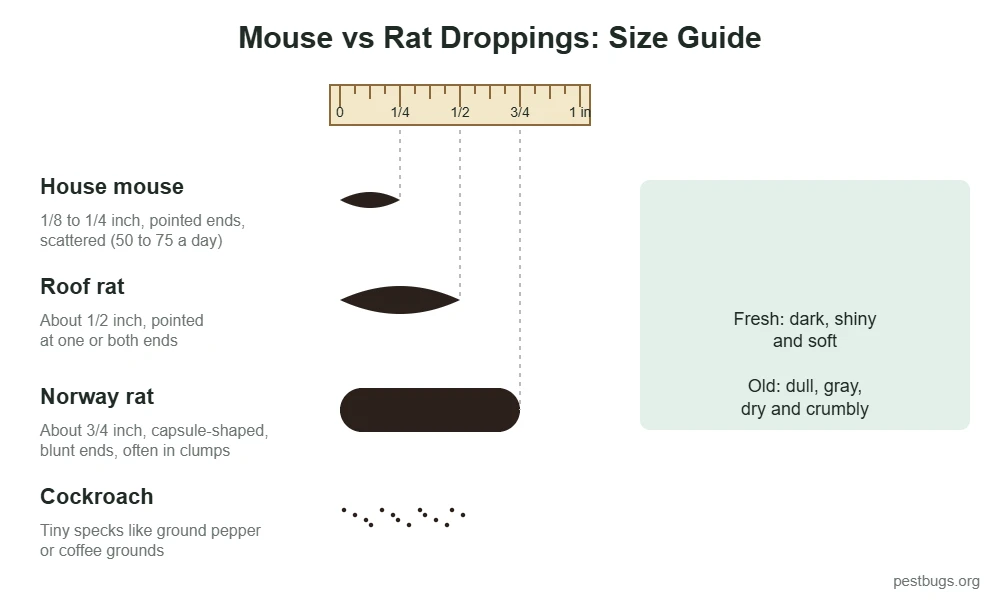
Table of Contents
Mouse Droppings vs Rat Droppings at a Glance
| House mouse | Roof rat | Norway rat | |
|---|---|---|---|
| Length | 1/8 to 1/4 inch | About 1/2 inch | About 3/4 inch |
| Shape | Rice-like, pointed at one or both ends | Pointed at one or both ends, slightly curved | Capsule-shaped, blunt ends |
| How they appear | Scattered along walls and in drawers | Along runways, often high up on shelves, beams and in attics | In clumps along walls, near burrows and food |
| Where to look | Cabinets, under sinks, pantries, behind appliances | Attics, upper walls, garages, near fruit trees | Basements, crawl spaces, garages, around garbage |
What Mouse Droppings Look Like
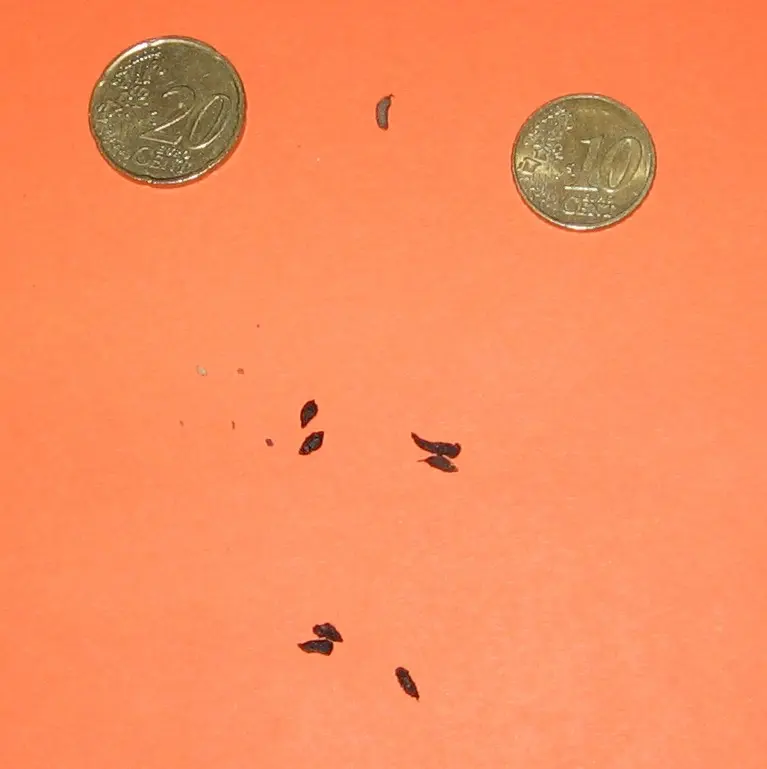
House mouse droppings look like dark grains of rice, about 1/8 to 1/4 inch long and pointed at the ends. A single mouse leaves about 50 to 75 droppings a day, so even one mouse makes a lot of them. You usually find them scattered along walls, in kitchen drawers and cabinets, under sinks, in pantries and behind the stove or refrigerator, often near gnawed food packages.
What Rat Droppings Look Like
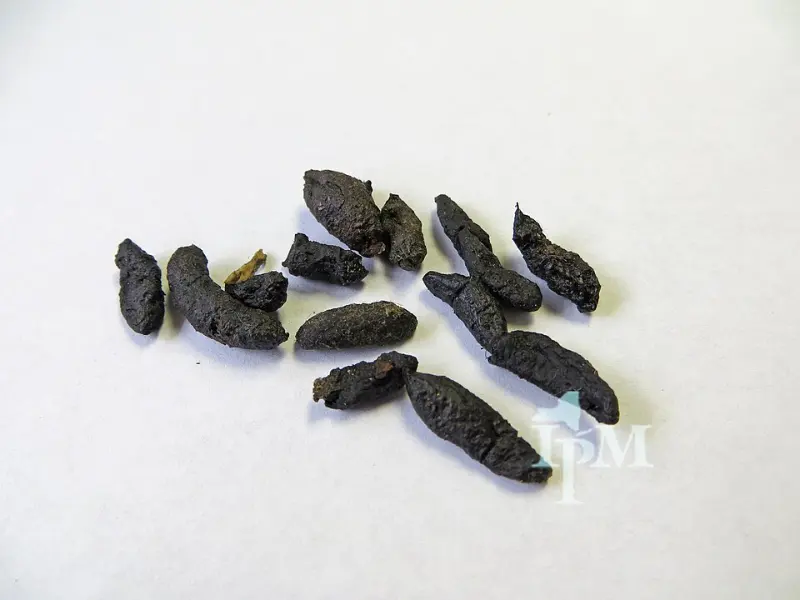
Rat droppings are two to three times longer than mouse droppings. Norway rat droppings are about 3/4 inch long, thick and capsule-shaped with blunt ends, and are often left in clumps near burrows, garbage and along walls. Roof rat droppings are about 1/2 inch long and pointed, and you are more likely to find them up high: in attics, on beams and shelves, and along pipes. Look for other rat signs nearby, such as greasy rub marks and gnaw holes about 2 inches across.
Not sure which rat you have? See roof rats vs Norway rats.
Fresh vs Old Droppings: Is the Infestation Active?
Fresh droppings are dark, shiny and soft. Within a few days they dry out, turn dull and gray, and crumble easily. To check whether rodents are still active, clean up all droppings in an area following the steps below, then look again the next day or two. New droppings mean rodents are still there.
Droppings That Look Similar
- Cockroach droppings: much smaller, like ground pepper or coffee grounds, often in corners and cabinet hinges. See how to get rid of cockroaches.
- Drywood termite pellets (frass): tiny, hard, six-sided pellets in small piles below wood, like fine sand. See termite droppings.
- Larger droppings outdoors or in the attic: may come from squirrels, raccoons or bats. These need different handling, so call a wildlife or pest professional if you are unsure.
Other pest signs people mistake for rodent droppings: flea dirt (black specks on pets and bedding that turn reddish on a wet paper towel) and bed bug fecal spots (dark ink-like stains on mattress seams).
Are Mouse and Rat Droppings Dangerous?
Yes, they can be. Rodent droppings, urine and nesting material can spread several diseases:
- Hantavirus: carried mainly by deer mice in the U.S. People catch it by breathing in dust from dried droppings, urine or nests. It is rare but can be fatal. See hantavirus from mice.
- Salmonella: from food or surfaces contaminated by droppings.
- Lymphocytic choriomeningitis virus (LCMV): carried by house mice.
- Leptospirosis: spread mainly through the urine of rats and other animals, especially in water or soil.
Mouse urine and droppings are also a common indoor allergen that can trigger asthma, especially in children.
How to Clean Up Mouse and Rat Droppings Safely
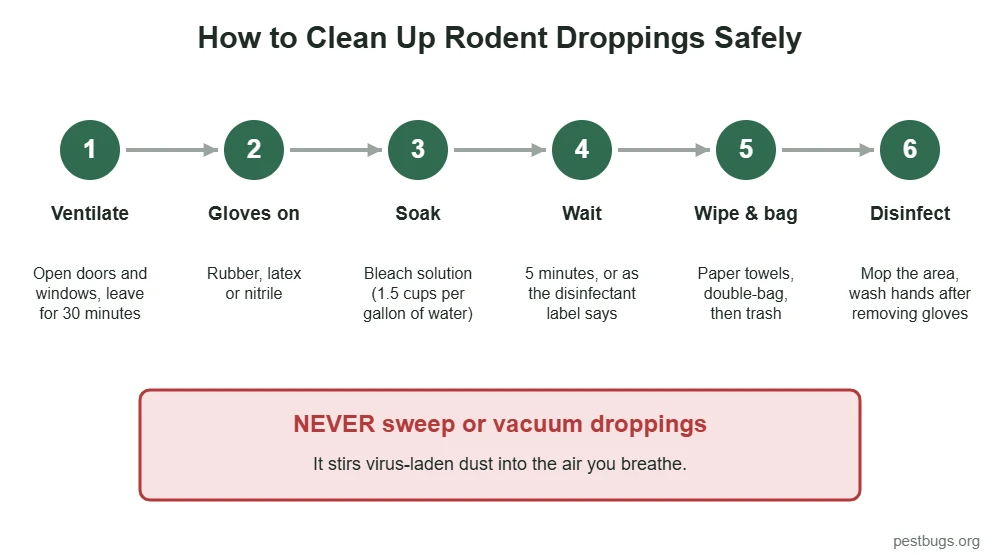
The CDC recommends wet cleaning so you don’t breathe in contaminated dust:
- Open doors and windows and leave the area for at least 30 minutes before you start.
- Put on rubber, latex or nitrile gloves.
- Spray droppings, urine and nesting material with a fresh bleach solution (1.5 cups of household bleach per gallon of water, about 1 part bleach to 10 parts water) or an EPA-registered disinfectant until soaked.
- Wait 5 minutes, or as long as the disinfectant label says.
- Wipe everything up with paper towels, put them in a plastic bag, seal it, and put that bag in a second bag. Throw it out with household trash.
- Mop or wipe the area with disinfectant. Wash your gloved hands, take off the gloves, then wash your hands with soap and water.
For heavy contamination, such as a cabin, shed or attic that has been closed up with lots of droppings, the CDC recommends extra precautions. In that case, consider hiring a professional cleaner or pest control company.
What to Do Next
Droppings mean rodents are getting in and finding food. Seal gaps and set traps along the walls where you found the droppings. Step-by-step guides: how to get rid of mice and how to get rid of rats.
Safe cleanup supplies
- Disposable nitrile gloves
- EPA-registered disinfectant spray
- Spray bottle for bleach solution
- Snap traps for the areas where you found droppings
As an Amazon Associate, Pestbugs earns from qualifying purchases. Follow the disinfectant label for contact time.
FAQ
Dark, rice-like pellets about 1/8 to 1/4 inch long with pointed ends, usually scattered along walls, in drawers, cabinets and under sinks.
By size. Mouse droppings are 1/4 inch or smaller. Roof rat droppings are about 1/2 inch and pointed, and Norway rat droppings are about 3/4 inch with blunt ends.
Yes. Dried droppings can still release germs, including hantavirus from deer mice, when disturbed. Always wet old droppings with disinfectant before cleaning them up, and never sweep or vacuum them.
About 50 to 75. That is why a large number of droppings doesn’t always mean a large number of mice.
No. Vacuuming and sweeping can throw contaminated dust into the air. Soak droppings with a bleach solution or disinfectant, wait 5 minutes, then wipe them up with paper towels.
Rodents are still active in that area. Set traps there and look for entry points to seal.
Sources
- CDC: How to Clean Up After Rodents
- UC IPM Pest Notes: House Mouse
- UC IPM Pest Notes: Rats
- University of Nebraska Extension: Controlling House Mice (G1105)
- Internet Center for Wildlife Damage Management: Norway Rats
- CDC: About Leptospirosis