
To get rid of rats, seal every gap wider than 1/4 inch with metal, remove food and water sources, and trap them with large rat-size snap traps set along walls and runways. Rats are wary of new objects, so leave baited traps unset for a few days, then set them and keep trapping for at least two weeks. Clean droppings with disinfectant; never sweep or vacuum them. Rats are much bigger than mice and can squeeze through a quarter-sized gap.
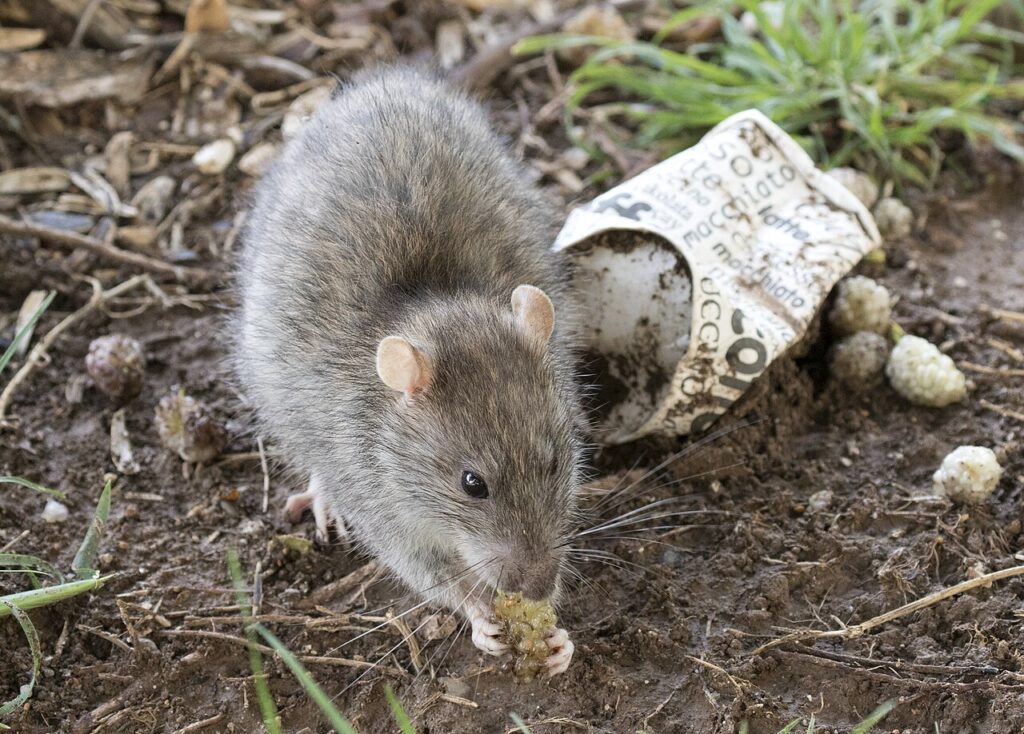
Table of Contents
How to Get Rid of Rats: 6 Steps
1. Seal entry points
- Seal any gap larger than 1/4 inch; that stops both rats and mice.
- Use hardware cloth, sheet metal, cement or lath screen. Steel wool held in place with caulk works for small holes.
- Rats chew through plastic, foam, wood and caulk alone. Never use chicken wire on vents; use 1/2-inch galvanized wire cloth or finer.
- Trim tree branches back at least 3 to 6 feet from the roof, keep shrubs 2 feet from walls, and remove ivy from the house.
2. Remove food and water
- Use garbage cans with tight lids; galvanized metal lasts longer than plastic.
- Pick up fallen fruit, nuts, and birdseed.
- Feed pets only what they eat at once and store pet food in sealed metal or heavy containers.
- Fix leaks and remove standing water.
3. Trap them
- Use large rat-size snap traps; mouse traps are too small. Traps with a large expanded trigger catch more.
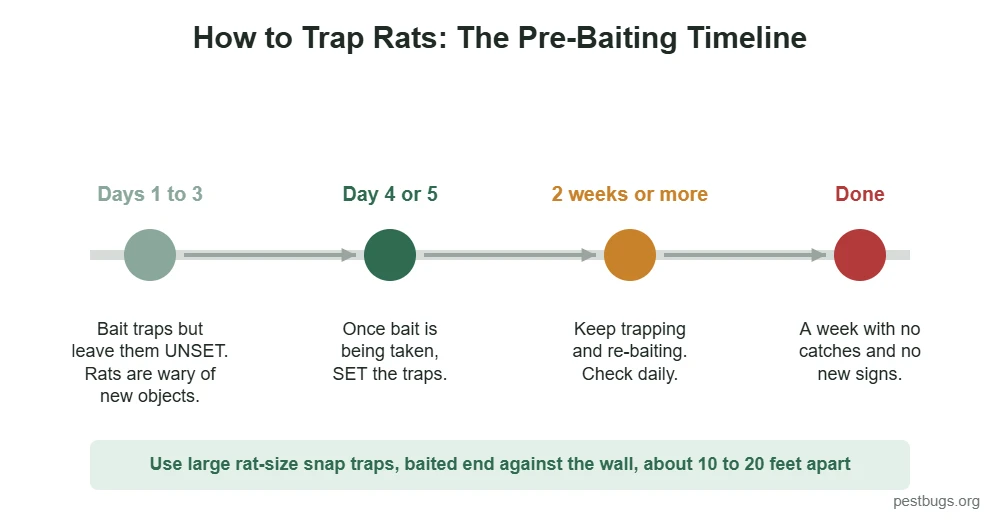
- Place traps along walls and runways where you see droppings and rub marks, with the baited end against the wall, about 10 to 20 feet apart. A heavy problem may need a dozen or more traps.
- For roof rats, also set traps on ledges, shelves, pipes, beams and fence tops.
- Rats are wary of new objects. Bait the traps with peanut butter but leave them unset for a few days until the bait is being taken, then set them.
- Keep trapping for at least two weeks. If you go a week with no catches and no new sign, the rats are gone.
- Keep traps away from children and pets, or put them in a box or station.
4. Skip these
- Glue traps: the CDC advises against them because trapped rats urinate in panic, and rats often pull free.
- Ultrasonic devices: rats get used to the sound and established rats don’t leave.
- Poison inside the house: poisoned rats often die inside walls, causing strong odors and attracting flies and beetles.
5. Use bait stations only with care
Before you buy poison, read rat poison types and pet safety.
How Many Traps or Bait Stations Do I Need?
Get a trap and bait station count for your home, the spacing product labels and university guides recommend, and a map of where outdoor stations go. Nothing is stored or sent.
Spacing, station counts by house size and placement tips: how many bait stations do I need?
Under EPA rules, rat poison sold to homeowners must come in tamper-resistant bait stations with block or paste bait; loose pellets and the strongest anticoagulants are for professionals only. All rodenticides are poisonous to pets and wildlife, and dogs are the most common victims, sometimes from eating poisoned rats. Seal entry points before baiting so rats don’t die inside.
6. Call a professional
Call a licensed pest control company if trapping and sealing don’t solve the problem, if rats are traveling on utility lines or nesting in walls and attics you can’t reach, or if you find burrows around the whole foundation.
Rat control supplies
- Large rat snap traps for walls and runways
- 1/4-inch hardware cloth for vents and gaps
- Copper or steel mesh for small holes
- Galvanized trash cans with tight lids
As an Amazon Associate, Pestbugs earns from qualifying purchases.
Rats in the Attic, Walls, Yard or Garden
Noises in the attic aren’t always rats. Squirrels chew entry holes under eaves and nest in attics too; see squirrels in the attic. In the West and Southwest, a rat with a furry tail and big ears is likely a pack rat.
Rats in the attic or walls
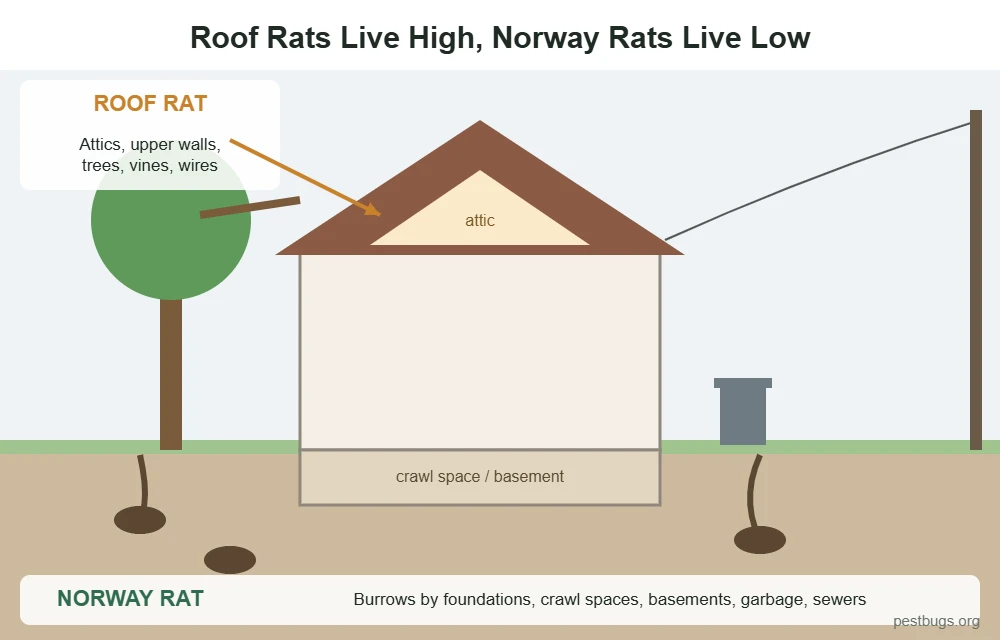
Rats in the attic or walls are usually roof rats, which climb trees, vines, fences and utility lines to reach the roof. Set traps along rafters, beams and pipes where you see droppings or rub marks, trim branches 3 to 6 feet back from the roof, and close vents and eave gaps with hardware cloth after the rats are gone.
Rats in the yard or garden
Rats in the yard are usually Norway rats, which dig burrows 2 to 3 inches wide along foundations, under sheds, woodpiles and compost. Remove fallen fruit, birdseed and pet food, keep garbage in cans with tight lids, move woodpiles away from the house, and set traps in covered boxes or stations near burrows so pets and birds can’t reach them.
Signs of Rats in Your House
- Droppings: Norway rat droppings are about 3/4 inch long, capsule-shaped, with blunt ends, often in clumps. Roof rat droppings are about 1/2 inch and pointed at one end. Fresh droppings are soft, shiny and dark; old ones are dull and crumbly.
- Gnaw marks and holes: chewed wood, plastic, wiring and food packaging, and ragged holes about 2 inches across.
- Rub marks: dark, greasy smudges along walls, beams, pipes and rafters where rats travel the same route.
- Burrows: Norway rats dig 2 to 3-inch-wide holes along foundations, under sheds, woodpiles, compost, and garbage bins, with smooth, debris-free entrances.
- Runways and tracks: packed paths through grass and footprints or tail marks in dust. Sprinkle flour or talc along a wall to check.
- Sounds: scratching, gnawing, climbing and squeaking in walls, attics and drop ceilings, mostly at night.
- Outdoors: rats running along fences or utility lines at dusk, and hollowed-out fruit on citrus or avocado trees, a sign of roof rats.
Seeing rats during the day usually means a large population. There are almost always more rats than you see.
Norway Rat vs Roof Rat
| Norway rat | Roof rat | |
|---|---|---|
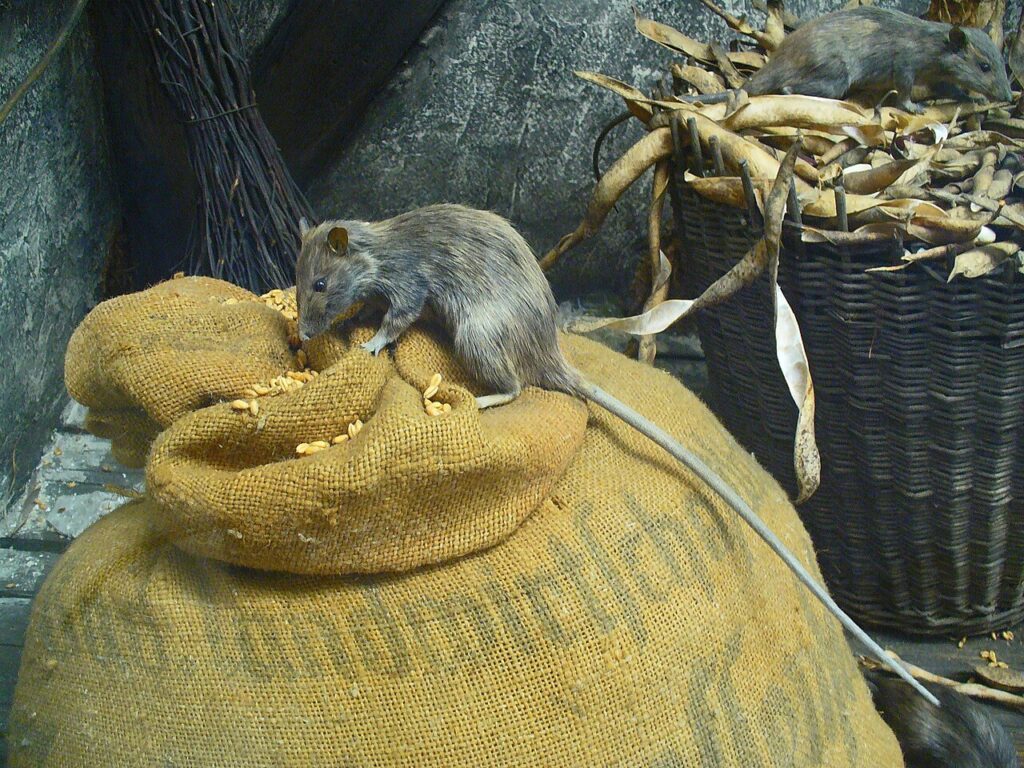
| Body | Large and stocky, 7 to 18 ounces | Sleek and slender, 5 to 12 ounces |
| Nose | Blunt | Pointed |
| Ears | Small; don’t reach the eyes when folded | Large; reach the eyes |
| Tail | Shorter than head and body | Longer than head and body |
| Fur | Coarse, brown or reddish-gray with a lighter belly | Black, gray or brown with a gray, white or cream belly |
| Droppings | About 3/4 inch, blunt ends | About 1/2 inch, pointed at one end |
| Lives | Burrows; basements and ground floors | Climbs; attics, trees, upper floors, wall voids |
| Where common | Across the U.S. | Warm and coastal areas; the main rat in Florida |
Rats vs mice
Rats are much bigger than house mice, which have a body only 2 1/2 to 3 1/2 inches long. Mouse droppings are only 1/8 to 1/4 inch, mice chew small clean holes about an inch across, and they fit through gaps about 1/4 inch wide. Mice are curious and walk into new traps; rats are cautious and avoid new objects. For mice, see signs of mice and how to get rid of them.
Why Rats Get Into Houses
Rats come in for food, water, and shelter, especially in fall and winter. A rat can squeeze through an opening about 1/2 inch wide, roughly the size of a quarter. Roof rats climb trees, vines, fences, and utility lines to reach roofs, soffits, and attic vents, while Norway rats burrow under foundations and enter through gaps around pipes, doors, and basement windows.
How fast rats breed
Norway rats have four to six litters a year with 6 to 12 young each, and the young can breed at two to three months old. Roof rats have three to five litters a year, with five to eight young each. A small problem can grow quickly if you don’t address it.
Are Rats Dangerous?
- Leptospirosis: spread through rat urine in water, soil, or food; severe cases damage the kidneys and liver.
- Rat-bite fever: spread by bites, scratches, and contact with rat saliva or urine.
- Seoul virus: a hantavirus carried by Norway rats that can cause kidney disease; people catch it by breathing dust from droppings and urine.
- Food poisoning: salmonella and other bacteria from contaminated food and surfaces.
- Fire risk: rats gnaw electrical wiring.
Rats can look healthy while carrying these diseases. Common rats in homes are not a rabies risk.
Rats and other rodents living under a house or in a crawl space can also bring in fleas. See how to get rid of fleas in your house.
How to Clean Up Rat Droppings Safely
- Open doors and windows and leave the area for 30 minutes.
- Wear rubber, latex or nitrile gloves.
- Spray droppings, urine and nesting material with a fresh bleach solution (1.5 cups bleach per gallon of water) or an EPA-registered disinfectant and let it soak 5 minutes.
- Wipe up with paper towels, double-bag everything, and disinfect the area.
- Never sweep or vacuum droppings; it stirs virus-laden dust into the air.
To compare rat and mouse droppings by size and shape, see mouse droppings vs rat droppings.
FAQ
Seal entry points, remove food and water, and set many large snap traps along walls and runways at once. Leave them baited but unset for a few days first, because rats avoid new objects, then set them and check daily.
Peanut butter works well. Nuts, dried fruit, bacon or the food the rats are already eating also work. Tie soft bait to the trigger or use a small amount so rats can’t take it without setting off the trap.
When you go a full week with no catches and no new droppings, gnaw marks or noises, the rats are likely gone. Keep checking entry points so new rats can’t get in.
Young rats can squeeze through a hole about the size of a quarter (about 1/2 inch). Seal any gap larger than 1/4 inch to stop both rats and mice.
Rat poison sold to homeowners must come in tamper-resistant bait stations, but it is still dangerous to pets and wildlife, and poisoned rats often die inside walls. Trapping is usually the better choice indoors.
Norway rat droppings are about 3/4 inch long, capsule-shaped with blunt ends. Roof rat droppings are about 1/2 inch and pointed. Mouse droppings are much smaller, 1/8 to 1/4 inch.
Sources
- UC IPM Pest Notes: Rats
- University of Kentucky: Rodent Control
- University of Florida IFAS: Roof Rats
- Internet Center for Wildlife Damage Management: Norway Rats
- CDC: How to Trap Up to Control Rodents
- CDC: How to Clean Up After Rodents
- CDC: About Leptospirosis
- U.S. EPA: Restrictions on Rodenticide Products
Facts in this guide are checked against the sources above and reviewed when they change. See how we research in our editorial policy.
Related guides
- Roof Rats vs Norway Rats (and Rats vs Mice): How to Tell Them Apart
- How to Get Rid of Mice in Your House
- How to Get Rid of Cockroaches: Signs, Baits & What Really Works
- Pantry Moths (Indian Meal Moths): How to Get Rid of Them for Good
- Carpet Beetles: Larvae, Damage, Rash & How to Get Rid of Them
- Mouse Droppings vs Rat Droppings
- Rat Poison: Types and Pet Safety
- Best Mouse Traps Compared
- How to Get Rid of Chipmunks