
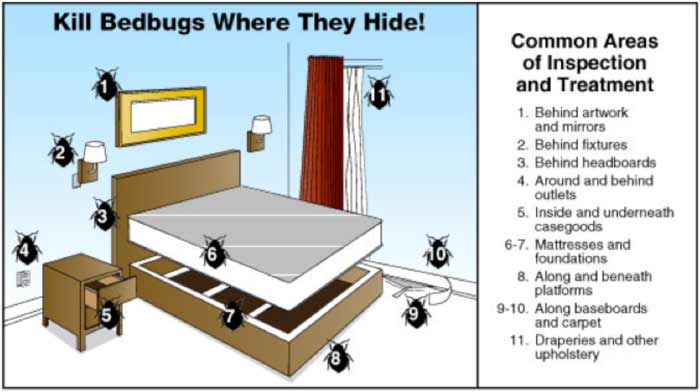
Bed bugs hide within about 8 feet of where people sleep or sit for long periods. The top spots are mattress seams and tags, box springs, bed frame joints and the back of the headboard, followed by nightstands, couch seams and cushions, carpet edges, baseboards, outlet covers, and cracks in walls and furniture. They can also hide in cars, luggage and electronics near the bed. They hide during the day and come out at night to feed, so check these spots with a bright flashlight and look for bugs, shed skins, eggs and black ink-like spots.
Table of Contents
12 Places Bed Bugs Hide
| # | Place | Where exactly to look |
|---|---|---|
| 1 | Mattress | Seams, piping, tufts, tags, corners, especially at the head end |
| 2 | Box spring | Under the fabric dust cover, wood frame joints, staples |
| 3 | Bed frame | Joints, screw holes, slats, the underside of rails |
| 4 | Headboard | Back side, where it meets the wall, mounting holes |
| 5 | Nightstands and dressers | Drawer joints, under drawers, back panels |
| 6 | Couches and chairs | Seams, under cushions, zippers, underside fabric, frame |
| 7 | Carpet and rugs | Edges along baseboards, under rugs near the bed |
| 8 | Baseboards and walls | Gaps behind baseboards, cracks, peeling wallpaper, picture frames |
| 9 | Outlets and switch plates | Behind covers near the bed |
| 10 | Curtains and clutter | Curtain folds and hems, piles of clothes, books and boxes |
| 11 | Electronics | Alarm clocks, bedside lamps, chargers, TVs near the bed |
| 12 | Luggage and cars | Suitcase seams and pockets, car seat seams and floor mats |
Bed Bugs in the Mattress, Box Spring and Bed Frame
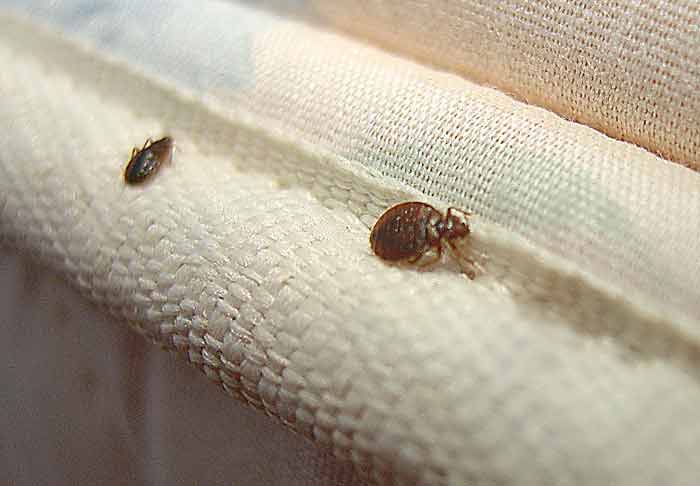
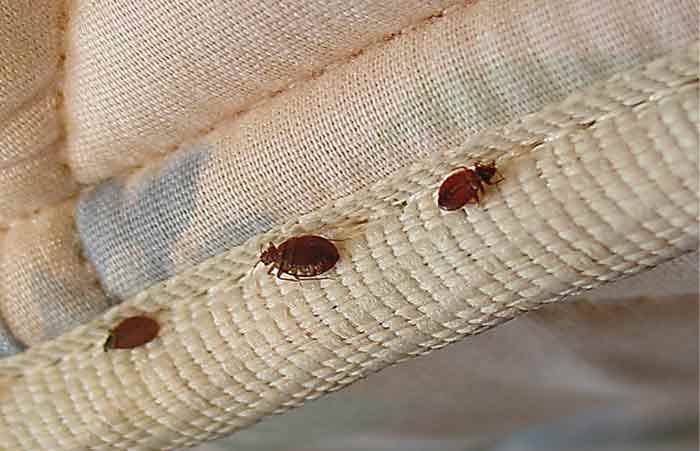
The bed is where most bed bugs live. Lift the sheets and check every seam, fold and tag of the mattress, then the box spring and frame. Encasements on the mattress and box spring remove these hiding places and trap any bugs inside. See mattress encasements.
Bed Bugs in the Couch
Couches are the second most common spot, especially if someone sleeps or naps on one. Bed bugs hide in seams, piping, zippers, under cushions and in the frame and underside fabric. Fabric couches have more hiding places than leather, but leather couches get bed bugs too.
- Check: remove cushions, open zippers, check seams and the underside with a flashlight.
- Treat: vacuum every seam, steam slowly along seams and joints, and put cushion covers through the dryer on high if the fabric allows.
- Protect: interceptors under couch legs; a bed bug-proof couch cover for heavily used sofas.
- Replace only as a last resort: wrap and label a discarded couch so no one takes it home.
Bed Bugs in Carpet

Bed bugs don’t live deep in carpet the way fleas do, but they hide along the edges where carpet meets the baseboard, and under rugs near the bed.
- Vacuum edges with a crevice tool; seal and bin the bag outdoors.
- Steam carpet edges and rug undersides.
- Apply a thin line of food-grade diatomaceous earth or an EPA-registered bed bug dust along the baseboard gap, not across the carpet.
- Carpet shampooing alone doesn’t reach bugs in the tack strip.
Bed Bugs in Your Car
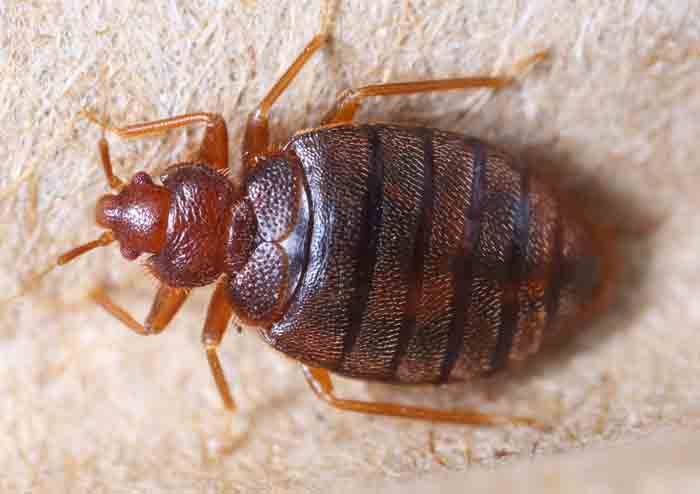
Bed bugs can ride into a car on bags, clothes or passengers, and hide in seat seams, between seats, under floor mats and in trunk carpet. Cars aren’t ideal for them because people don’t sleep there, but bugs can survive for weeks.
- Remove everything, vacuum seats, seams, carpets and the trunk thoroughly, and empty the vacuum outdoors.
- Steam seat seams and fabric.
- Heat helps: on hot summer days a car parked in full sun can get very hot inside, but temperatures aren’t even enough to rely on alone.
- A professional can heat-treat a vehicle if bugs persist.
Bed Bugs in Electronics
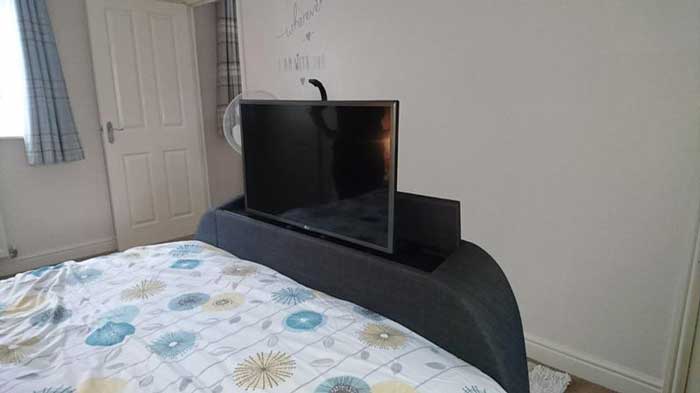
Bed bugs sometimes hide in and under electronics next to the bed, such as alarm clocks, lamps, routers, chargers and TVs, because they’re close to the sleeper and full of crevices. Don’t spray liquids into electronics. Instead, vacuum around them, use a portable heat chamber for small items (check the manufacturer’s heat limits), or ask a professional about treating electronics. Moving electronics away from the bed removes a hiding place.
Bed Bugs in Clothes, Closets and Luggage

Bed bugs hide in piles of clothes on the floor, laundry baskets, closets near the bed and luggage, and move between homes that way. Bag clothes and put them through the dryer on high for 30 minutes. See bed bugs in clothes.
Do Bed Bugs Hide on Your Body?
No. Bed bugs don’t live on people the way lice do. They feed for a few minutes, then leave to hide. They occasionally end up in hair or clothing at night. See bed bugs in hair.
How to Find Bed Bugs
- Use a bright LED flashlight held low, and a magnifying glass.
- Start at the head of the bed and work outward about 8 feet.
- Slide a credit card or putty knife into seams and cracks to push bugs out.
- Look for live bugs, pale shed skins, tiny white eggs, black ink-like dots and rusty stains.
- Put interceptor cups under bed and couch legs to catch bugs over one to two weeks. See bed bug traps.
Pictures of each sign: what bed bugs look like. Next steps: how to get rid of bed bugs.
Find and block bed bug hiding spots
- Bright LED flashlight for seams and cracks
- Interceptor cups for bed and couch legs
- Mattress encasement removes the top hiding place
- Steamer for couches, car seats and carpet edges
As an Amazon Associate, Pestbugs earns from qualifying purchases.
FAQs
During the day bed bugs hide in mattress seams, box springs, bed frames, headboards, couch seams, baseboards, outlet covers and cracks within about 8 feet of where people sleep.
Yes. Couches are the second most common hiding place after beds, especially if someone sleeps on them. Check seams, zippers, under cushions and the frame.
Bed bugs don’t live deep in carpet, but they hide along carpet edges near baseboards and under rugs close to the bed.
Yes, for a while. Bed bugs can hide in seat seams and under floor mats after riding in on bags or clothes, but cars are not a long-term home because no one sleeps there.
Yes. Alarm clocks, lamps, chargers and TVs near the bed have crevices bed bugs use. Don’t spray liquids into electronics; use vacuuming, heat chambers within manufacturer limits, or a professional.
Sources
- US EPA: Do-it-yourself bed bug control
- University of Kentucky Entomology: Bed bugs
- University of Minnesota Extension: Bed bug prevention and control
Facts in this guide are checked against the sources above and reviewed when they change. See how we research in our editorial policy.
Related guides
- What Attracts Bed Bugs & things they Hate /Dislike Most
- How do Bed Bugs Spread? Are they Contagious? How Fast/Easily from Person, Room or House?
- How to Kill Bed Bugs with Steam: Best Steamers & Guide + Tips
- What Do Bed Bug Bites Look Like? Pictures, Patterns & How to Tell
- Bed Bug Treatment Cost (2026): Heat, Fumigation & Exterminator Prices
- Bed Bug Bites vs Flea, Mosquito, Spider & Dust Mite Bites (Pictures)