
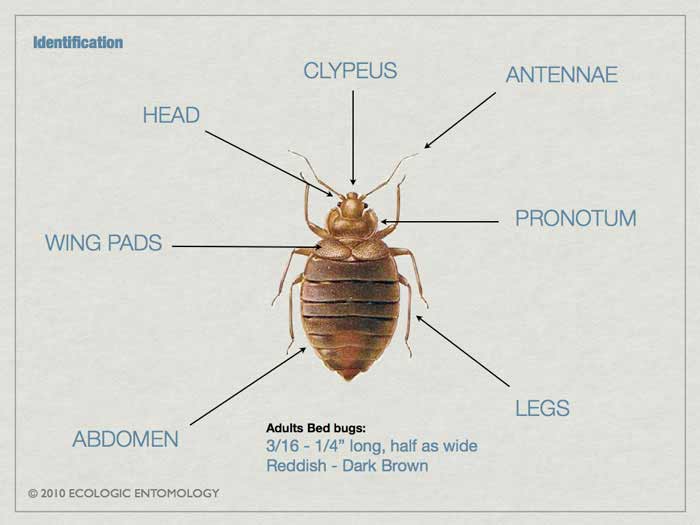
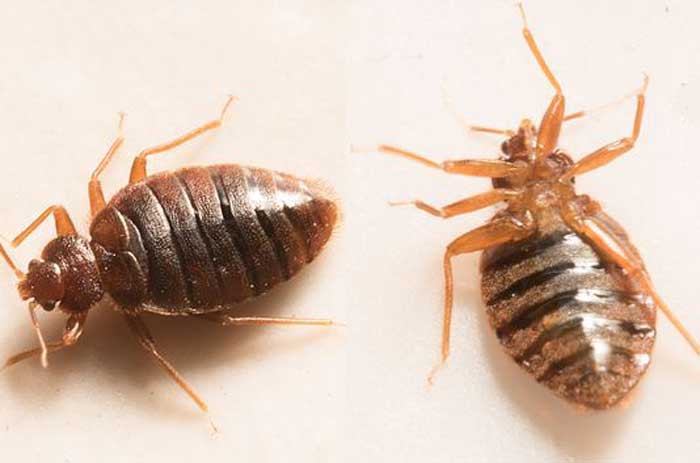
Adult bed bugs are flat, oval, reddish-brown and wingless, about 5 to 7 mm long: the size and shape of an apple seed. Yes, you can see them with the naked eye. Baby bed bugs (nymphs) are smaller, pale and almost see-through until they feed, and eggs are pearl-white specks about 1 mm long. Most people spot the signs first: dark droppings, empty shells or rusty blood spots on the mattress.
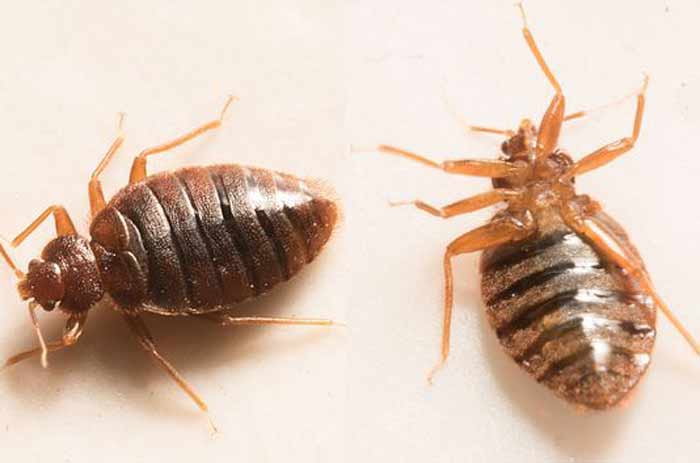
| Size | Adults 5 to 7 mm (3/16 to 1/4 inch); nymphs 1.5 to 4.5 mm; eggs 1 mm |
| Shape | Flat and oval when unfed; swollen and longer after feeding |
| Color | Brown unfed, reddish-brown after feeding; nymphs clear to yellowish |
| Wings | None. Bed bugs can’t fly or jump; they crawl. |
| Other features | Six legs, short antennae, fine hairs, a musty sweet smell in heavy infestations |
Table of Contents
Bed Bug Pictures: Every Stage and Sign
Adult bed bugs
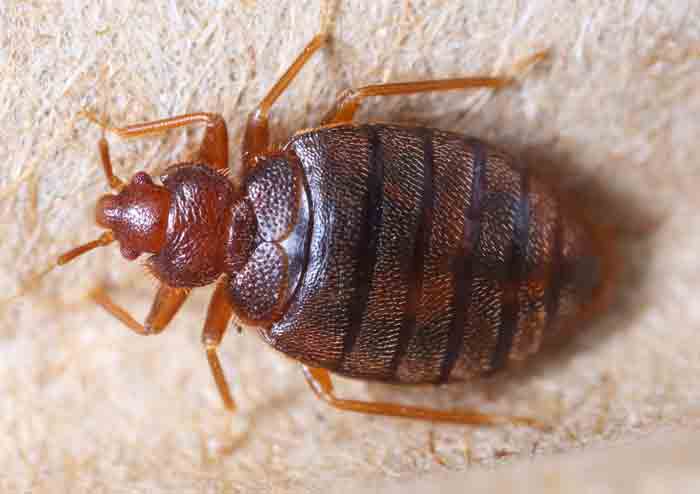
An unfed adult is flat enough to slide into a crack the width of a credit card. After a meal it swells like a small balloon and turns a deeper red. Adults move at about the speed of an ant.
Baby bed bugs (nymphs)
Nymphs look like tiny, pale adults, from the size of a poppy seed up to a sesame seed. They are hard to see until they feed, when the red blood inside makes them stand out. Full stage-by-stage sizes are in the bed bug life cycle.
Bed bug eggs
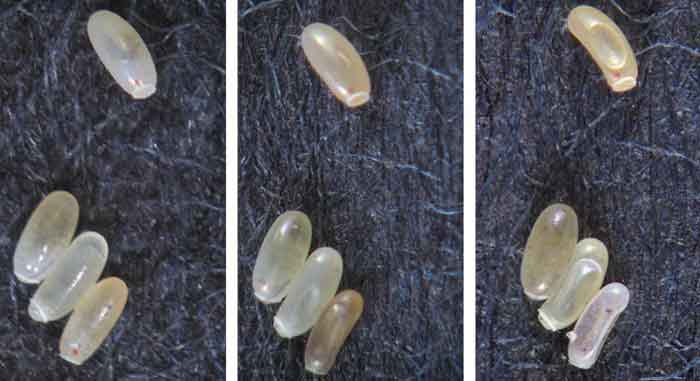
Eggs are pearl-white, about 1 mm long and glued in clusters in seams and cracks. Empty shells are flattened and clear. More in bed bug eggs.
Bed bug shells (shed skins)
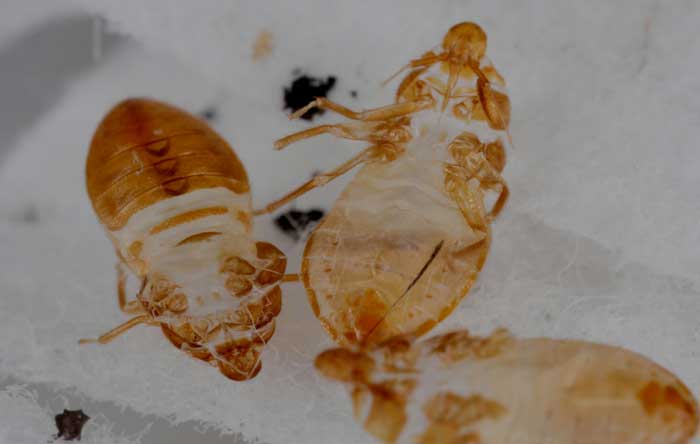
Nymphs shed their skin five times on the way to adulthood. The empty casings are pale yellow-brown, see-through and exactly the shape of a bed bug. Piles of shells in a seam or crack mean a colony has been living there for a while.
Bed bug poop (fecal spots)
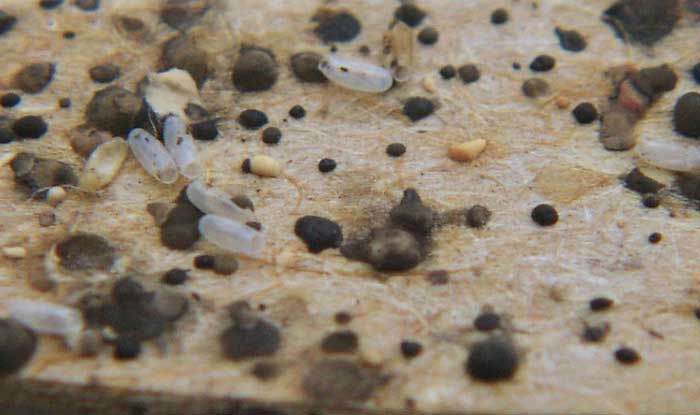

Bed bug droppings are digested blood. They look like dots from a black or dark brown felt-tip marker, often in clusters along mattress seams, on sheets, headboards, walls and wood joints. Rub one with a damp cloth: droppings smear like ink, while dirt or mold usually doesn’t.
Blood stains

Small rusty or red spots on pillowcases and sheets come from bugs crushed while you slept or from bites that bled a little.
How to See Bed Bugs: Inspection Tips
- Use a bright flashlight and hold it at a low angle so bugs and spots cast shadows.
- Start at the head of the bed. Check mattress seams, piping and tags, then the box spring, bed frame joints and behind the headboard.
- Slide a card into cracks to push bugs and eggs out of seams.
- Use a magnifying glass for nymphs and eggs.
- Move outward to nightstands, couch seams, curtain folds, outlet covers and baseboards near the bed.
- Put interceptor cups under each bed leg to catch bugs over the next week or two.
All the hiding spots, room by room: where bed bugs hide.
Bugs That Look Like Bed Bugs
| Look-alike | How to tell it apart |
|---|---|
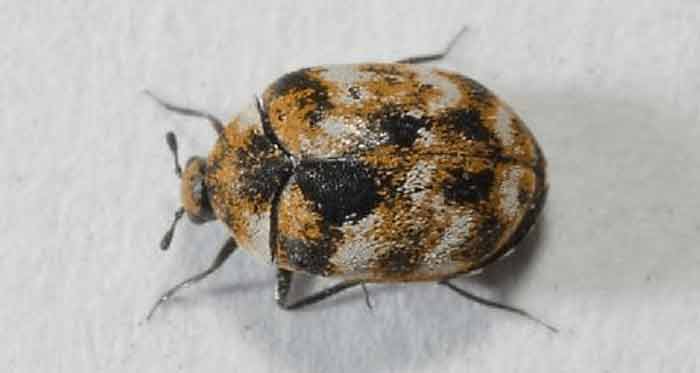
| Carpet beetle | Rounder, hard-shelled, often mottled black, white and orange; larvae are fuzzy. Found near wool, carpets and closets. |
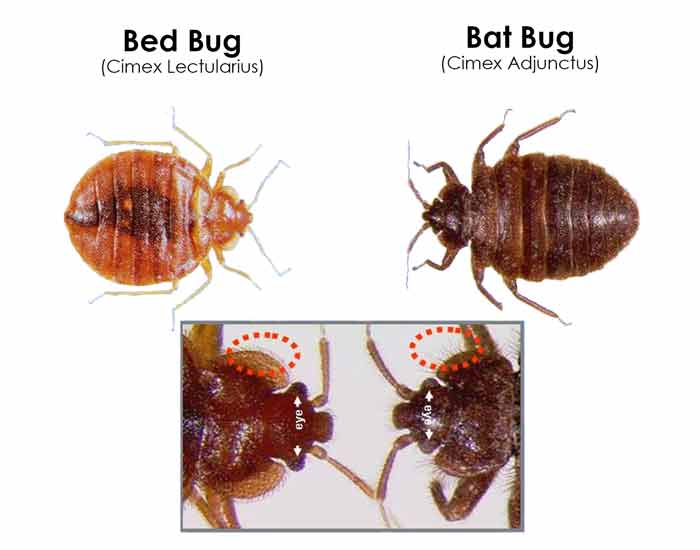
| Bat bug | Almost identical but with longer hairs on the upper body. Comes from bats in the attic or walls. Needs an expert to confirm. |
| Spider beetle | Round, shiny, spider-like body with long legs. Found in pantries. |
| Drugstore beetle | Reddish-brown, cylindrical, with ridged wing covers; can fly. Lives in dry foods. |
| Head lice | Much smaller, grayish, live only on the scalp and hair, not in beds. |
| Fleas | Tiny, narrow side to side and jump. Usually come with pets. |
| Cockroach nymphs | Longer, with long antennae; fast runners. |
| Ticks | Eight legs and no visible separation between head and body. |
Found Bed Bugs? Next Steps
- Catch one on clear tape or in a sealed bag for identification.
- Don’t move to another bedroom or the couch; bed bugs follow you and spread.
- Wash bedding and clothes and dry on high heat for at least 30 minutes.
- Encase the mattress and box spring.
- Choose a treatment. Compare options and prices in bed bug treatment cost and how to get rid of bed bugs.
Bed bug inspection kit
- Bright LED flashlight for seams and cracks
- Lighted magnifier for eggs and nymphs
- Interceptor cups to catch and confirm bugs
- Mattress encasement to trap bugs and make inspection easy
As an Amazon Associate, Pestbugs earns from qualifying purchases.
Bed Bug Identification FAQs
Yes. Adult bed bugs are 5 to 7 mm long, about the size of an apple seed, and easy to see. Nymphs and eggs are smaller and pale, so a flashlight and magnifying glass help.
Bed bugs are flat, oval, wingless insects, brown before feeding and reddish-brown and swollen after. Adults are the size of an apple seed; nymphs are smaller and pale.
Adult bed bugs are brown to reddish-brown. They look redder and darker after a blood meal. Nymphs are clear to pale yellow until they feed.
Bed bug poop looks like small black or dark brown dots, like marks from a felt-tip pen, often clustered on mattress seams, sheets and headboards. It smears when wiped with a damp cloth.
Carpet beetles, bat bugs, spider beetles, drugstore beetles, fleas, ticks and cockroach nymphs are often mistaken for bed bugs. Bat bugs look the most similar.
Sources
- US EPA: Bed bugs appearance and life cycle
- CDC: About bed bugs
- University of Kentucky Entomology: Bed bugs
Facts in this guide are checked against the sources above and reviewed when they change. See how we research in our editorial policy.
Related guides
- What Do Bed Bug Bites Look Like? Pictures, Patterns & How to Tell
- What Attracts Bed Bugs & things they Hate /Dislike Most
- How do Bed Bugs Spread? Are they Contagious? How Fast/Easily from Person, Room or House?
- How to Kill Bed Bugs with Steam: Best Steamers & Guide + Tips
- Bed Bug Bites vs Flea, Mosquito, Spider & Dust Mite Bites (Pictures)
- Bed Bug Interceptor-How it works, DIY & Reviews