
A bed bug rash is a group of red or darker, swollen, itchy bumps, often in a line or cluster on skin you leave uncovered at night: the face, neck, arms, hands and shoulders. It is an allergic reaction to bed bug saliva, so it can take up to 14 days to appear, and some people never react at all. Most rashes heal within one to two weeks with soap and water, an anti-itch cream and an antihistamine. Bed bugs are not known to spread disease.
| Question | Short answer |
|---|---|
| Looks like | Red or darker bumps or welts, in lines or clusters; sometimes blisters |
| Where on the body | Face, neck, arms, hands, shoulders, upper body |
| When it appears | Usually 1 to several days after the bites; up to 14 days |
| How long it lasts | About 1 to 2 weeks |
| Treatment | Wash, hydrocortisone cream, oral antihistamine, don’t scratch |
| See a doctor if | Signs of infection, or a rash that spreads or blisters badly |
| Emergency if | Trouble breathing, throat or lip swelling, hives all over |
Table of Contents
What Does a Bed Bug Rash Look Like?
Each bite turns into a slightly swollen, itchy bump, red on lighter skin and purple or darker brown on darker skin. Some have a darker dot in the center. Because bed bugs often bite several times as they feed and move along the skin, the bumps tend to line up in rows of three or more or bunch together in a small patch. People who react strongly get larger welts that look like hives, and some get small blisters filled with fluid.
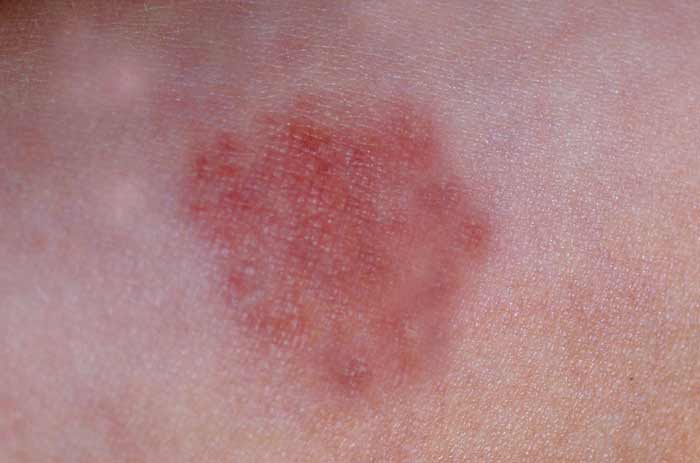
You usually don’t feel the bites while they happen, because bed bugs feed while you are asleep. A rash that appears overnight on uncovered skin, with small rusty spots of blood on the sheets, is a strong sign.

For more pictures and bite patterns, see what bed bug bites look like.
Why Bed Bugs Cause a Rash
Bed bug saliva contains proteins that keep blood flowing while they feed. The rash is your immune system reacting to those proteins, which is why reactions differ so much from person to person. Some people show no marks at all, some get small spots, and people bitten again and again can develop bigger, itchier reactions. Severe whole-body allergic reactions, such as widespread hives, wheezing or anaphylaxis, are rare and have been reported only in isolated cases.
Bed Bug Rash Symptoms and Timeline
| Time after bites | What you may notice |
|---|---|
| First night | Nothing, usually; bites are painless |
| 1 to several days | Itchy red or darker bumps appear, often in lines or clusters |
| Up to 14 days | New spots may still appear in slow reactors |
| 1 to 2 weeks | Itch fades and the bumps heal |
| Longer | Ongoing new bites, or a skin infection from scratching |
Other effects are itching that disturbs sleep, anxiety and, from scratching, broken skin that can become infected.
How to Treat a Bed Bug Rash
- Wash the rash with soap and water to lower the risk of infection.
- Apply an anti-itch cream such as 1% hydrocortisone, or calamine lotion, as the label directs.
- Take an oral antihistamine for itching that keeps you awake. Some, such as diphenhydramine, cause drowsiness.
- Use a cold compress for 10 to 15 minutes to ease swelling and burning.
- Don’t scratch. Keep nails short; scratching breaks the skin and lets bacteria in.
For babies and young children, ask a pediatrician or pharmacist before using steroid creams or antihistamines.
When to See a Doctor
- The rash is spreading, hot, painful or oozing pus, which can mean a skin infection that needs antibiotics
- You develop large blisters or the rash keeps getting worse after a few days
- You are not sure what is causing it
Get emergency care for hives spreading across the body, trouble breathing or wheezing, swelling of the lips, mouth or throat, dizziness or confusion.
Bed Bug Rash vs Other Rashes
Several common rashes look like bed bug bites. Where the bumps are and when they appear are the best clues.
| Cause | How it differs |
|---|---|
| Bed bugs | Bumps in lines or clusters on skin exposed during sleep; appear days later |
| Fleas | Smaller bumps, mostly on the ankles and lower legs; often a pet in the home. See flea vs bed bug bites |
| Mosquitoes | Welts appear within minutes, scattered rather than in lines, after time outdoors |
| Hives | Welts come and go and each one usually fades within 24 hours |
| Carpet beetle larvae | Itchy, rash-like bumps from the larvae’s bristly hairs, not bites; see carpet beetles |
| Dust mites | No bites; an allergy that causes sneezing and itchy skin. See dust mite allergy |
Stopping the Rash for Good
Creams calm the itch, but new bumps keep coming until the bed bugs are gone. Check mattress seams, the box spring, the bed frame and headboard for live bugs, shed skins and dark spots of droppings. If you find them, follow our step-by-step guide on how to get rid of bed bugs, or call a licensed pest professional.
Rash relief and bed bug essentials
- 1% hydrocortisone cream to calm the itch
- Calamine lotion for cooling relief
- Bed bug proof mattress encasement to trap bugs in the mattress
- Bed bug interceptor cups under the bed legs to catch climbing bugs
As an Amazon Associate, Pestbugs earns from qualifying purchases.
FAQ
Red or darker, slightly swollen, itchy bumps, often in a line or a tight cluster on skin that was exposed while you slept: face, neck, arms, hands and shoulders. Some people get welts that look like hives or small fluid-filled blisters.
Most bed bug bites and rashes heal within one to two weeks. A rash can take up to 14 days to appear after the bites, so new spots may keep showing up for a while even after the bugs are gone.
Yes, in most cases. The red, itchy bumps are your immune system reacting to proteins in bed bug saliva, which is why some people get a strong rash and others have no marks at all. Severe whole-body allergic reactions are rare.
Some people develop raised, itchy welts that look like hives around the bites. Hives spreading across the body, with swelling of the lips or throat or trouble breathing, need emergency care.
No. According to the CDC, bed bugs are not known to spread diseases to people. The main health risks are itching, lost sleep and skin infections from scratching.
Treat the bites to calm the itch, but the rash only stops when the bed bugs are gone. Inspect the mattress seams and bed frame, encase the mattress and box spring, and follow a full bed bug treatment plan or call a professional.
Sources
- CDC: About bed bugs
- Healthline: Bed bug bites (medically reviewed; cites NHS, Harvard Health and AAD)
- WebMD: Pictures of bed bug bites
This article is general information, not medical advice. If you are worried about a rash, contact a doctor.
Related guides
- How to Get Rid of Bed Bugs: 7 Steps That Work (DIY & Professional)
- What Do Bed Bugs Look Like? Pictures, Size, Eggs, Shells & Poop
- What Attracts Bed Bugs & things they Hate /Dislike Most
- How do Bed Bugs Spread? Are they Contagious? How Fast/Easily from Person, Room or House?
- How to Kill Bed Bugs with Steam: Best Steamers & Guide + Tips
- What Do Bed Bug Bites Look Like? Pictures, Patterns & How to Tell